Read the whole thing right here — no email, no signup, nothing to fill in. Or download the PDF and keep it forever.
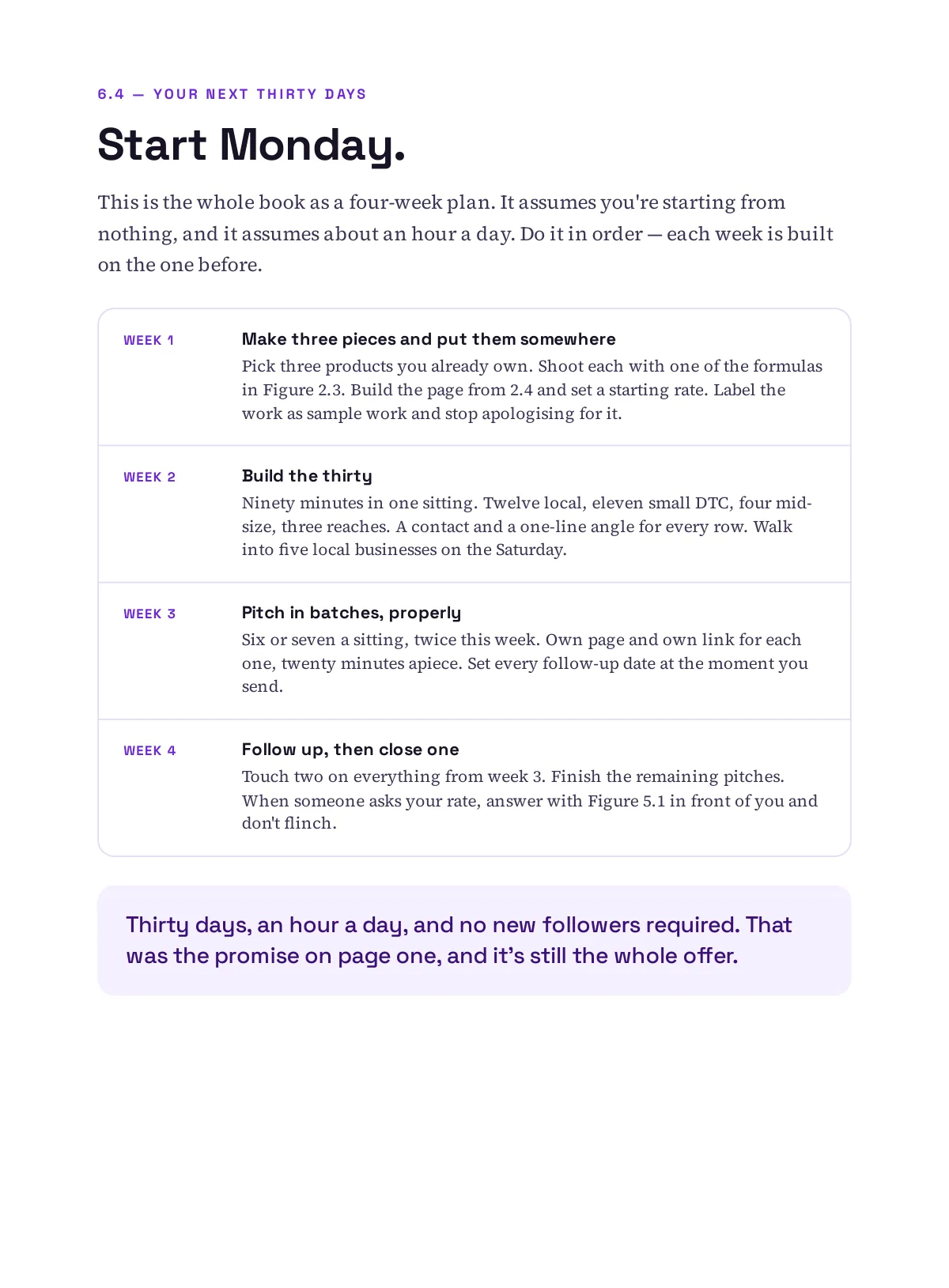
Most advice about brand deals assumes you already have one. This guide starts earlier than that: you have content, you have no deals, and you have no idea who to email.
It is the whole path, written out — how to build something worth sending, how to find brands worth pitching, exactly what to write, what to charge, and what to do when the offer that comes back is a scam.
Who it is for
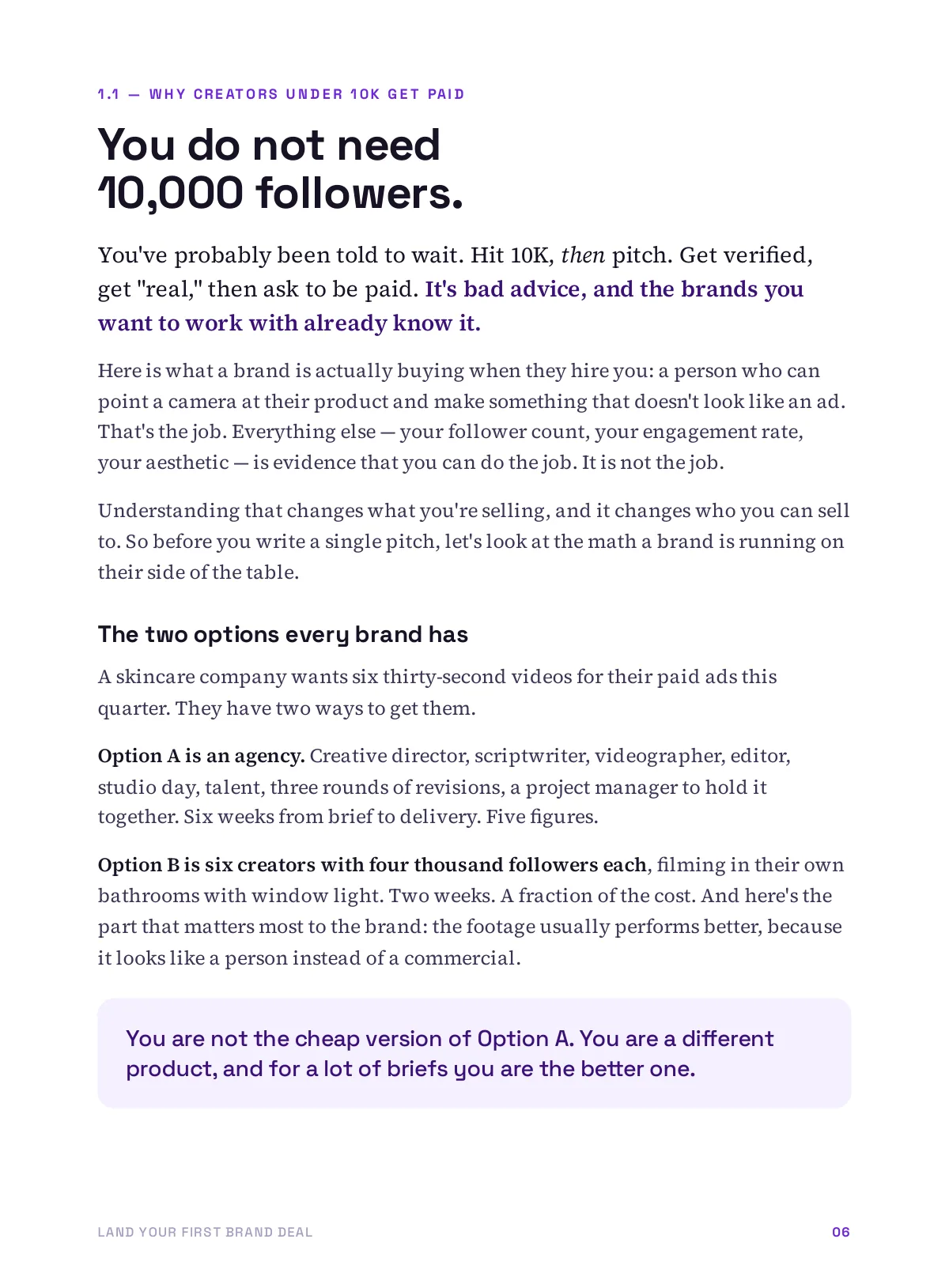
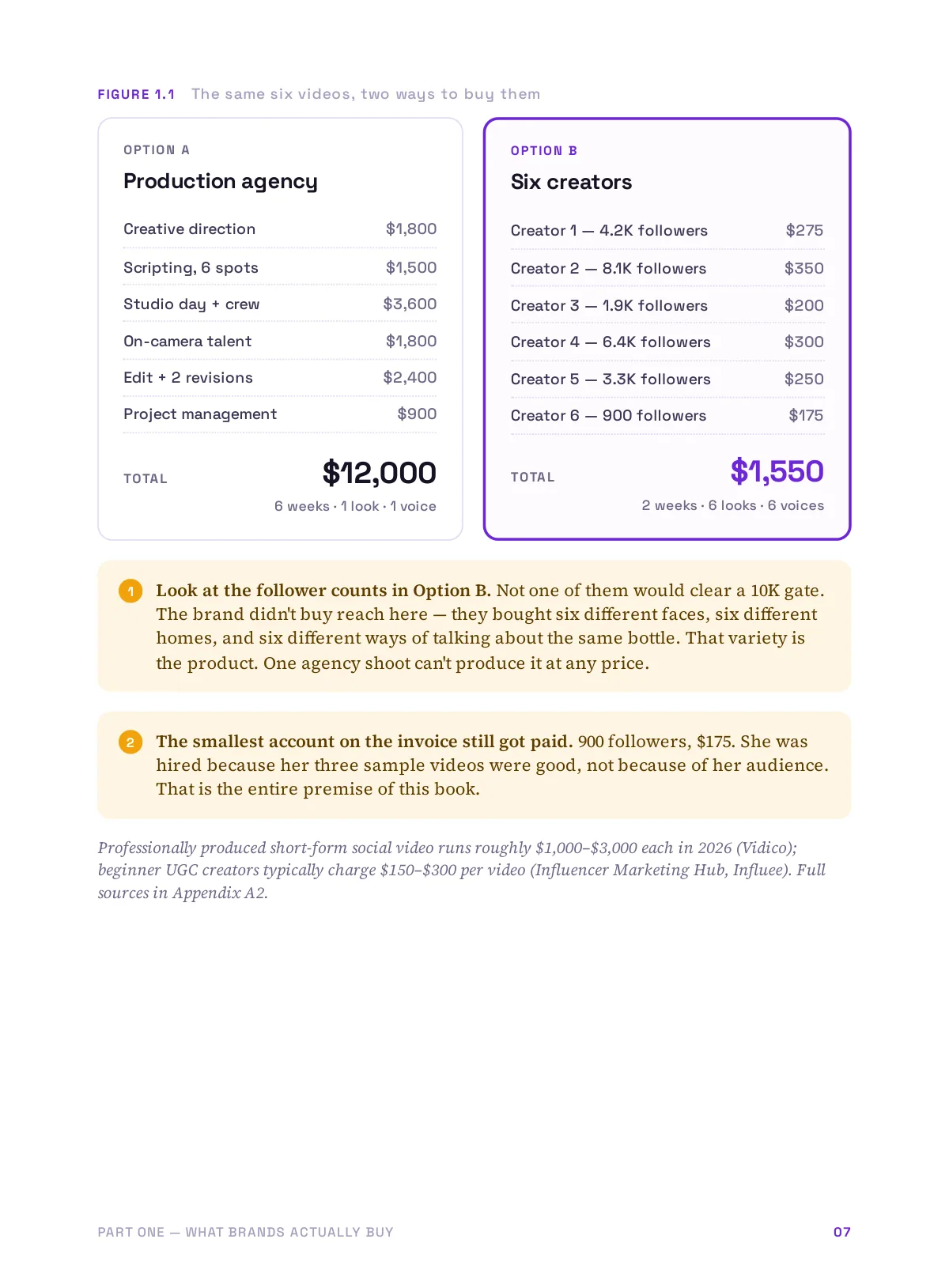
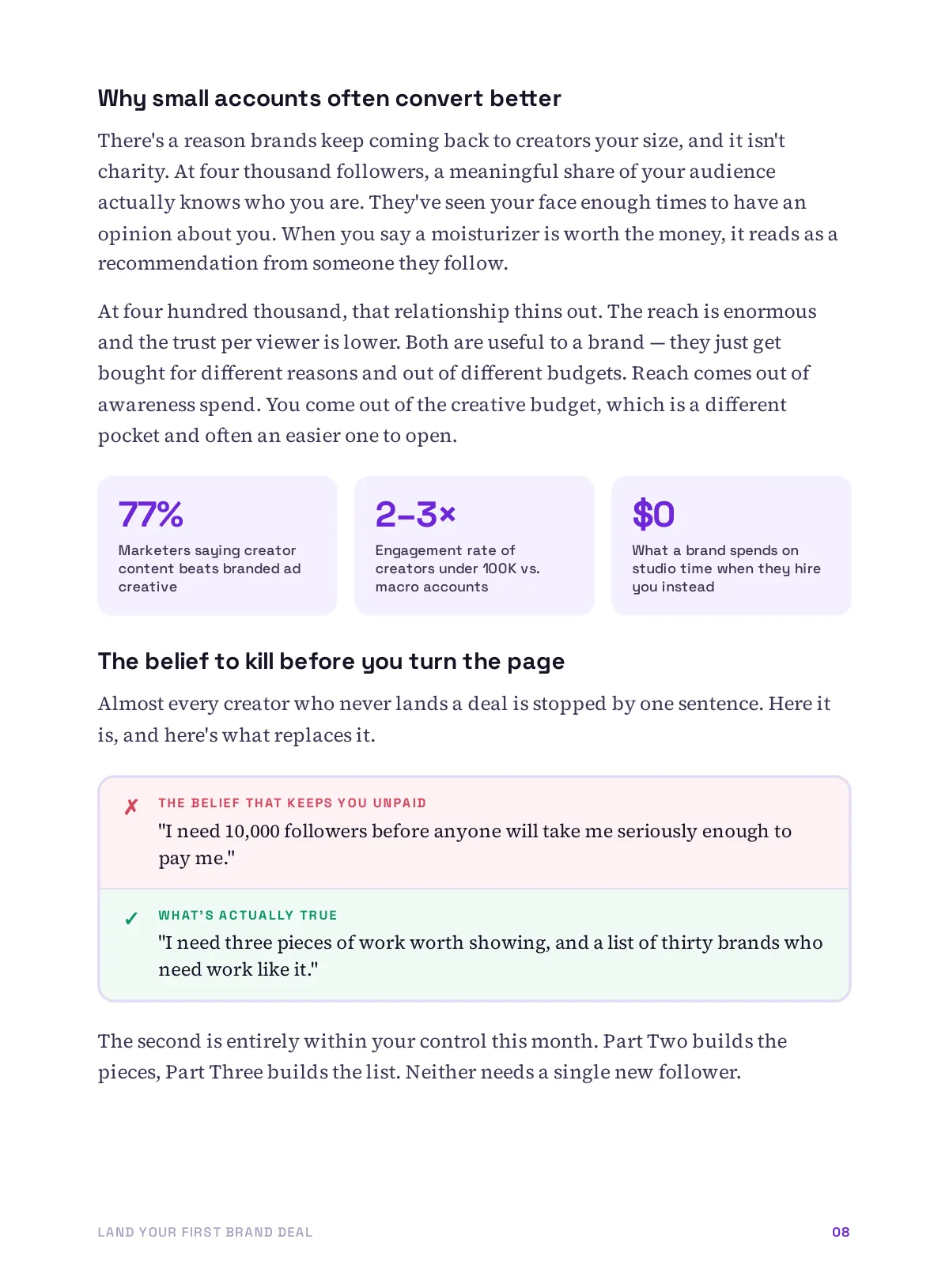
Creators who have not been paid yet, or have been paid once and want it to keep happening. There is no follower threshold anywhere in it. The opening chapter is largely about why small accounts often convert better — and why the follower count is the wrong thing to lead with.
What is inside
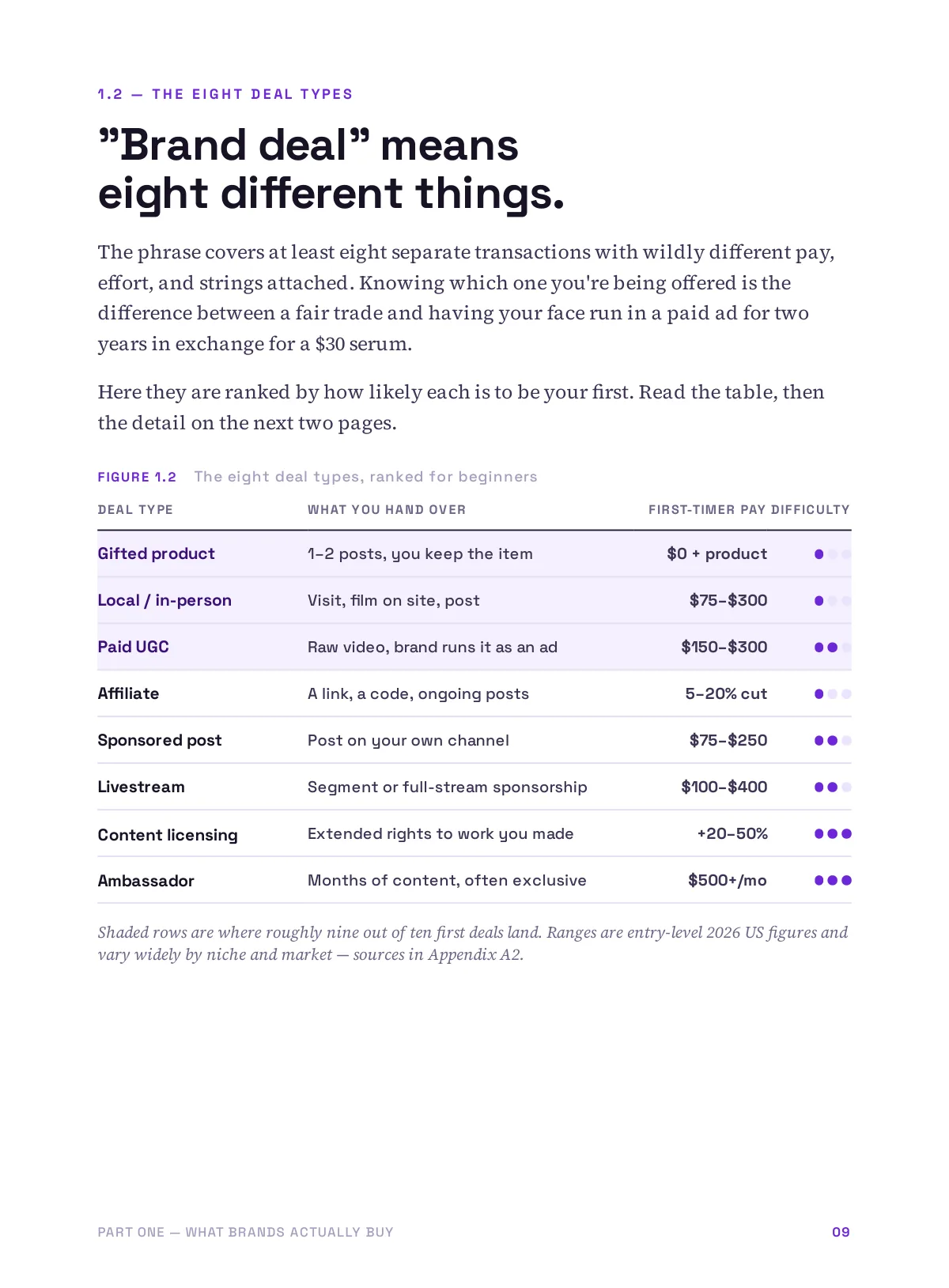
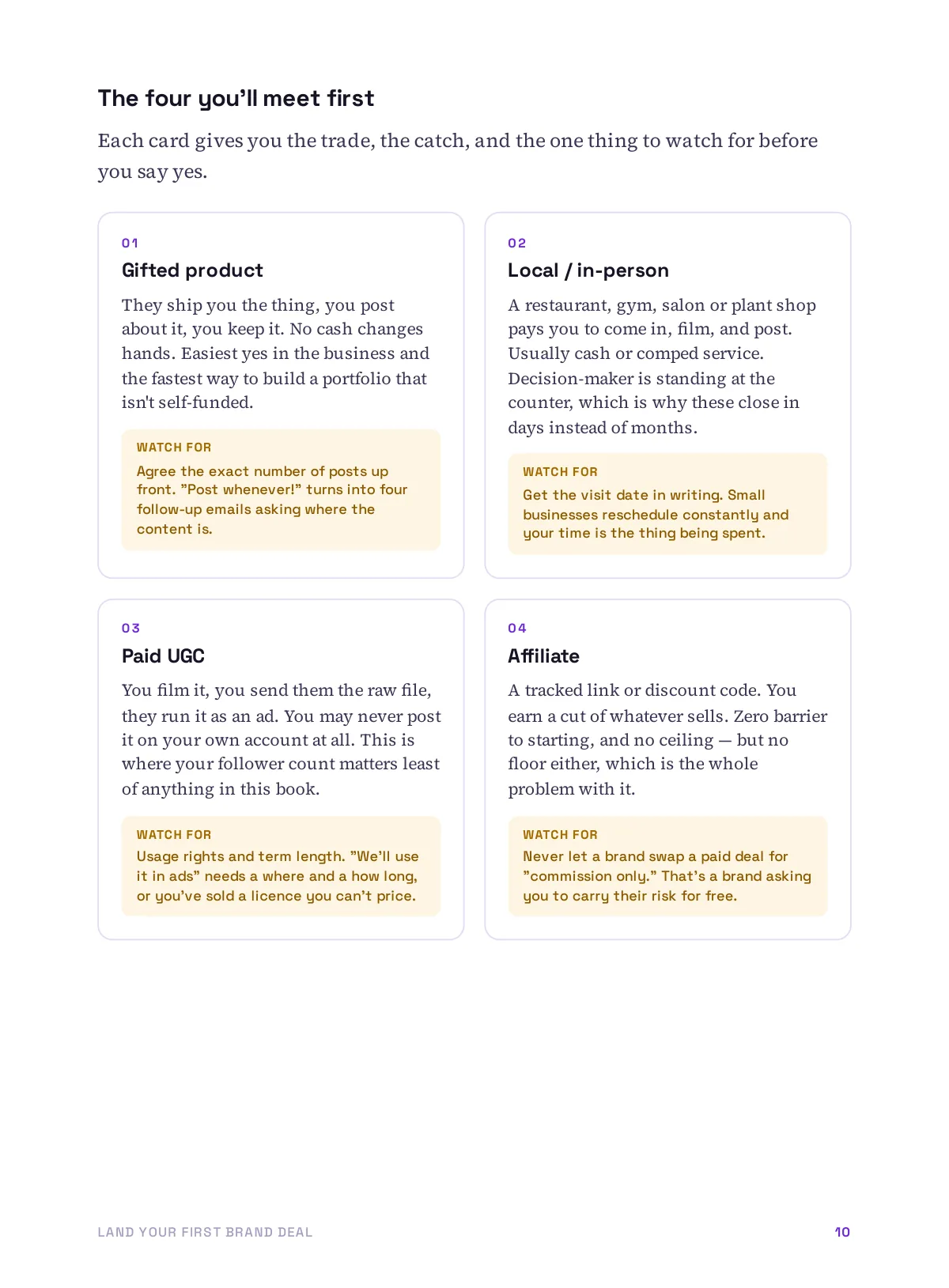
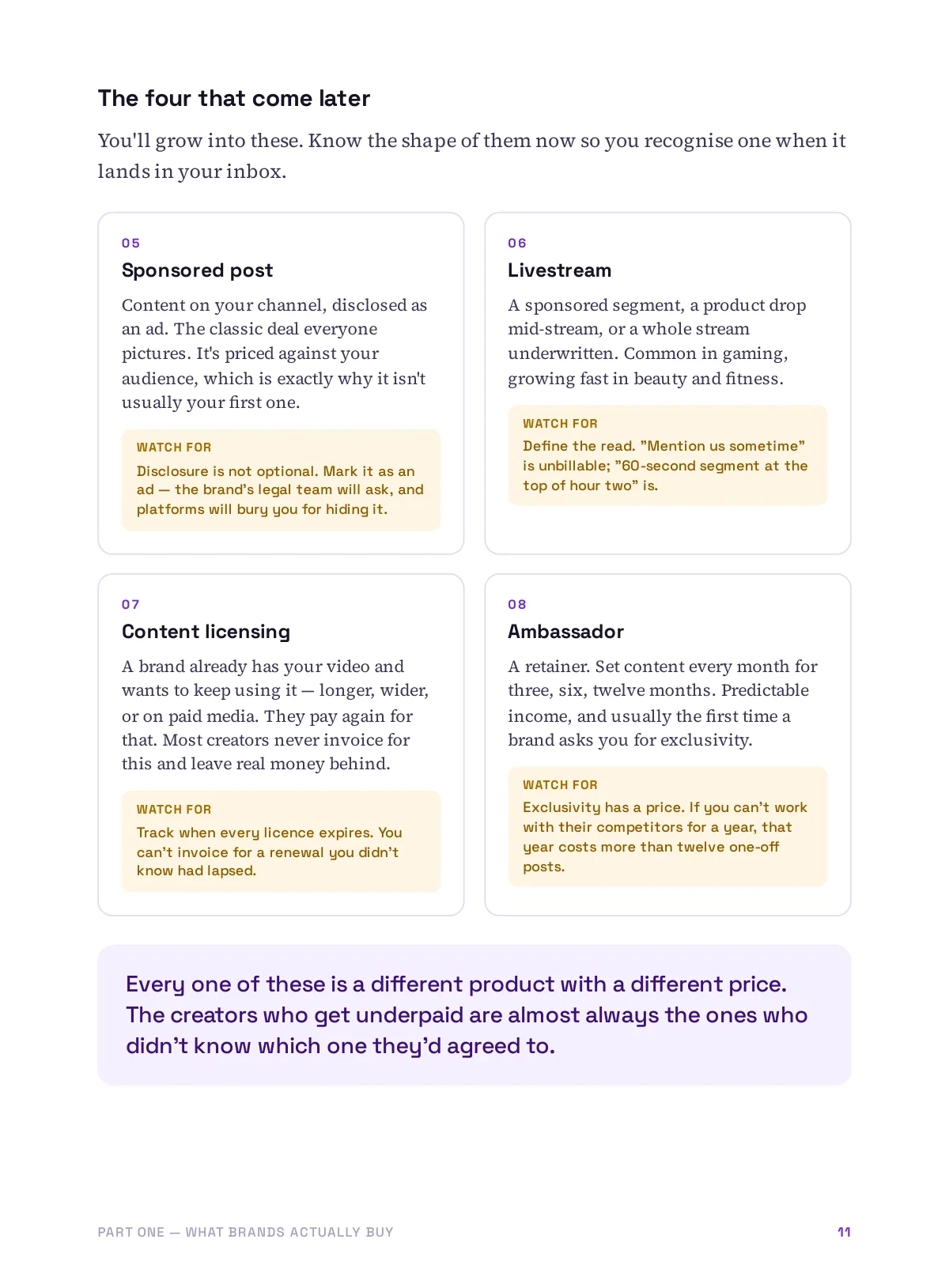
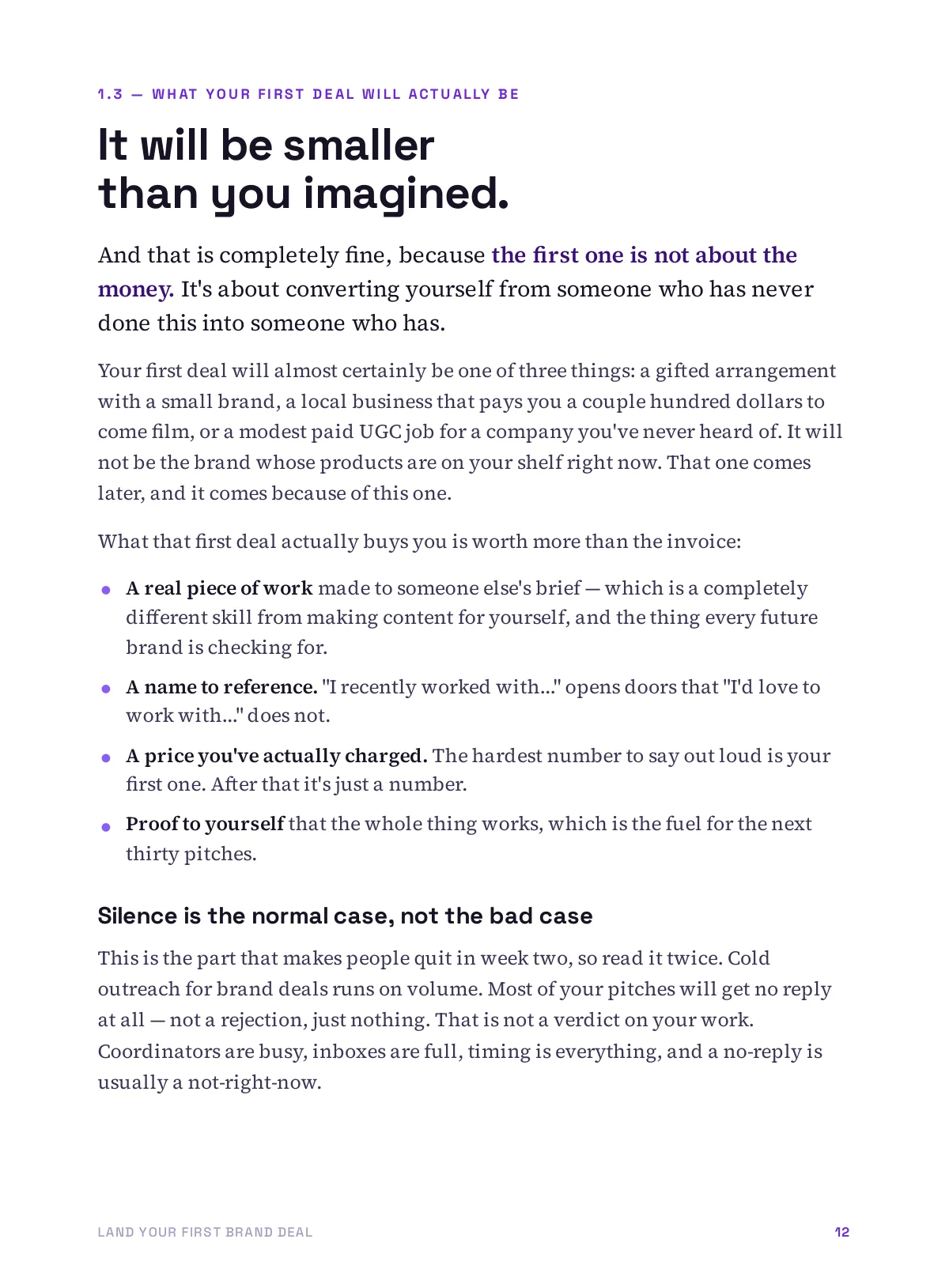
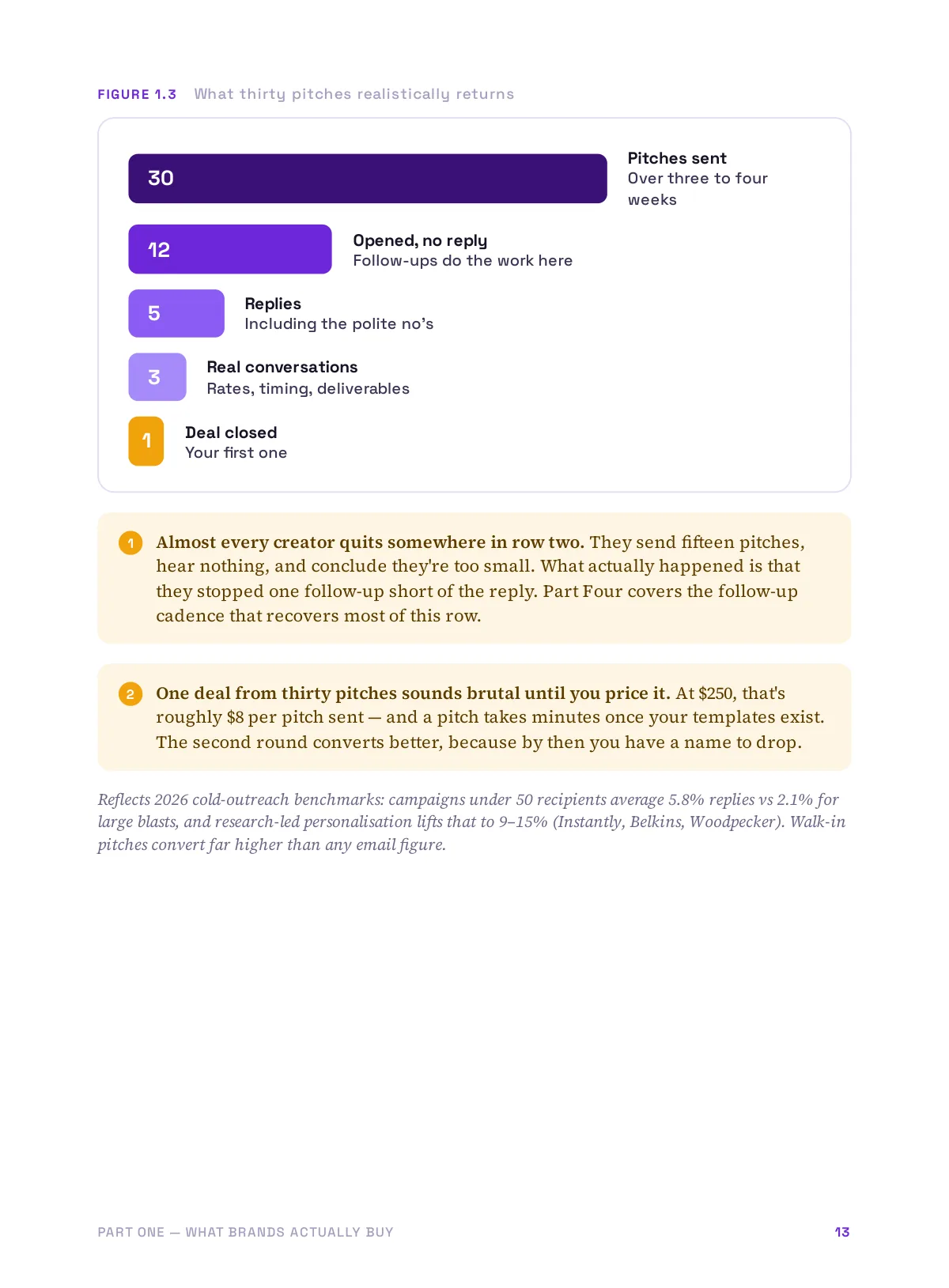
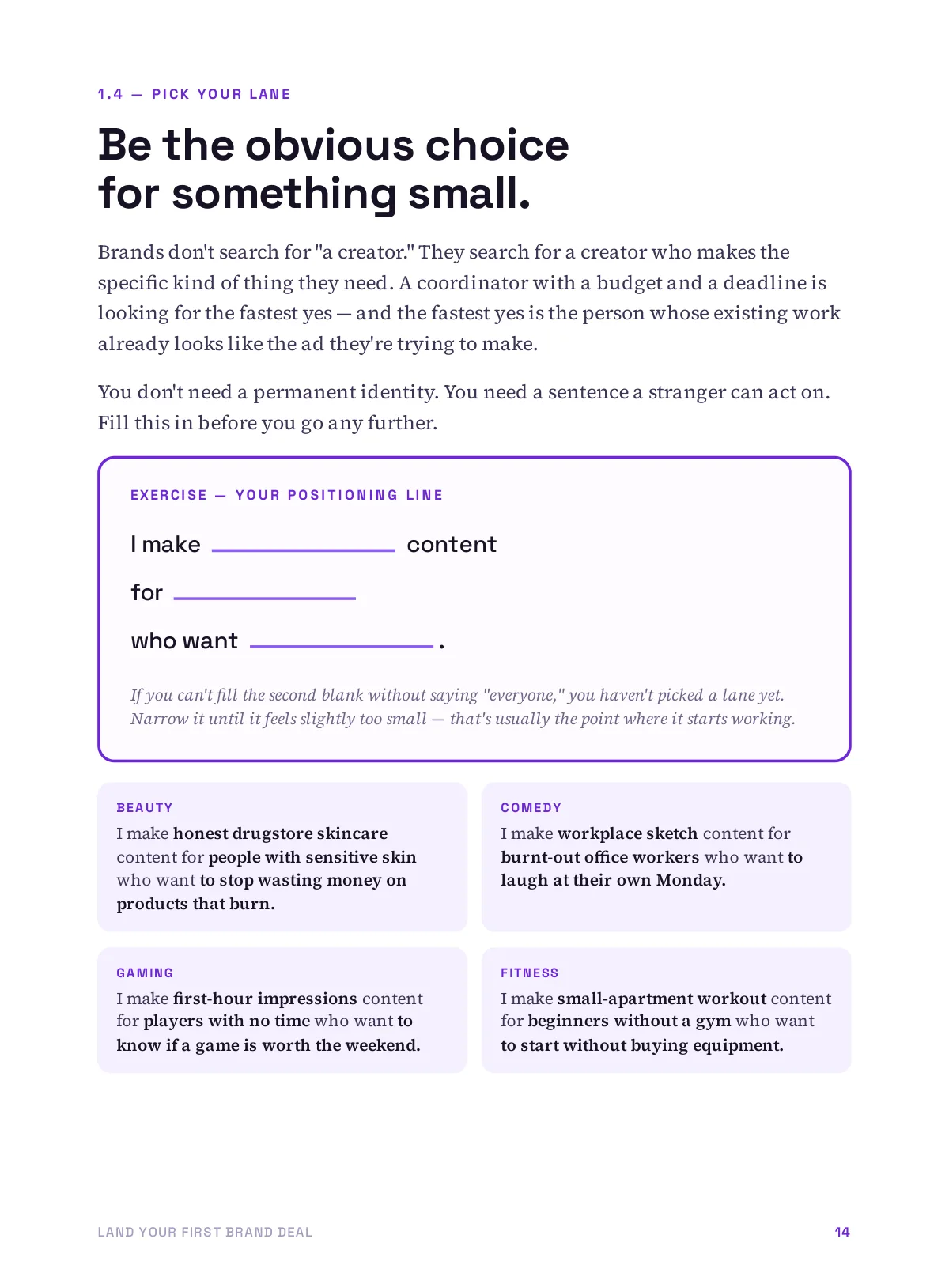
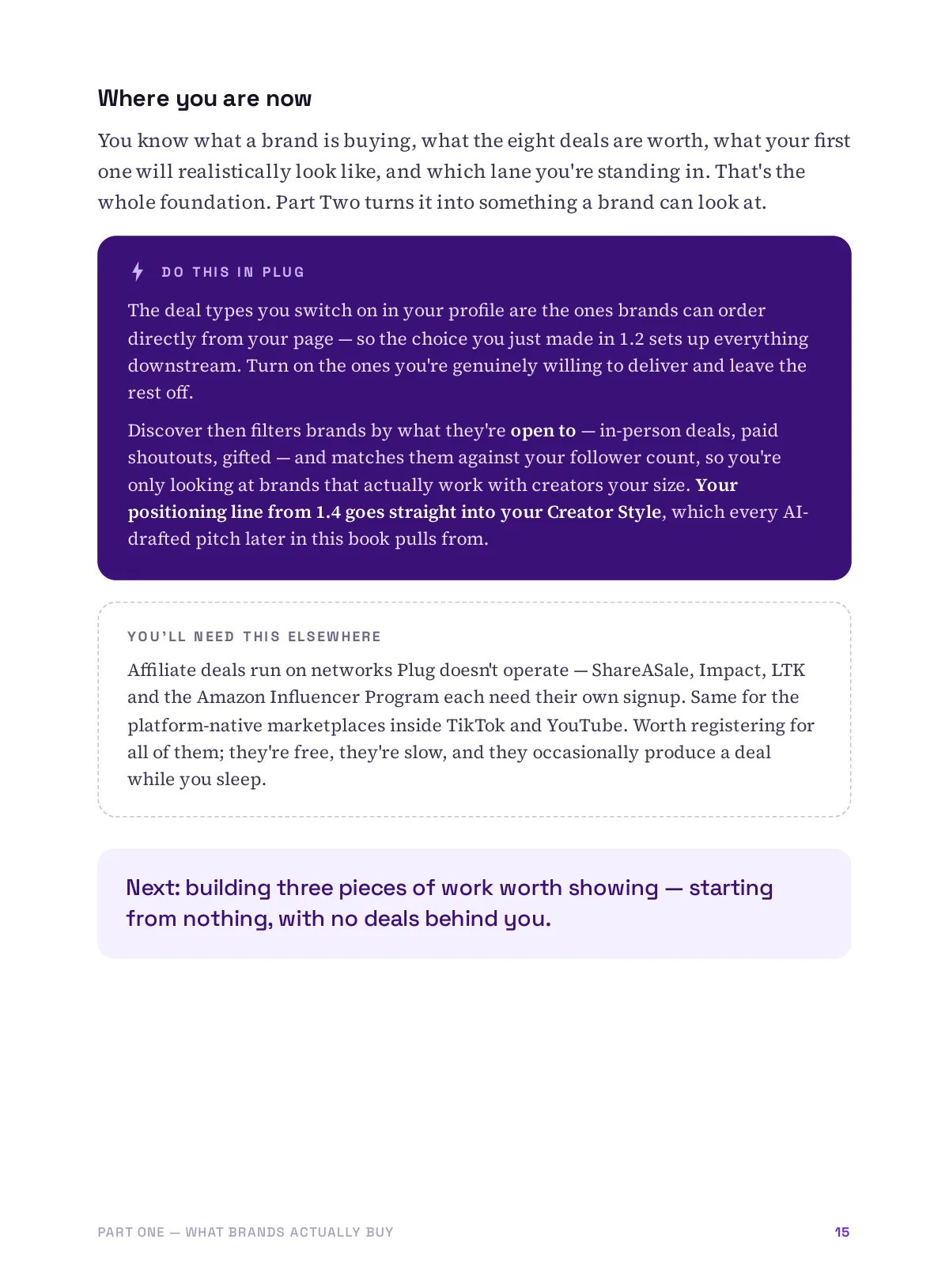
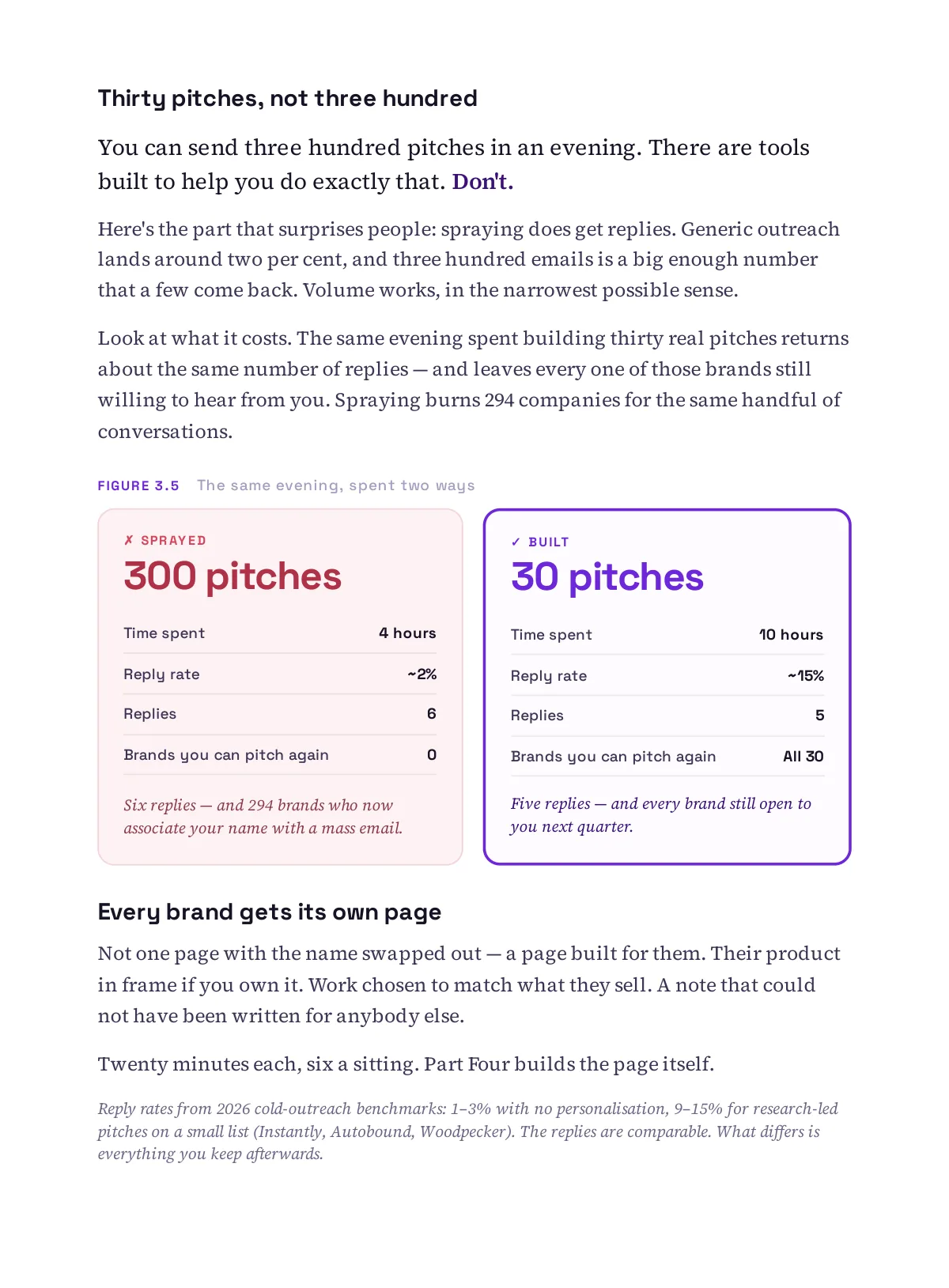
Part one — the landscape. Why creators under 10K get paid, the eight deal types and which four you will actually meet first, and an honest funnel: what thirty pitches realistically returns.
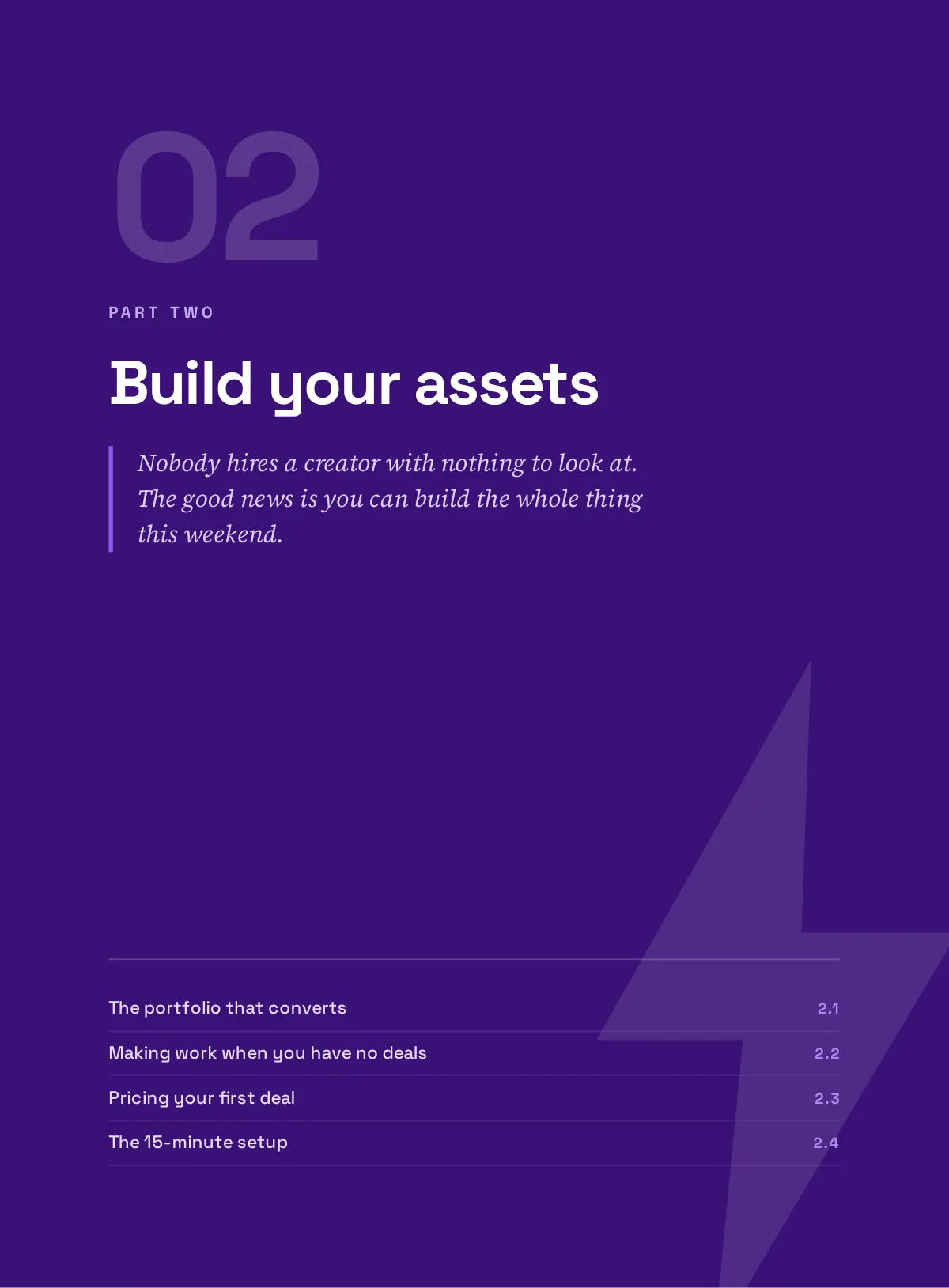
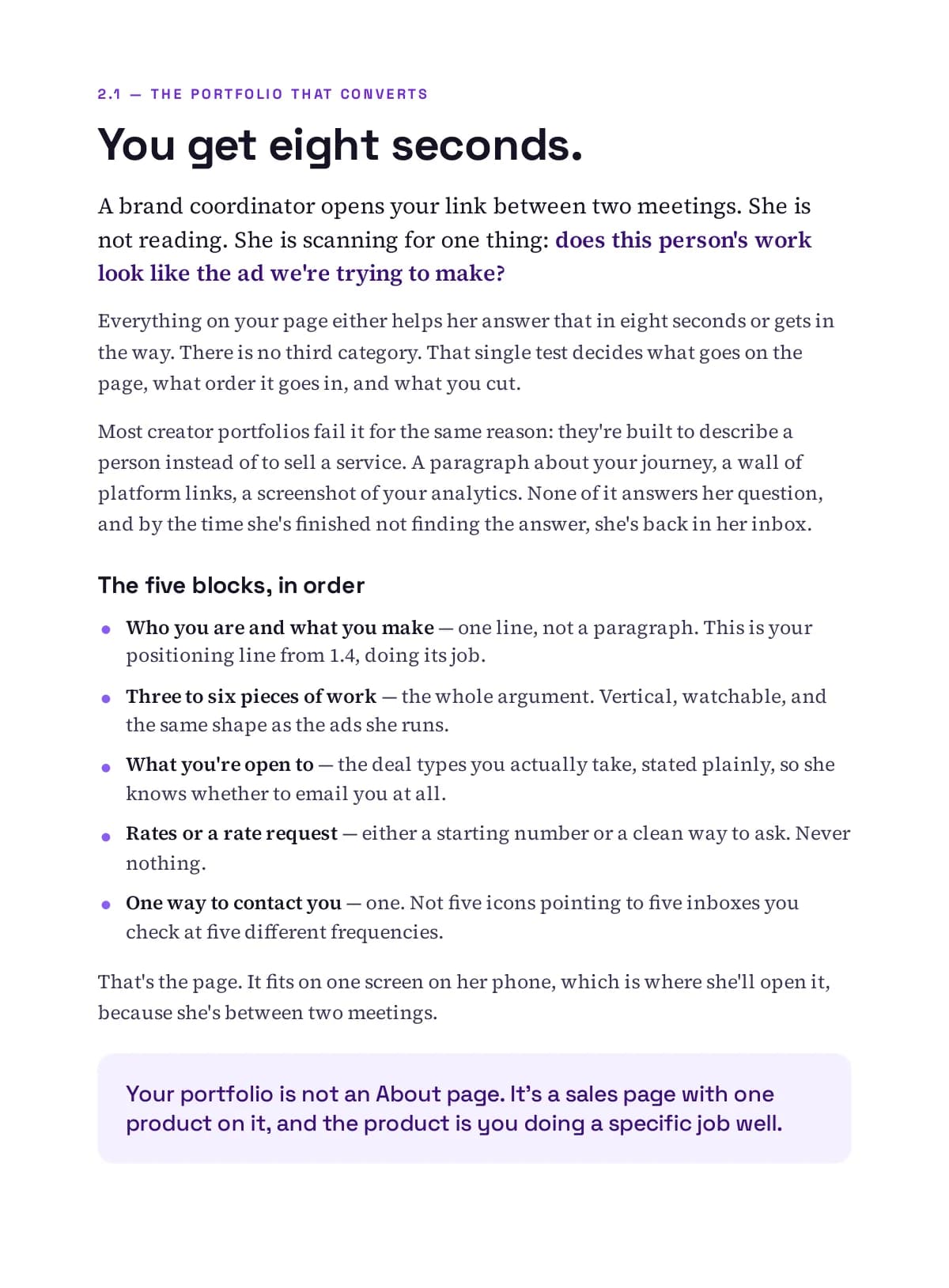
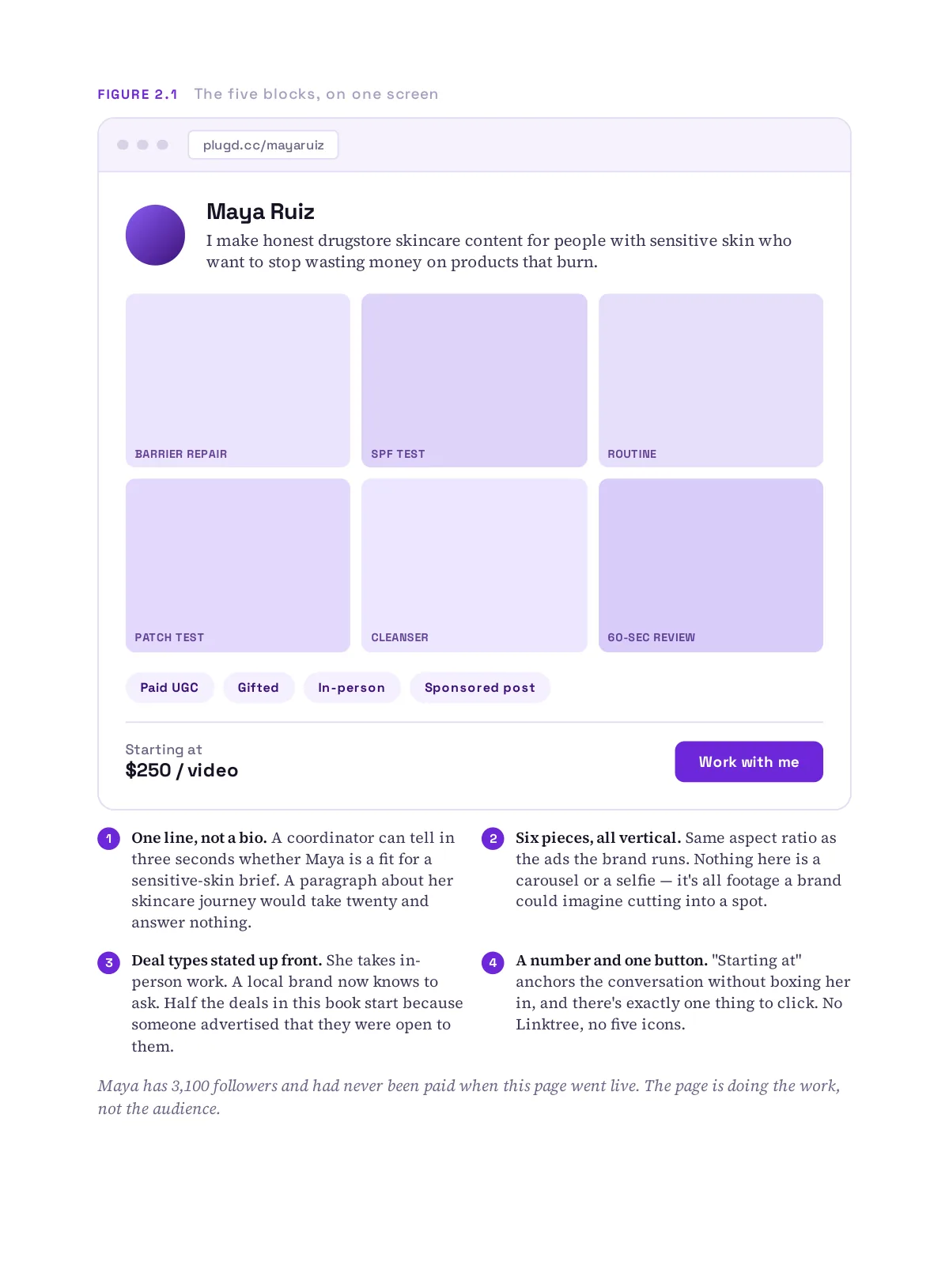
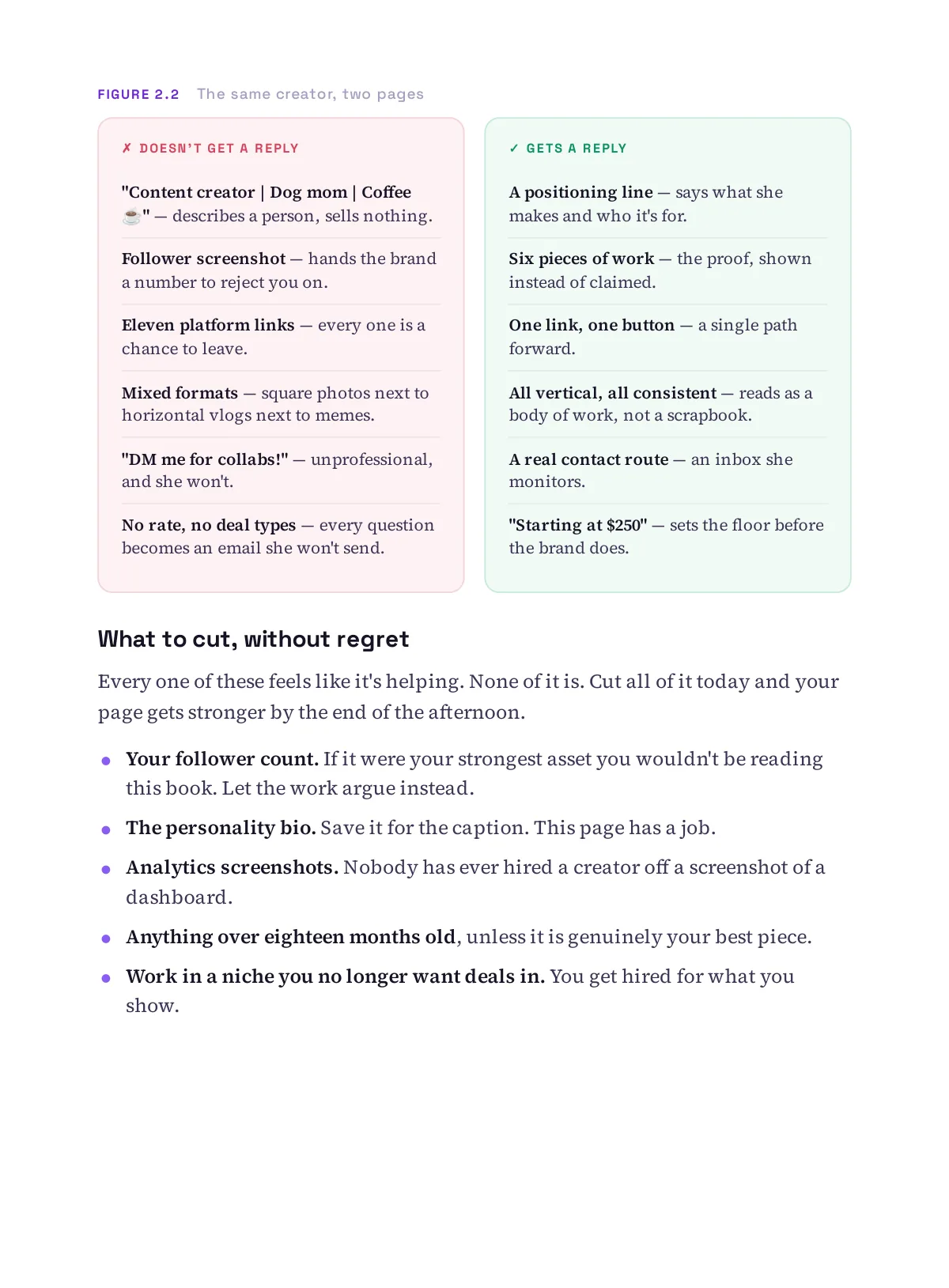
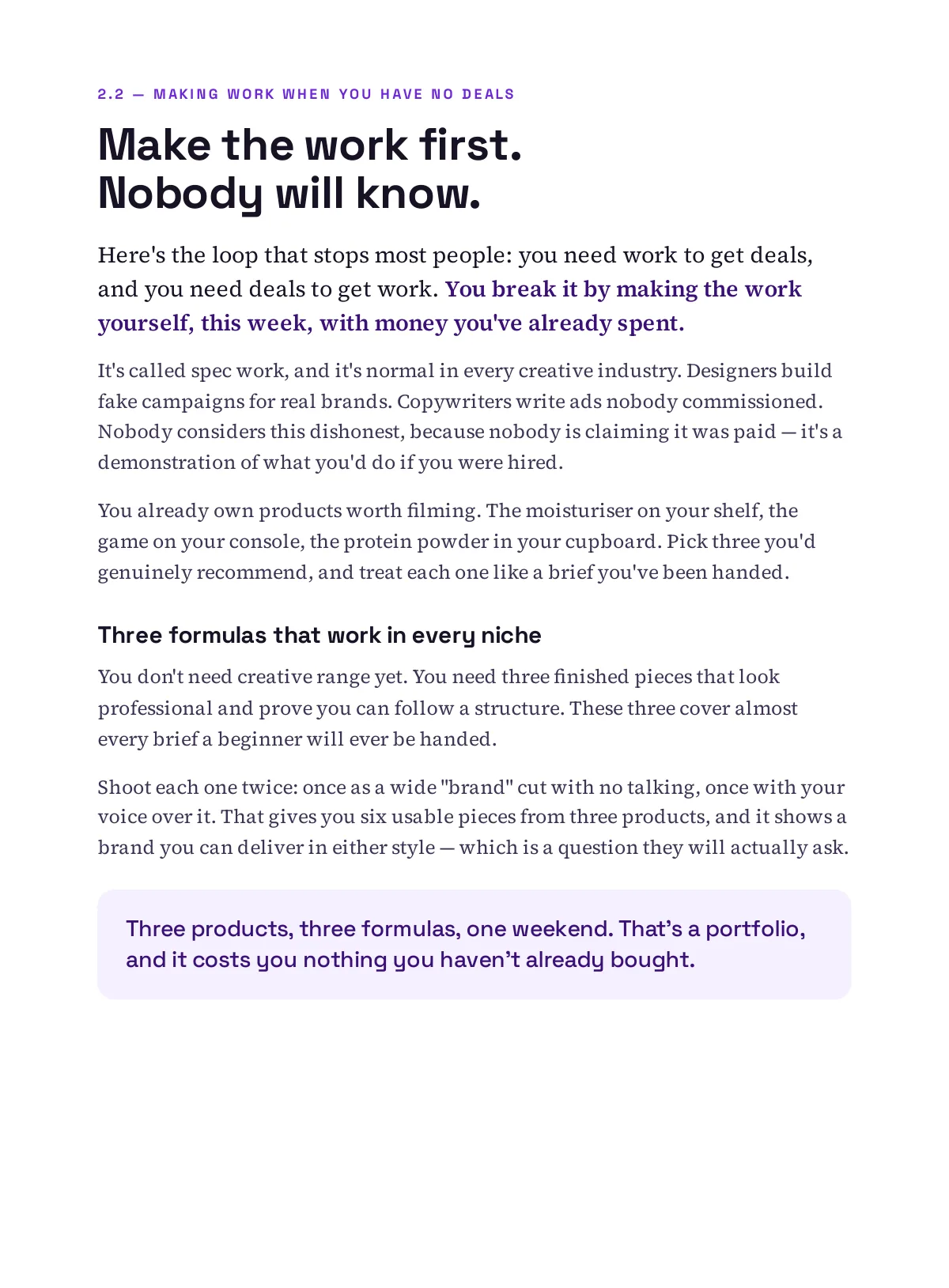
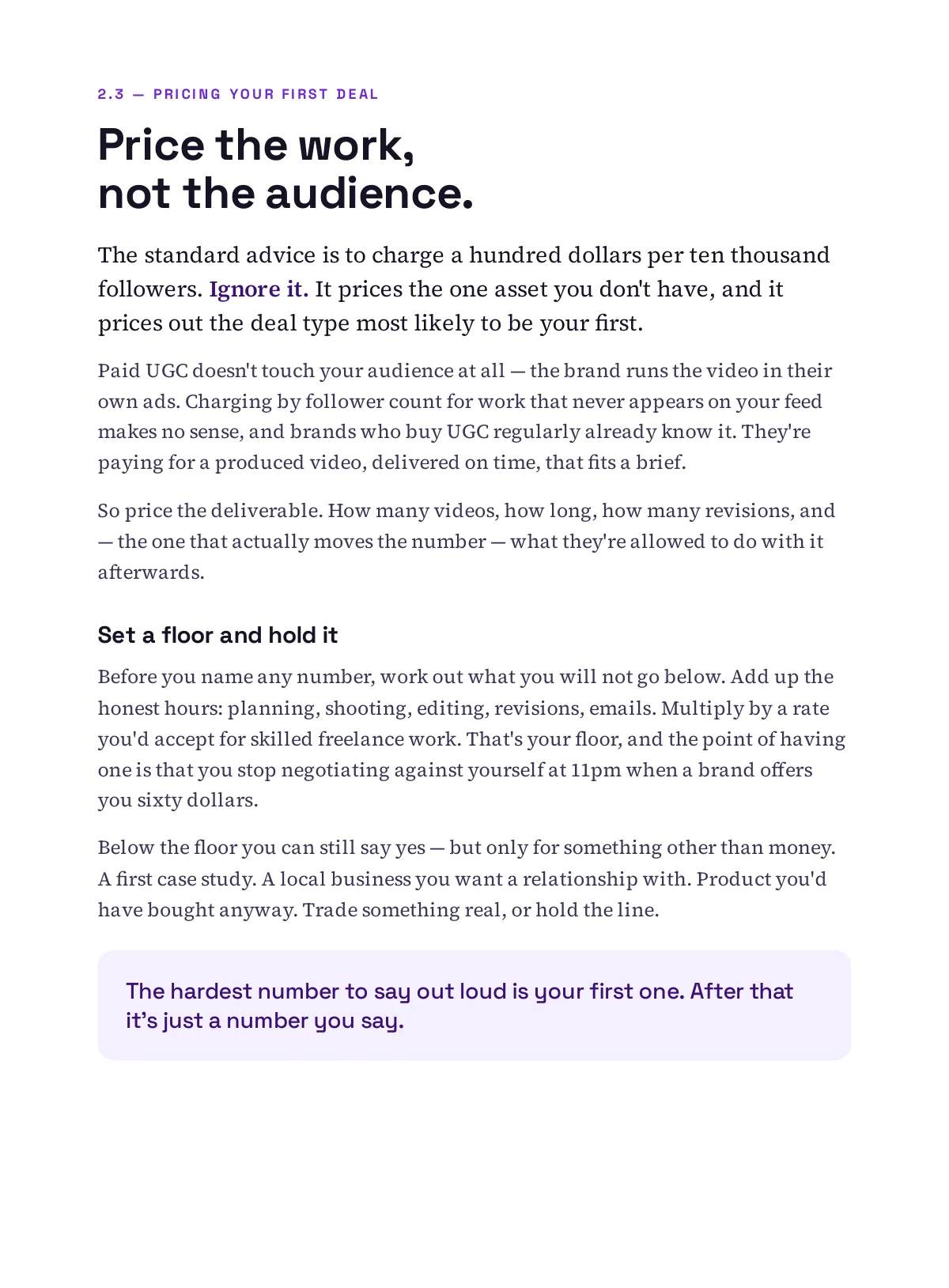
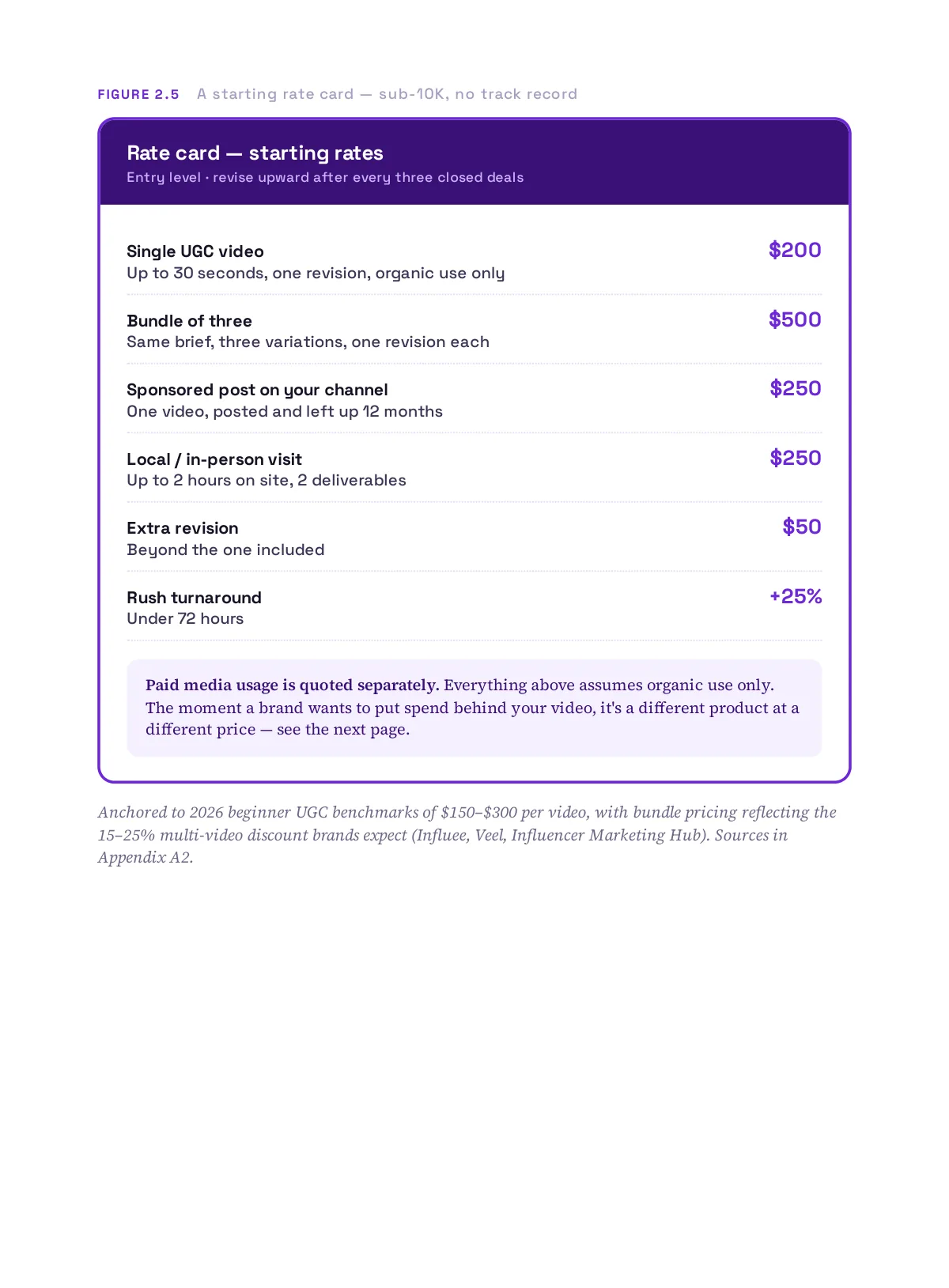
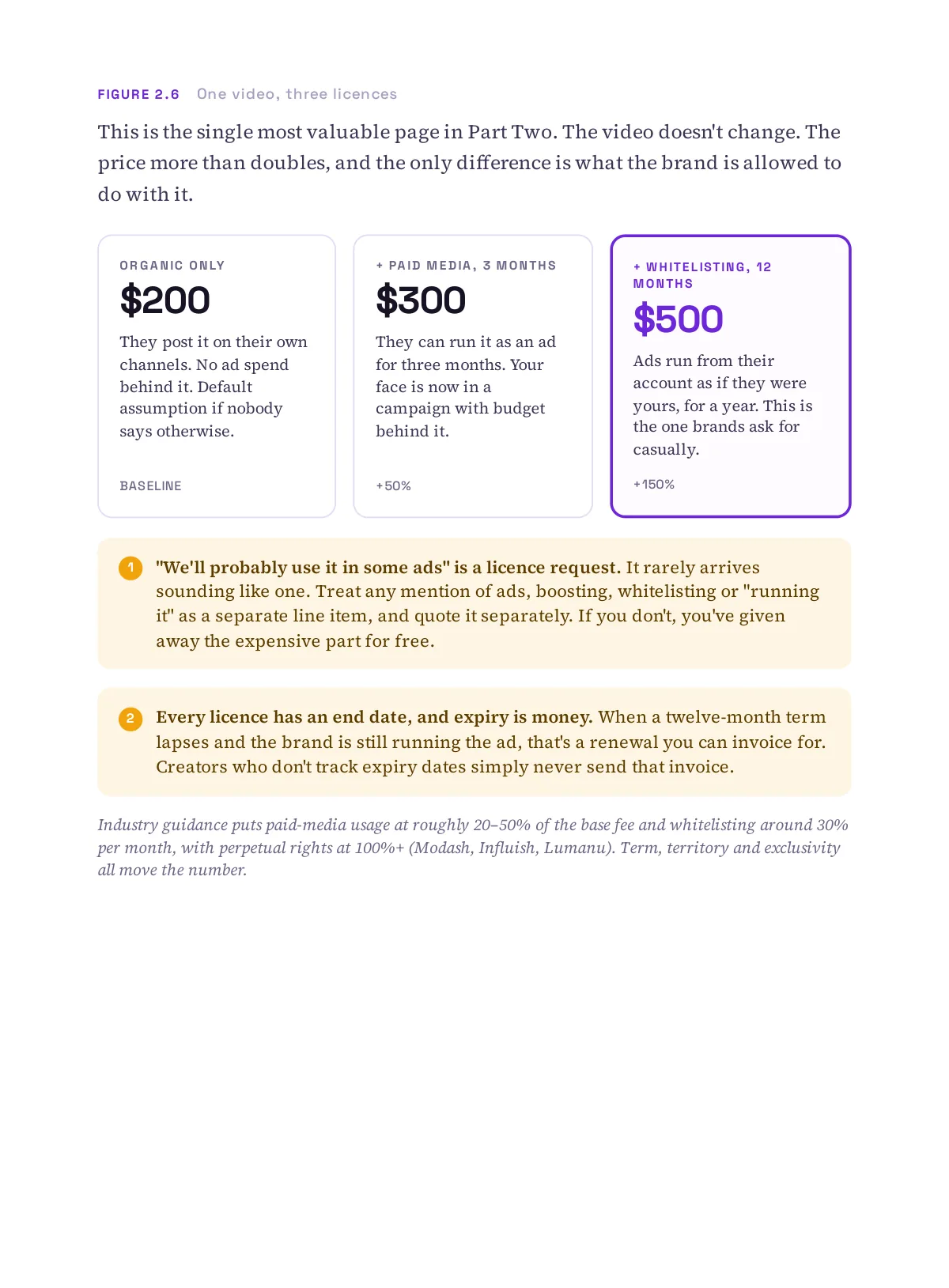
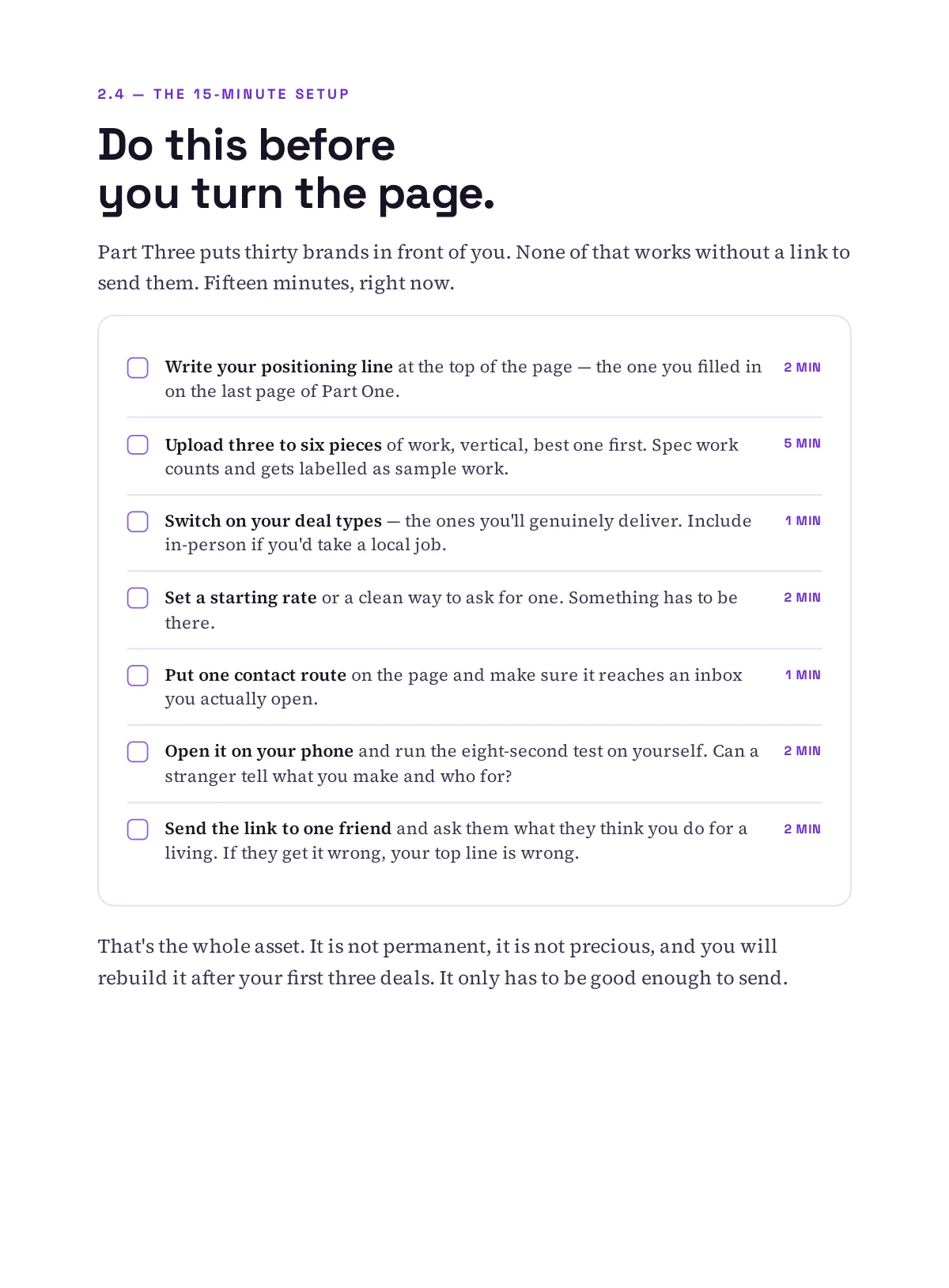
Part two — what you send. The five blocks of a portfolio that converts, how to make work when you have no deals yet, and how to price your first deal without guessing.
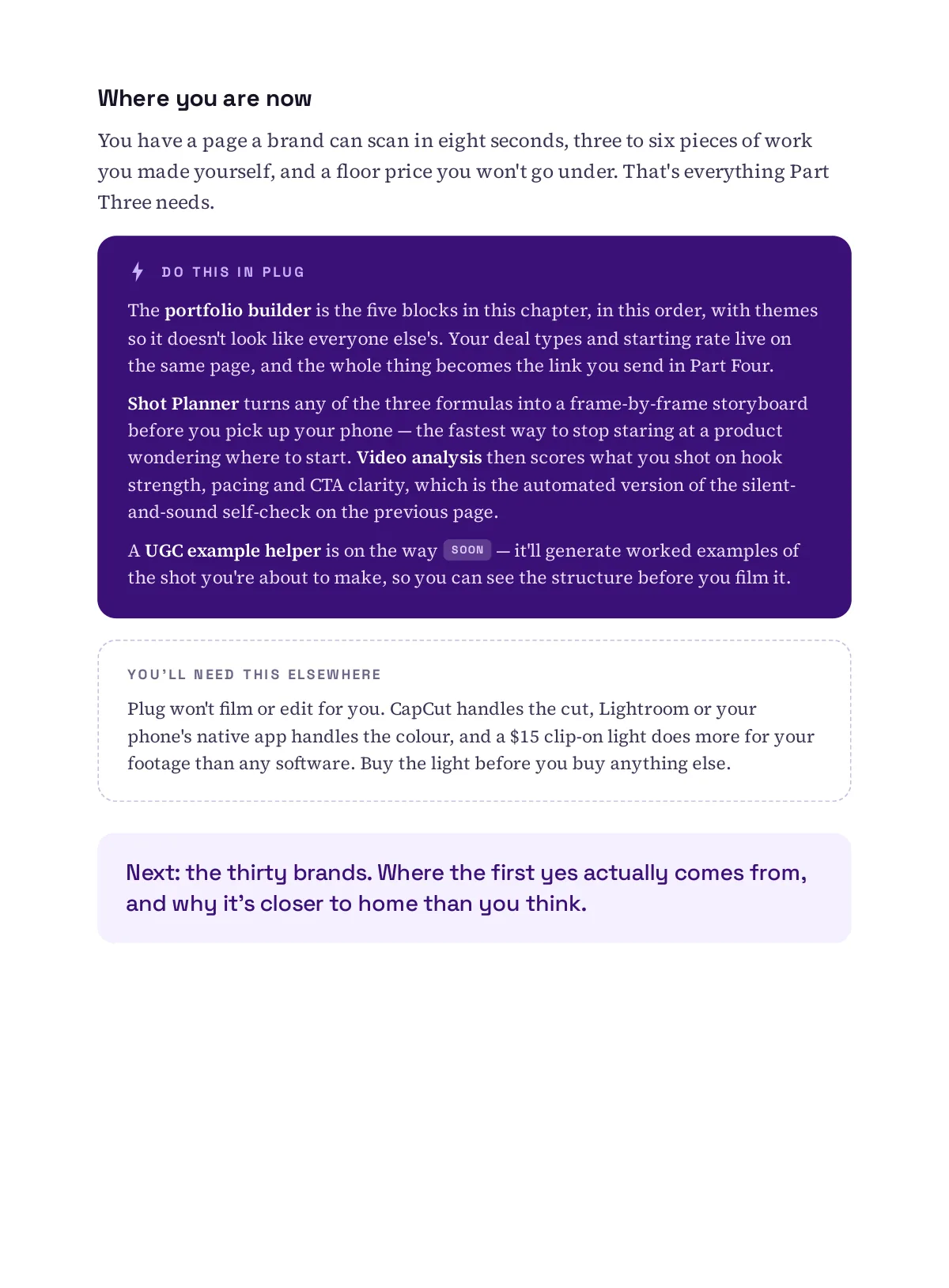
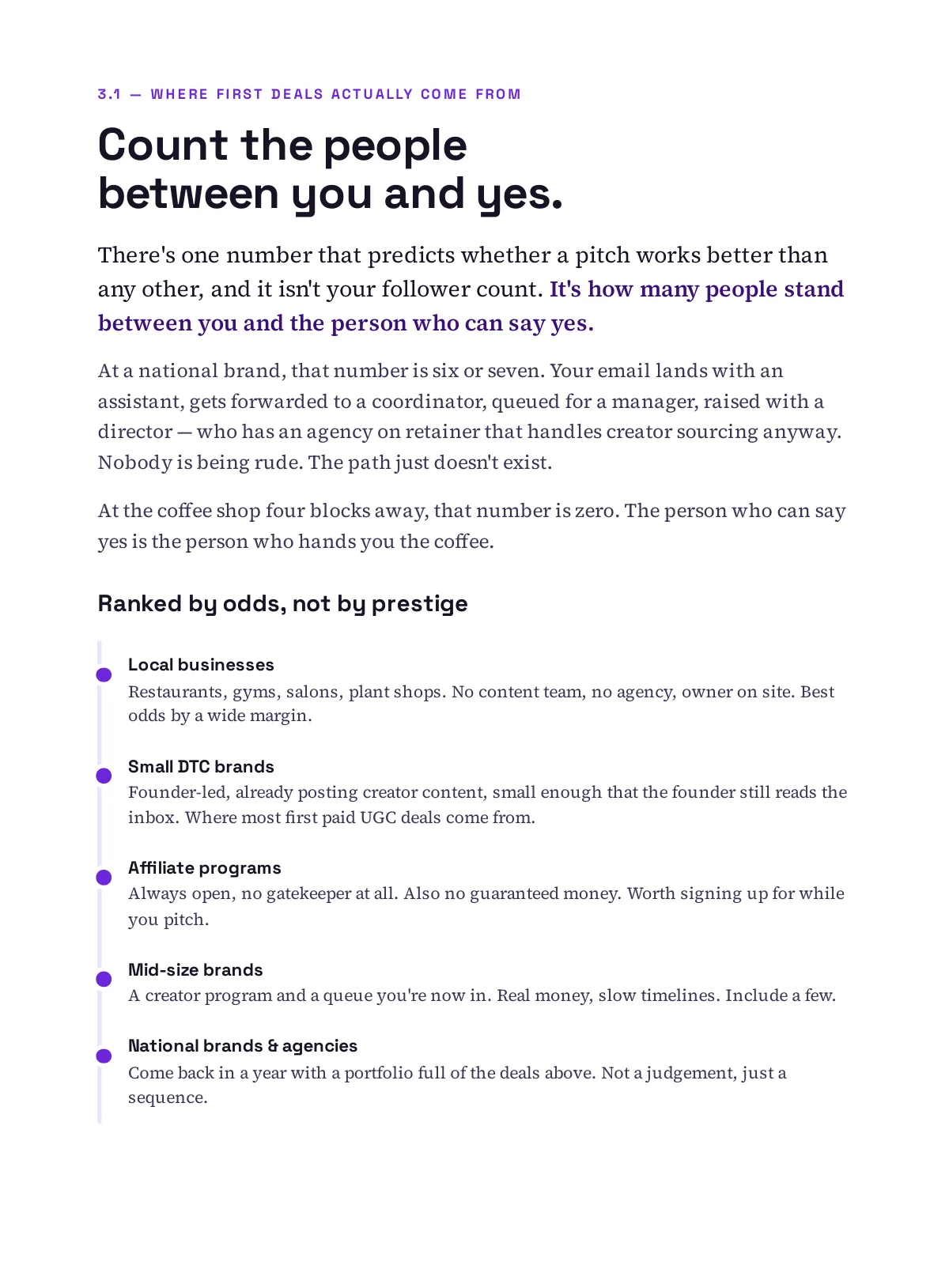
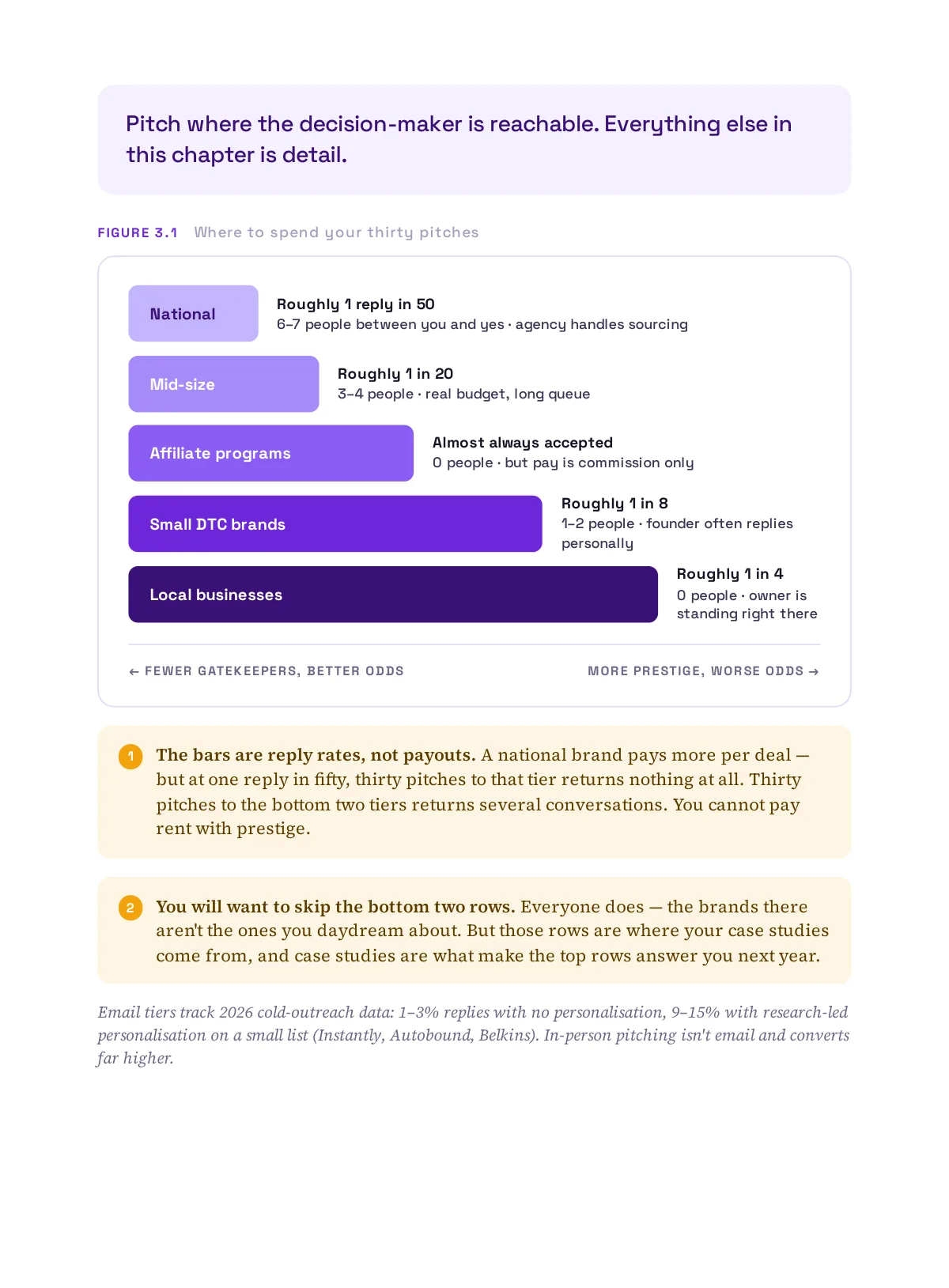
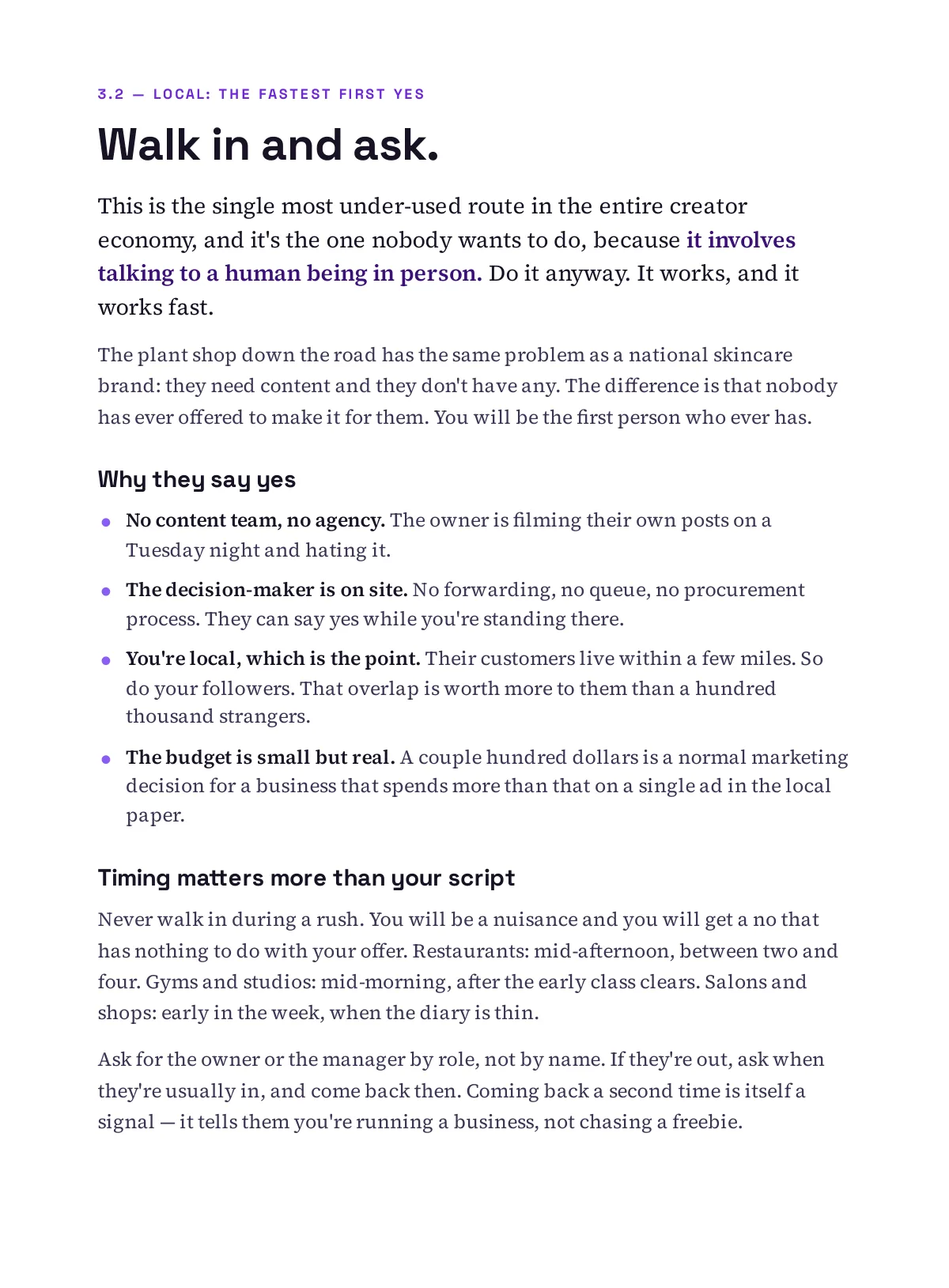
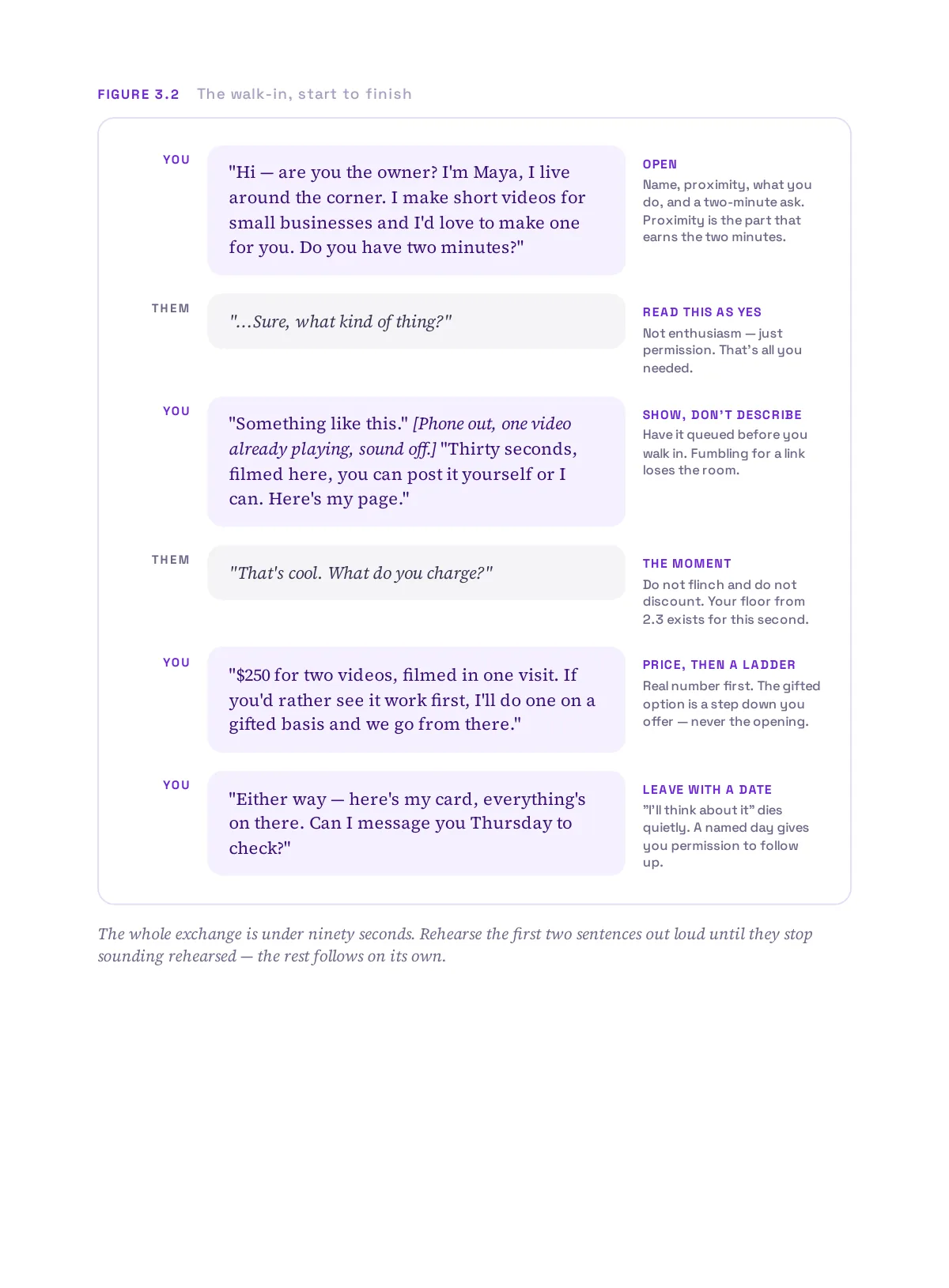
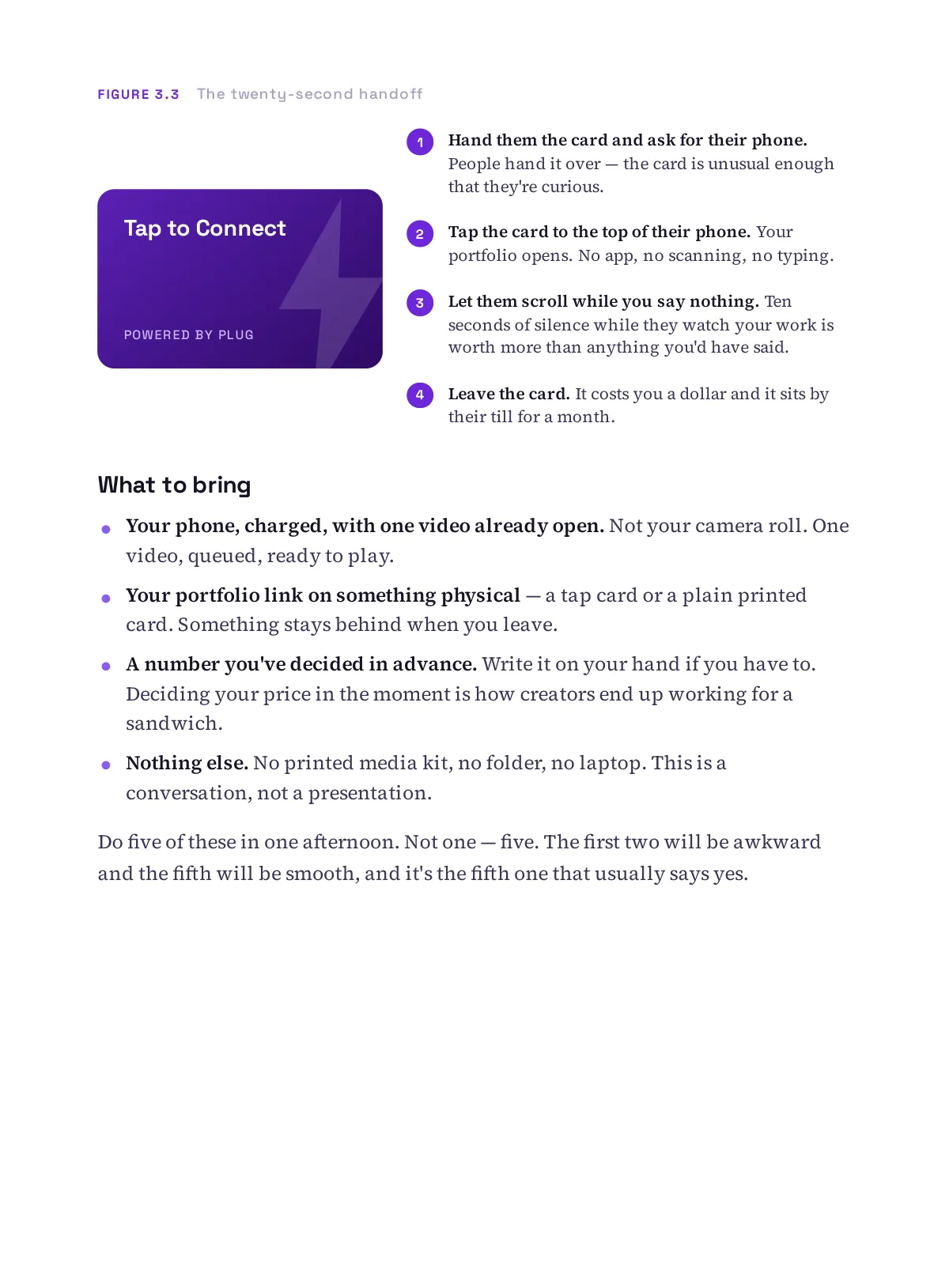
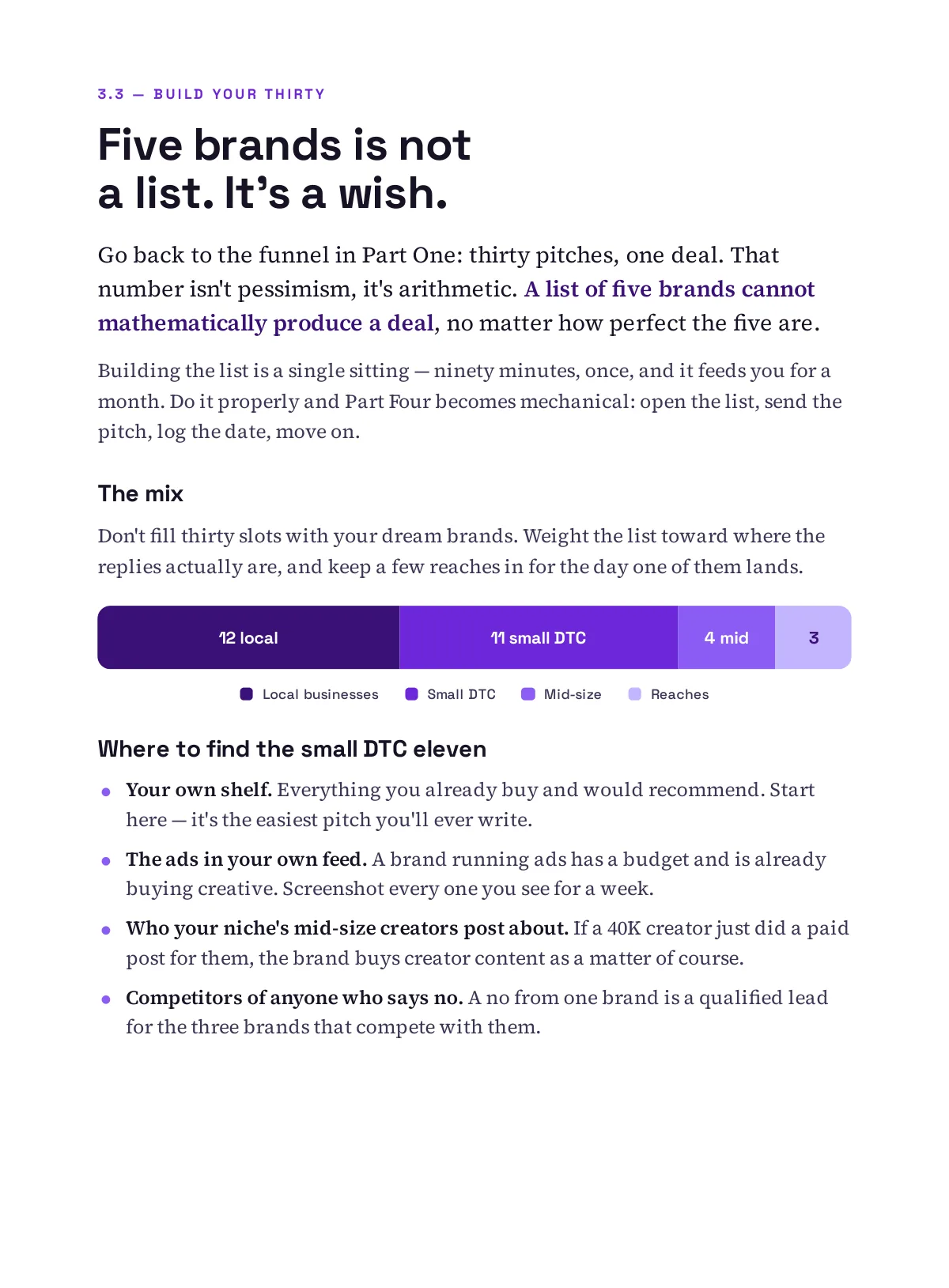
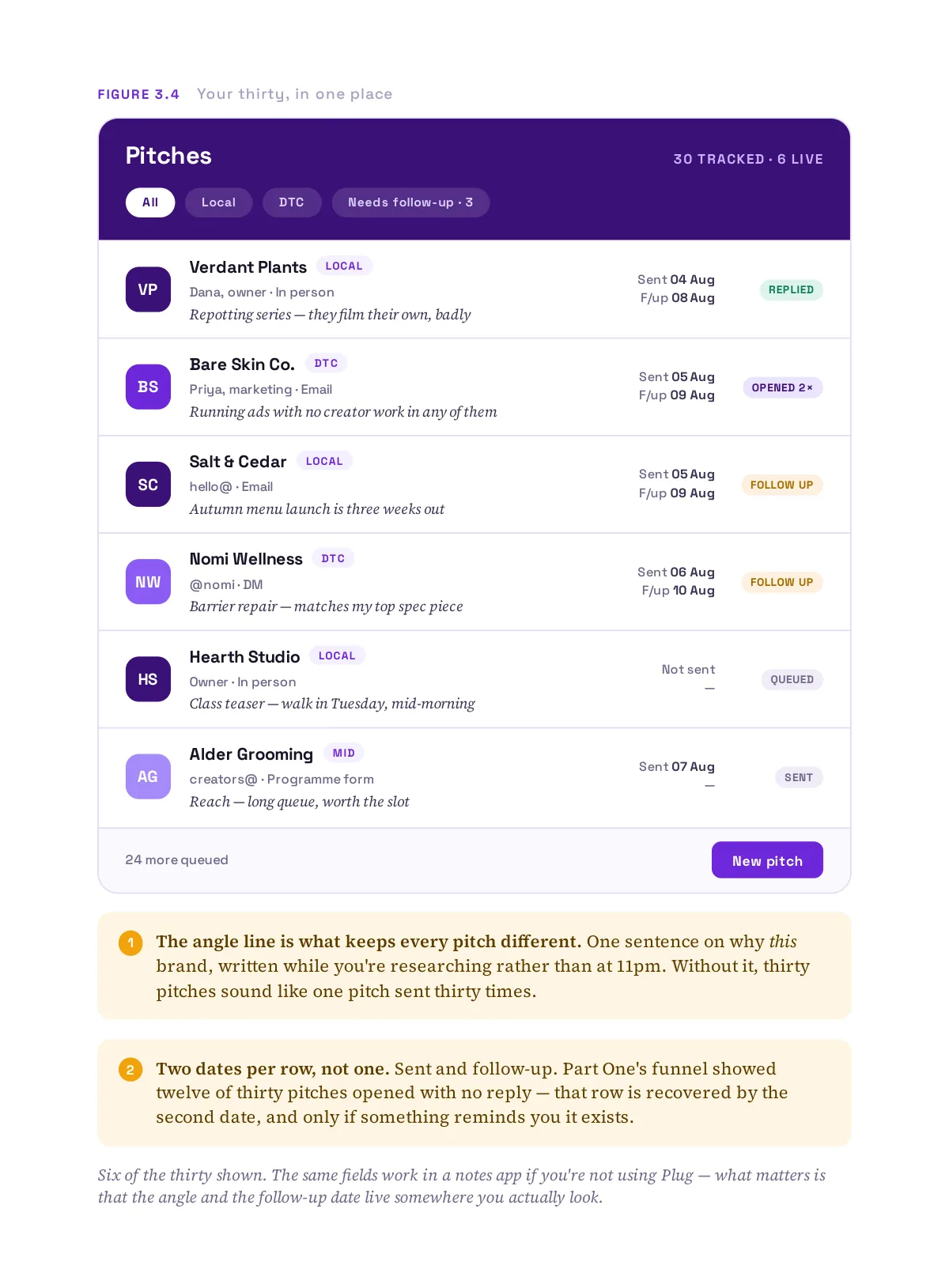
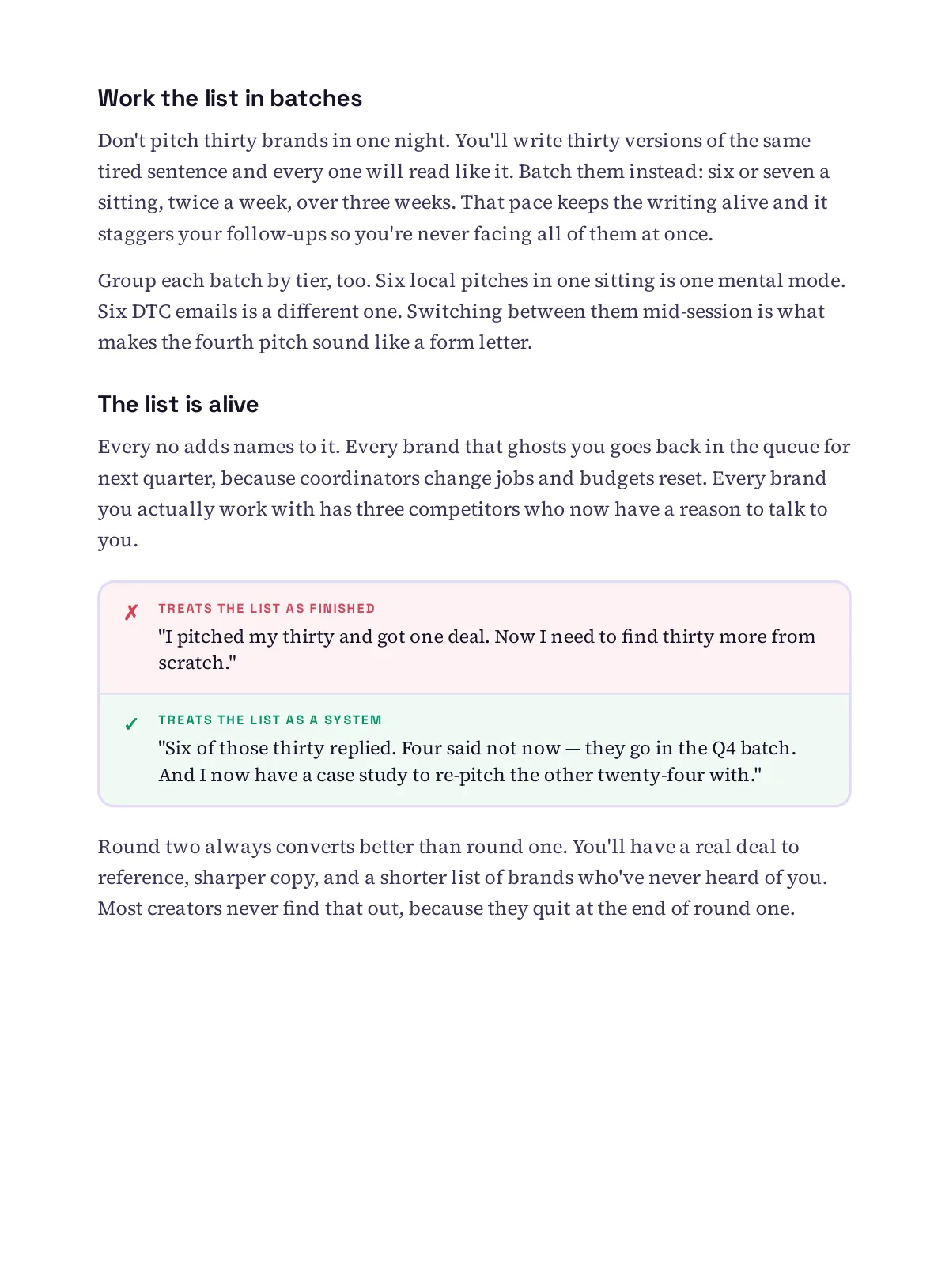
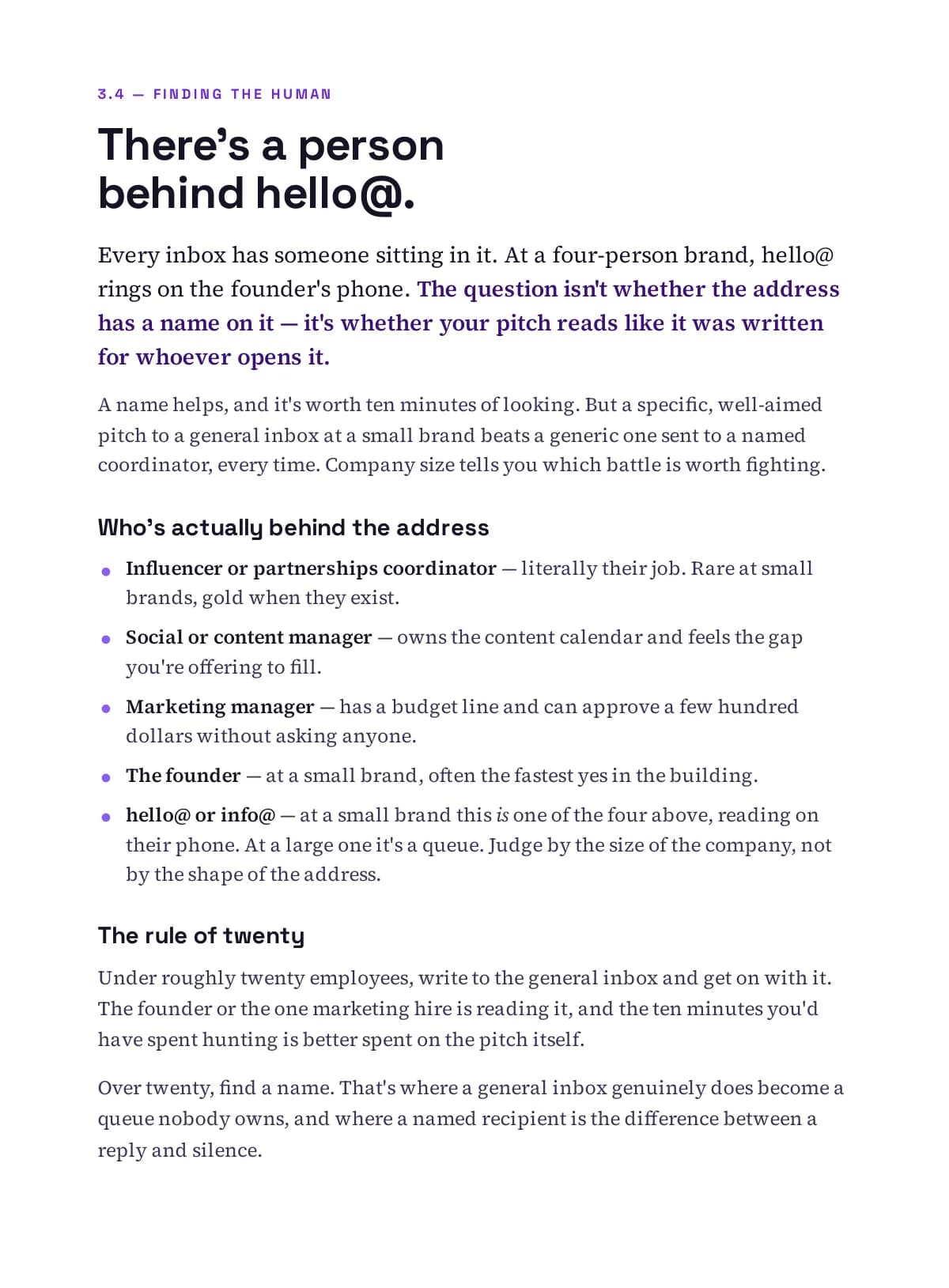
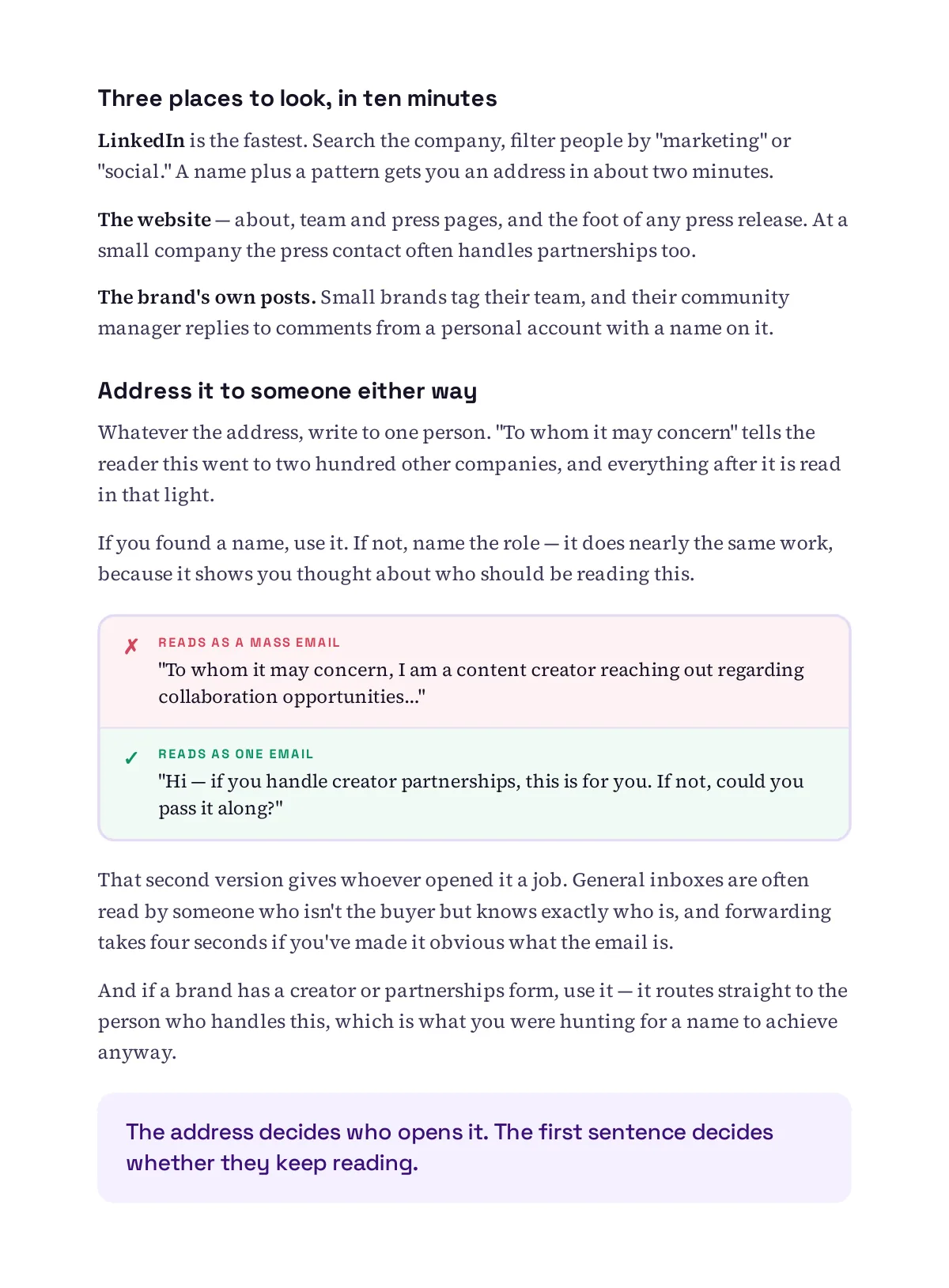
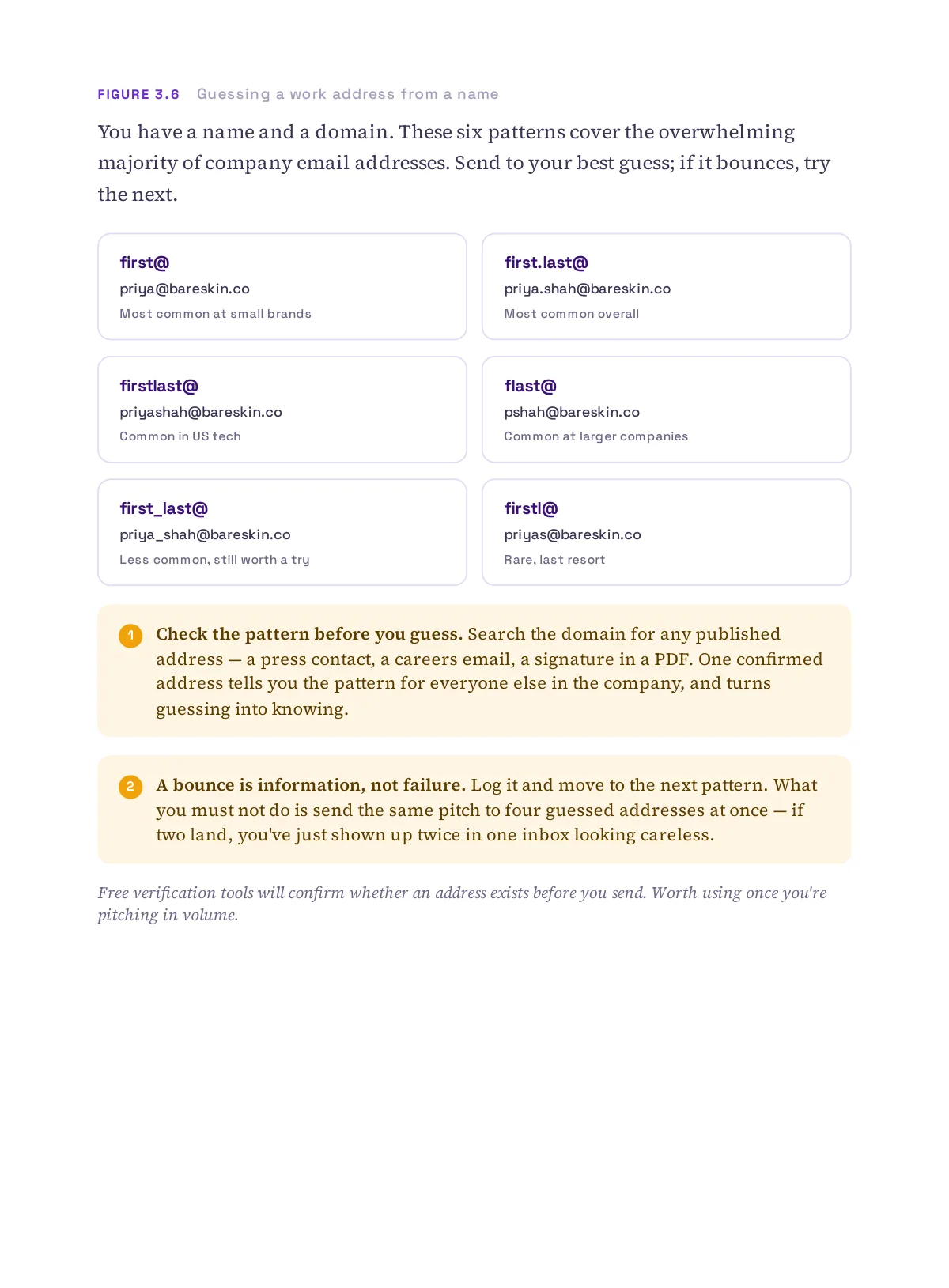
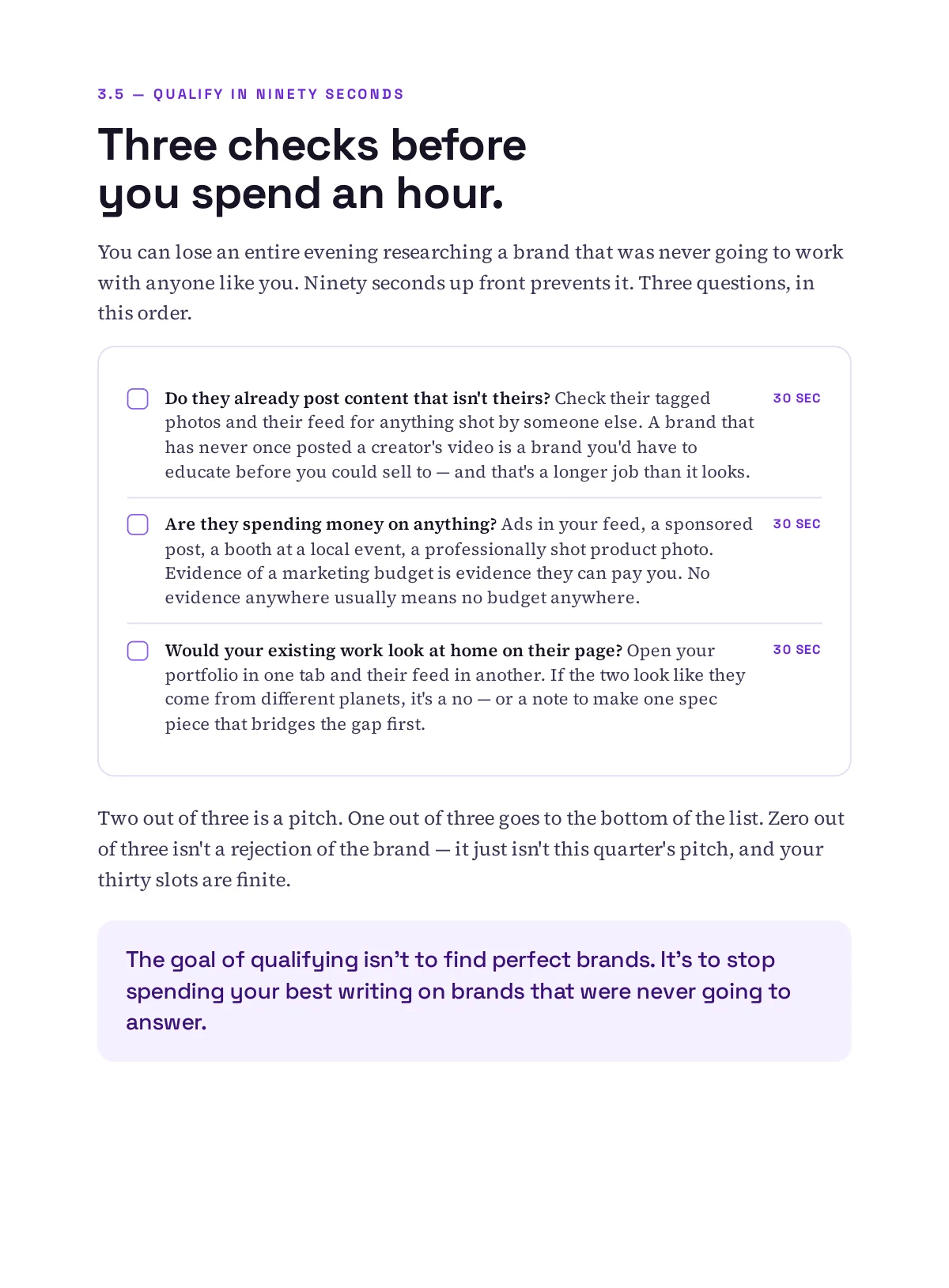
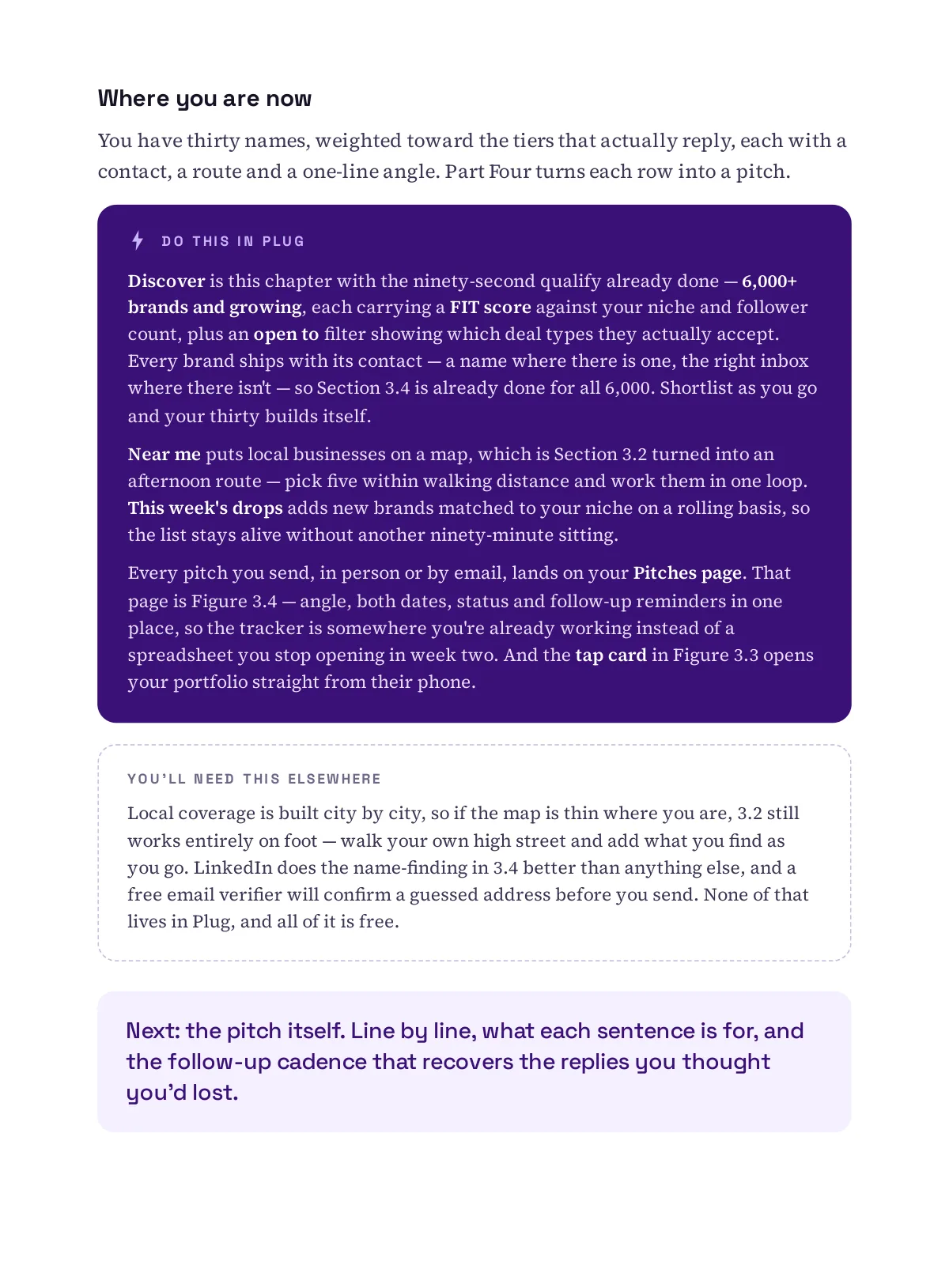
Part three — who you pitch. Where first deals actually come from, why local is the fastest first yes, how to build a list of thirty, how to find the real human behind a contact form, and how to qualify a brand in ninety seconds.
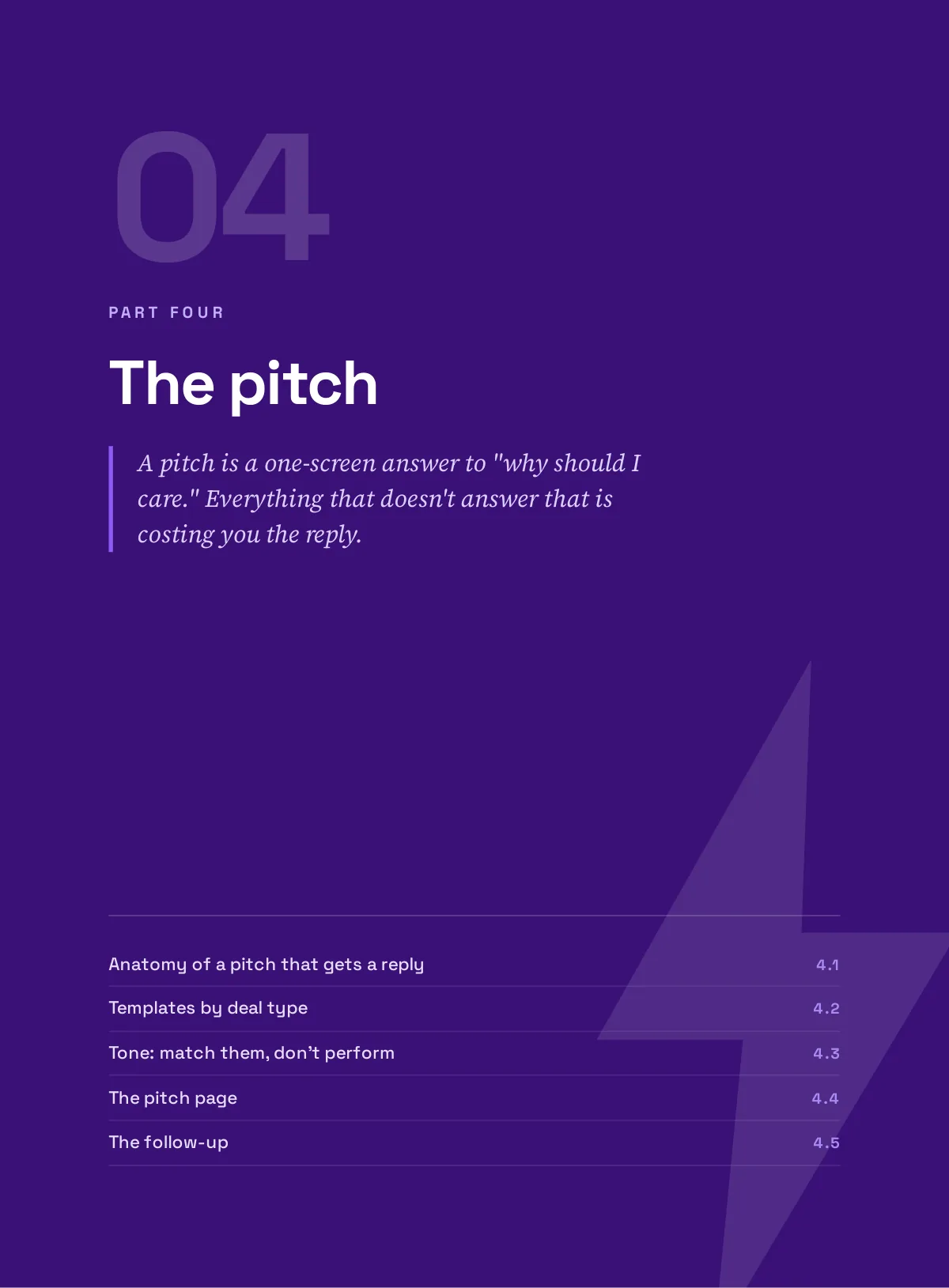
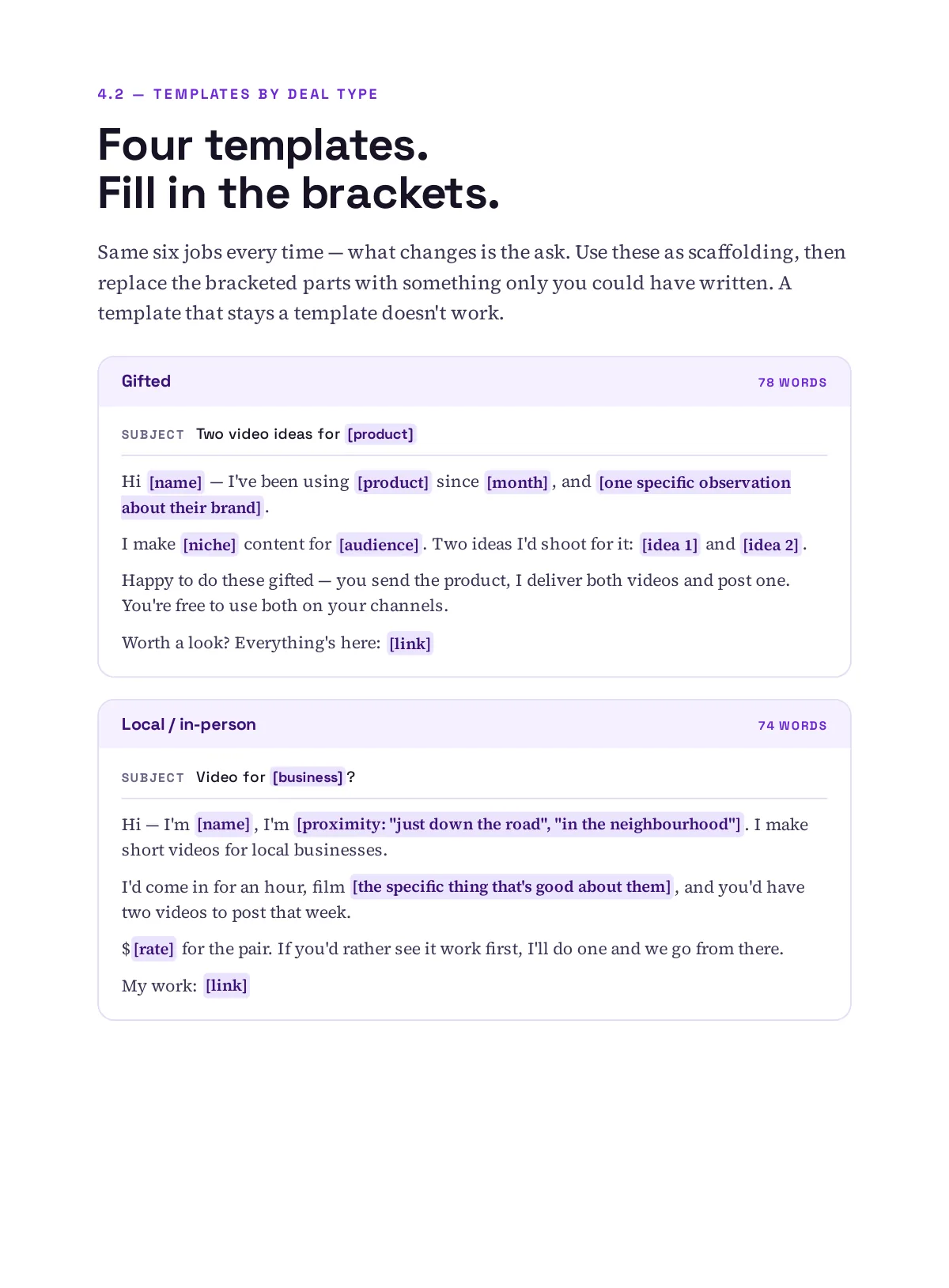
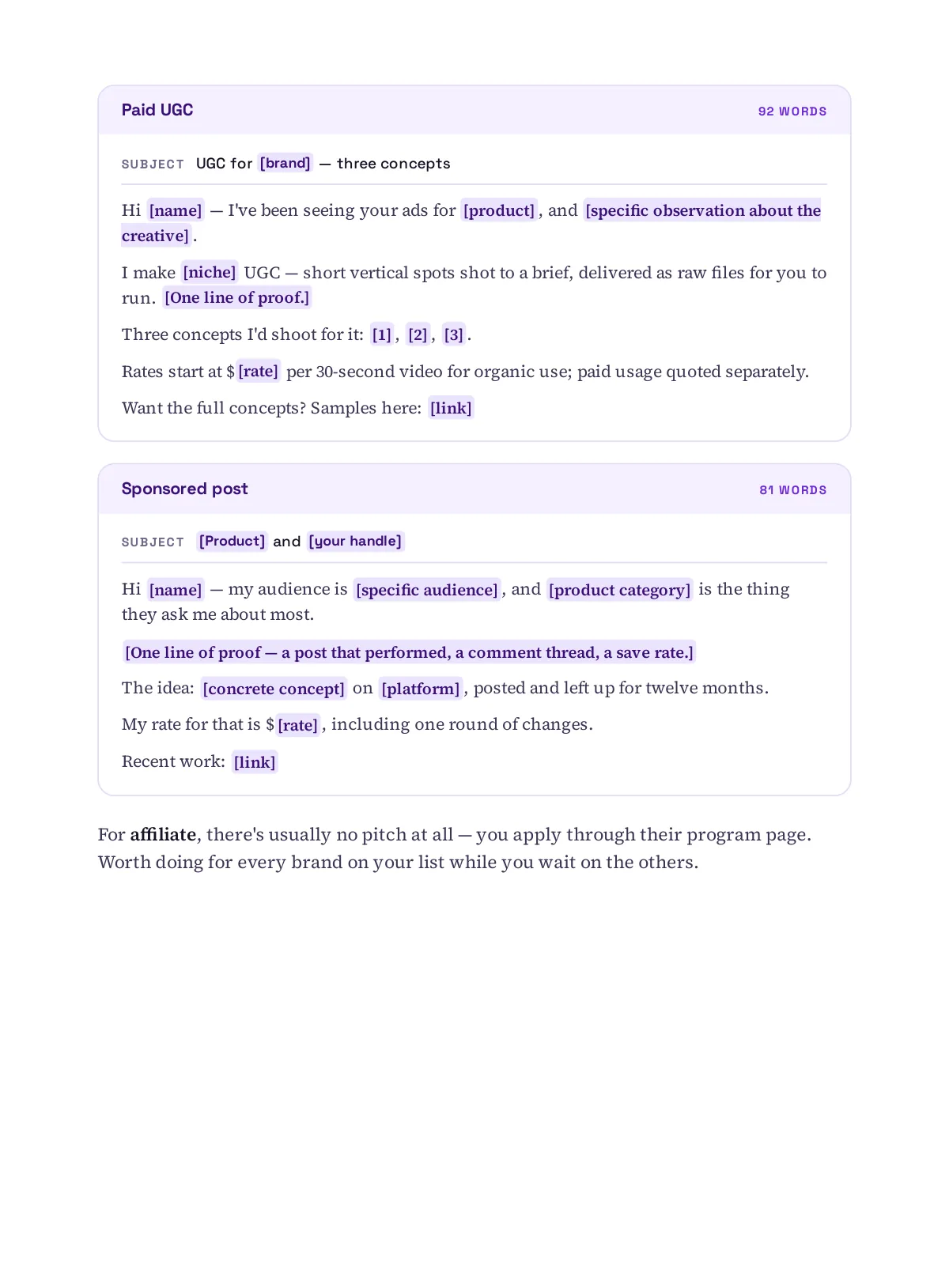
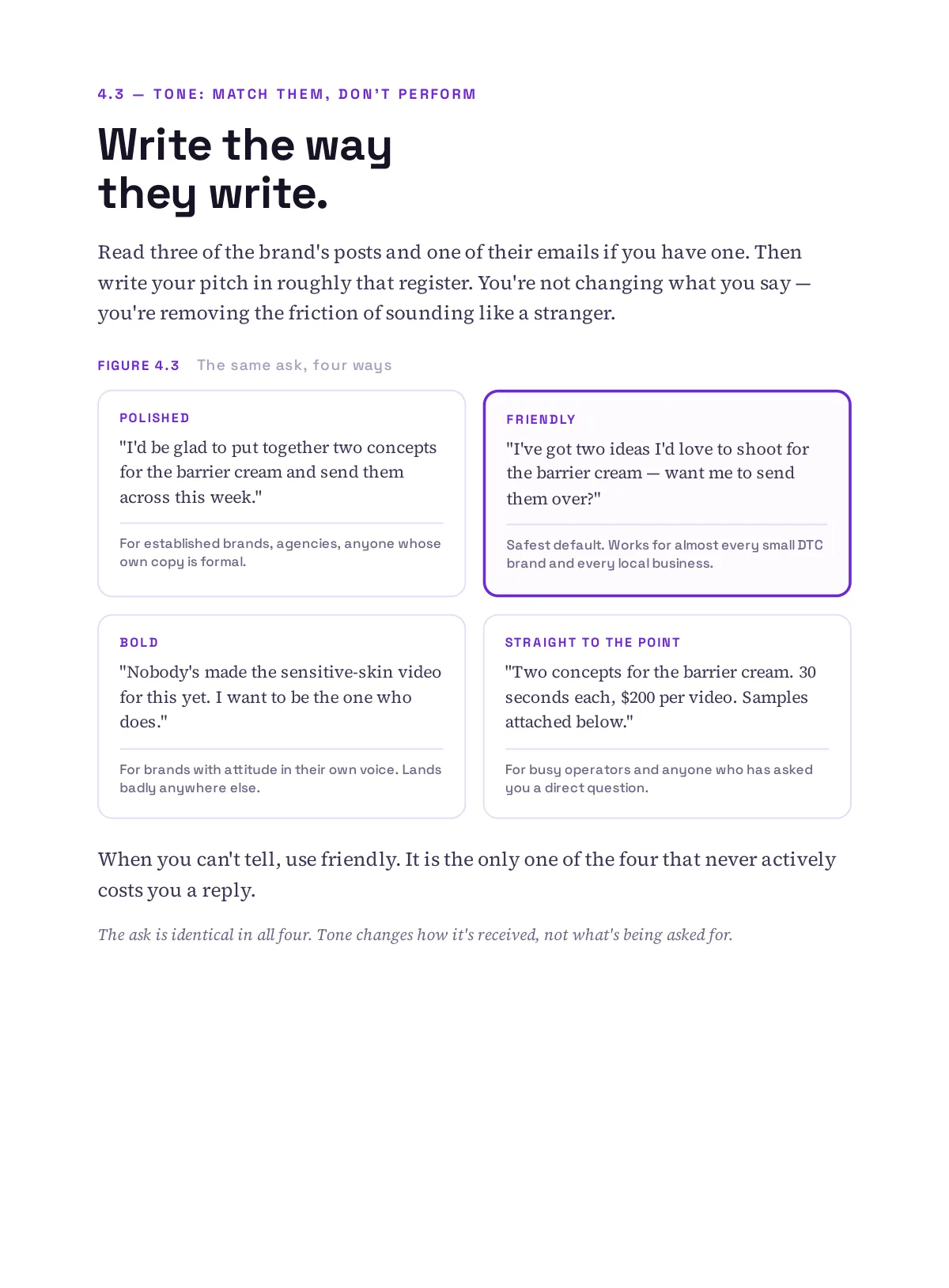
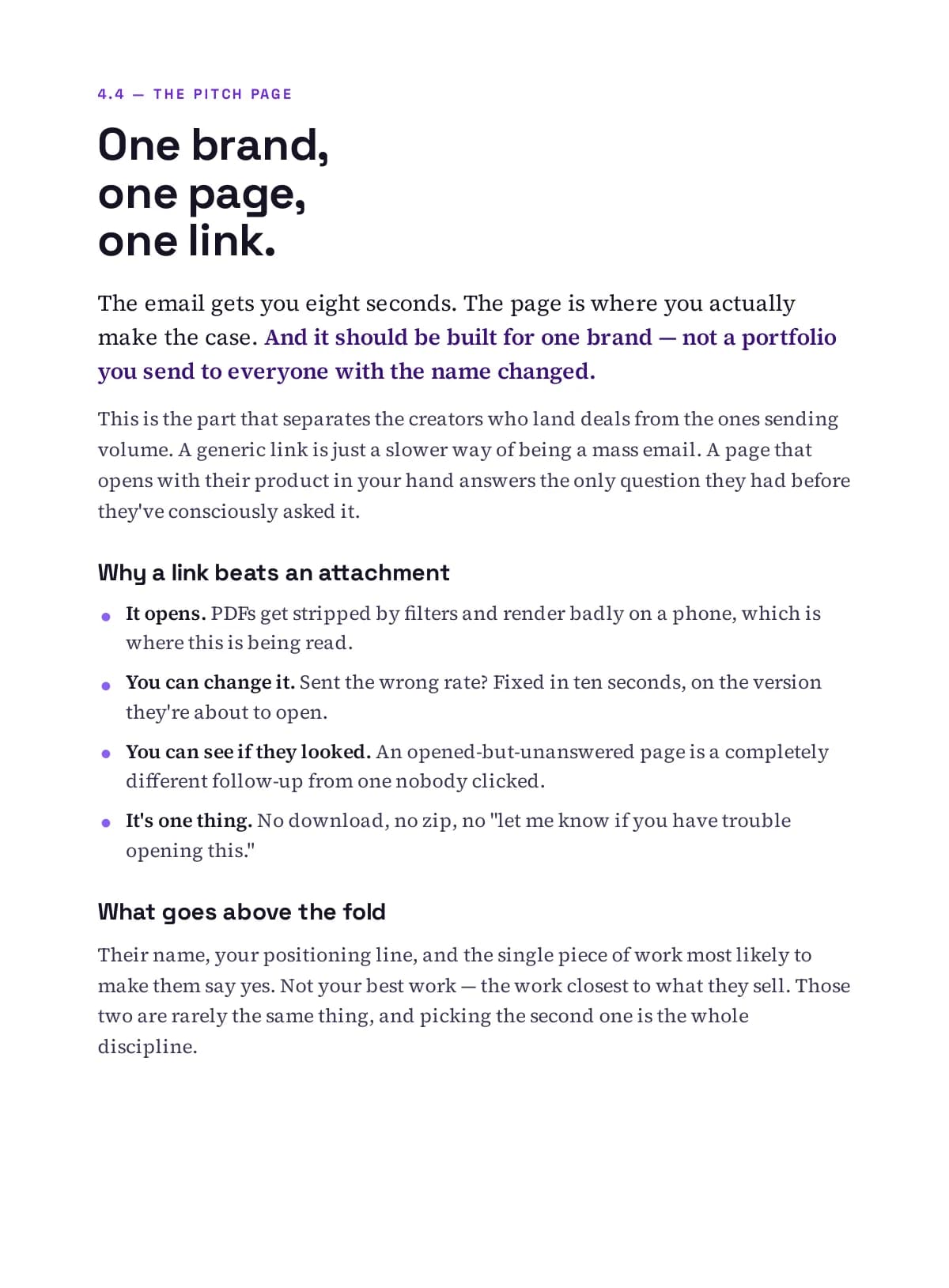
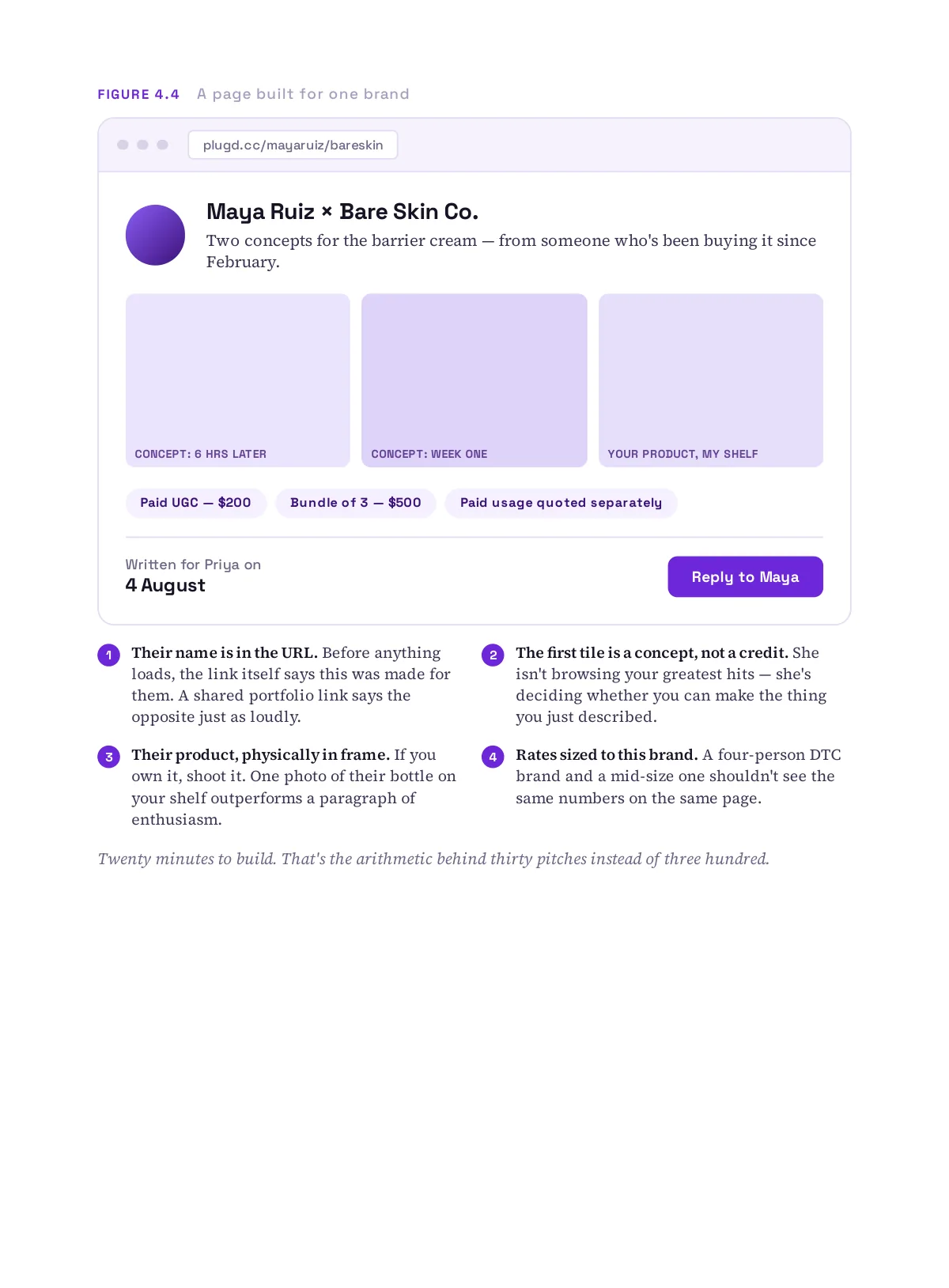
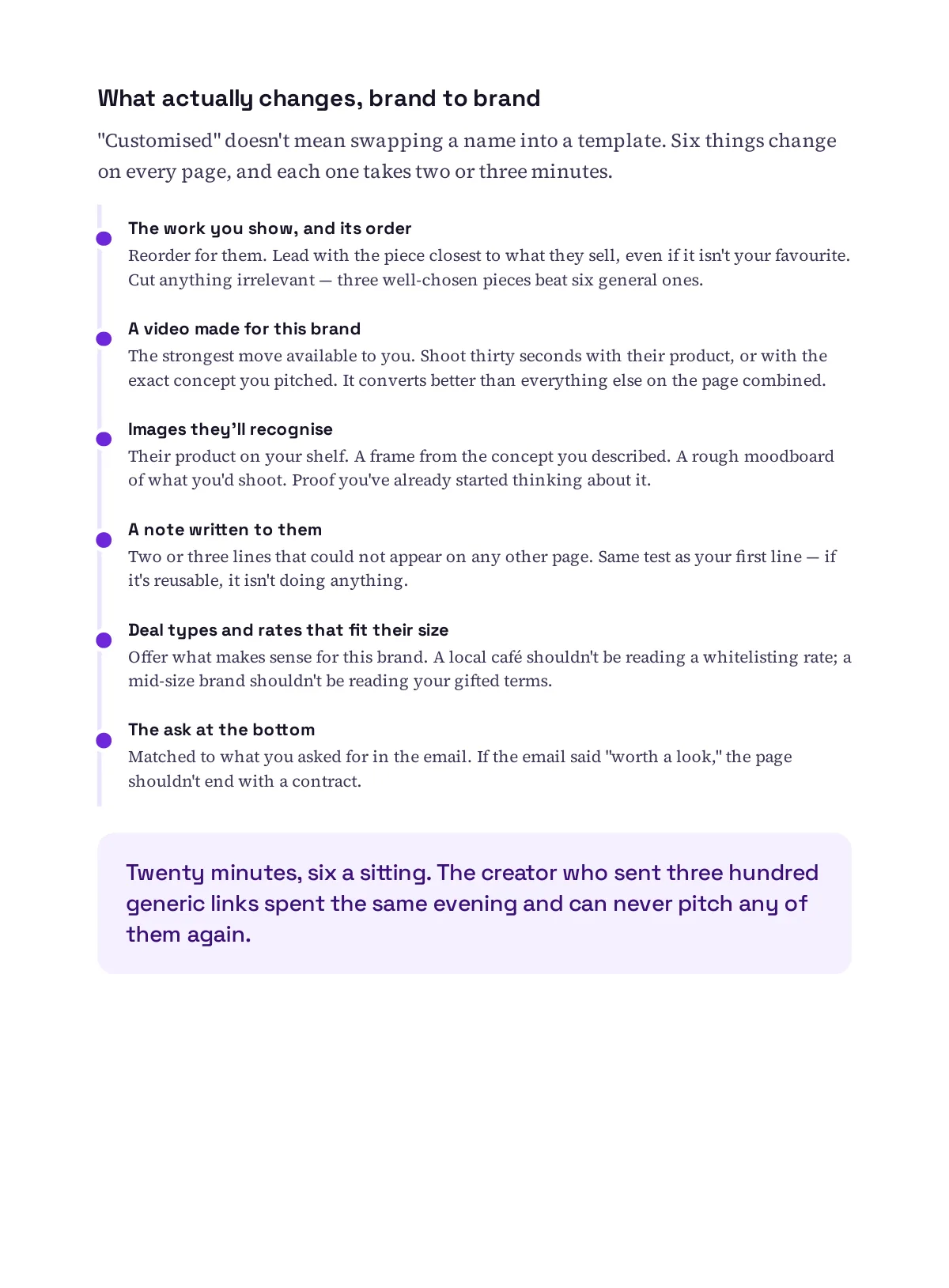
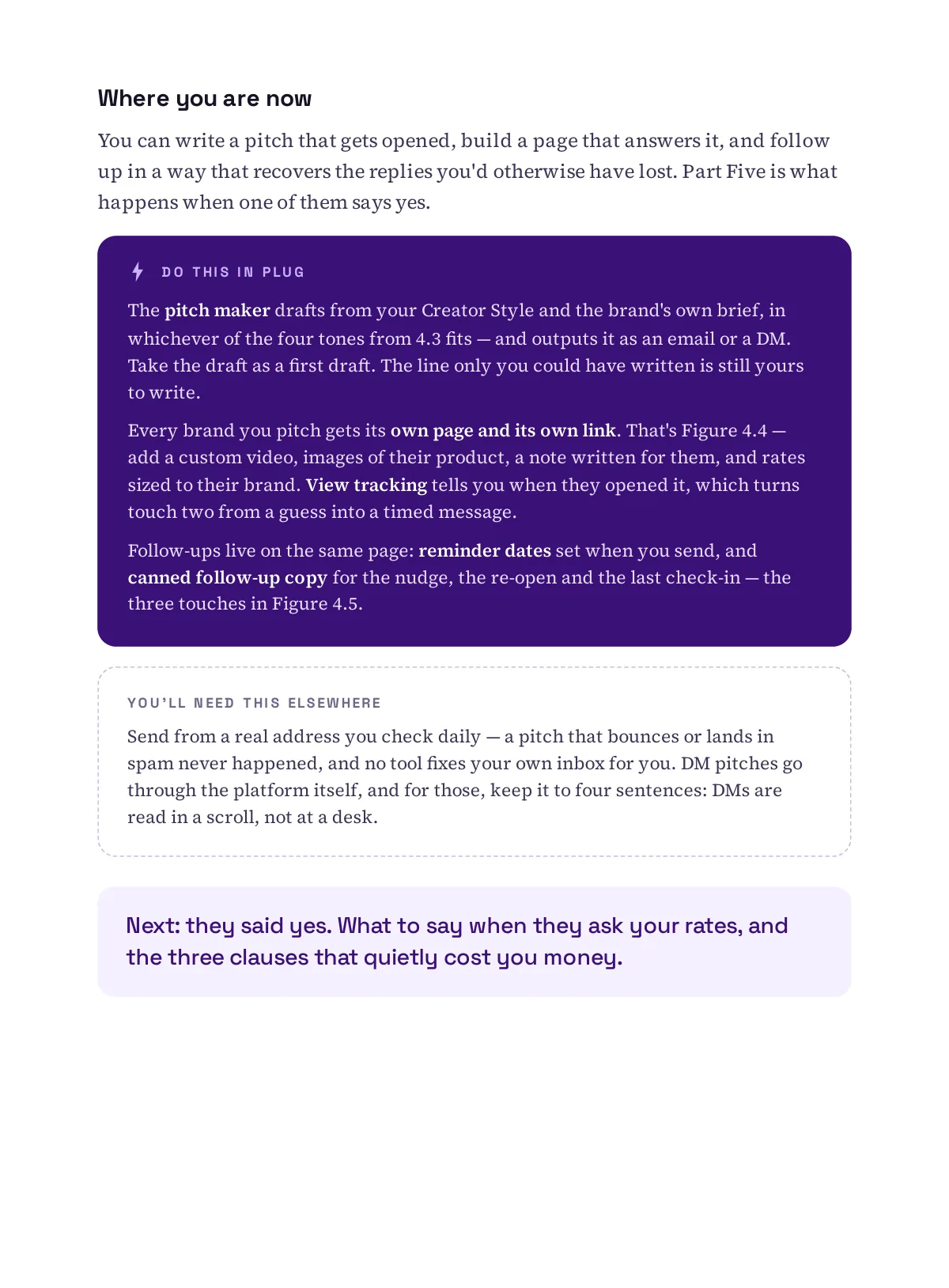
Part four — the pitch. The anatomy of a pitch that gets a reply, four templates by deal type, how to match a brand's tone, how to build a pitch page for one brand, and the three-touch follow-up.
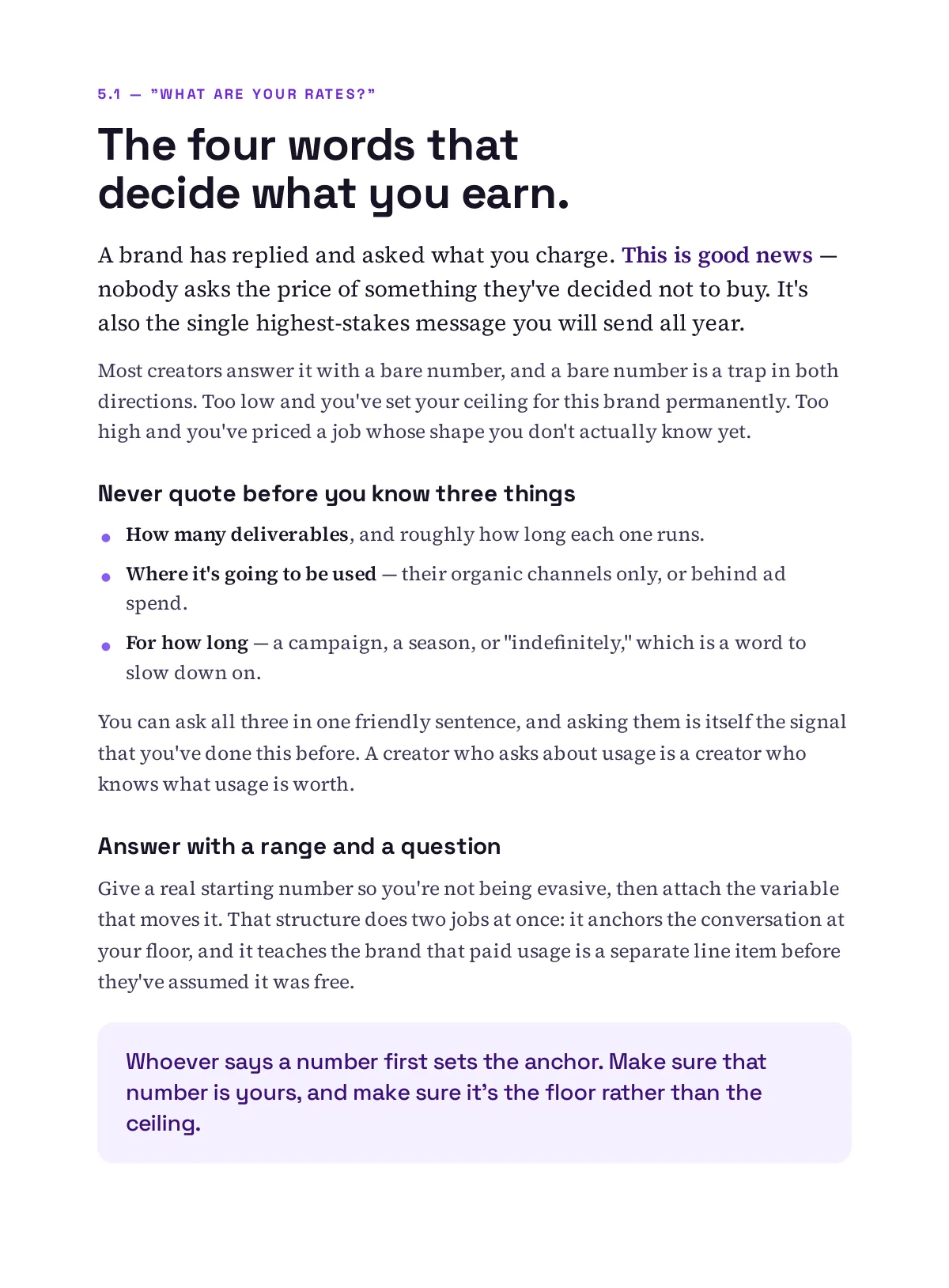
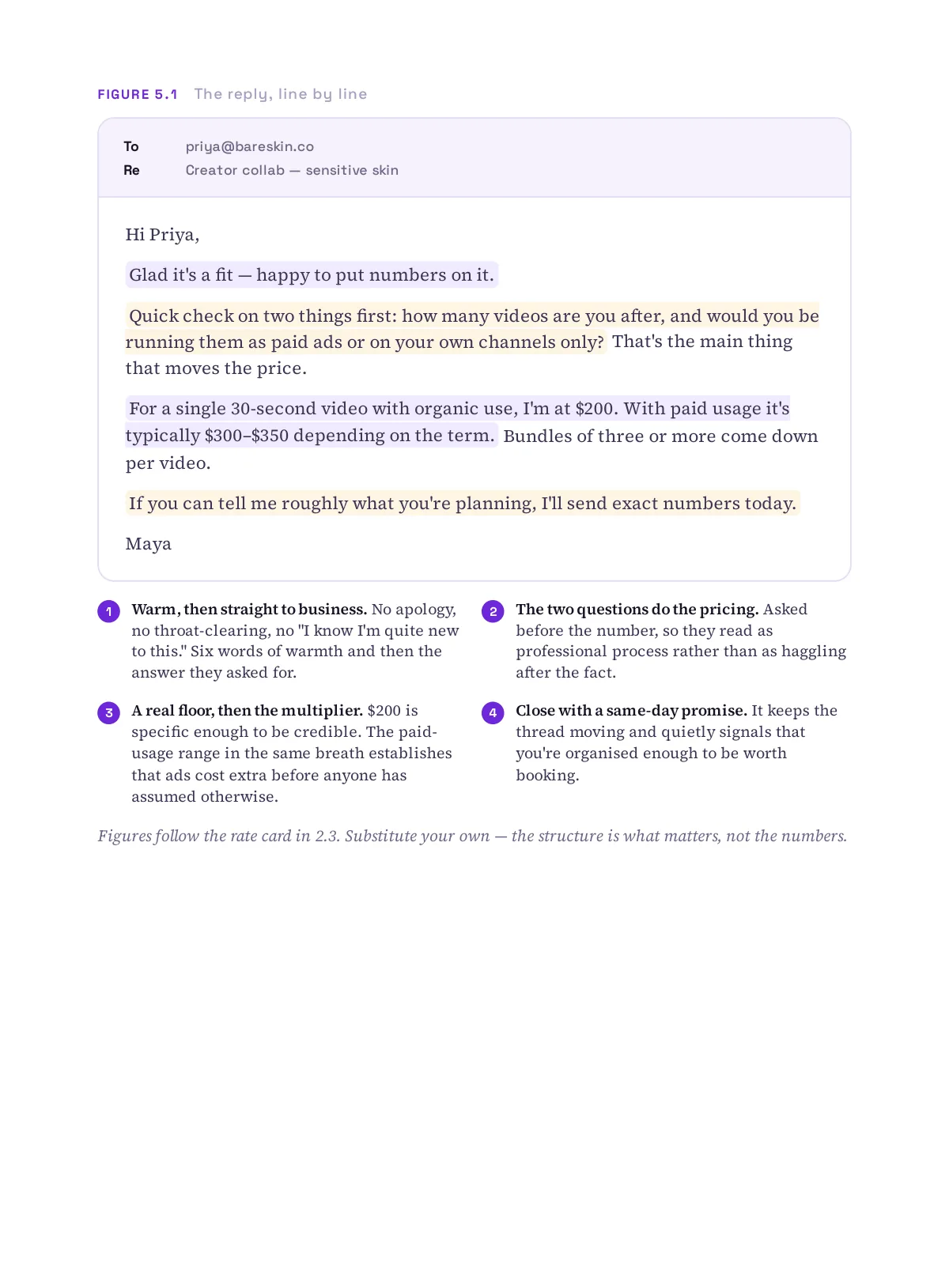
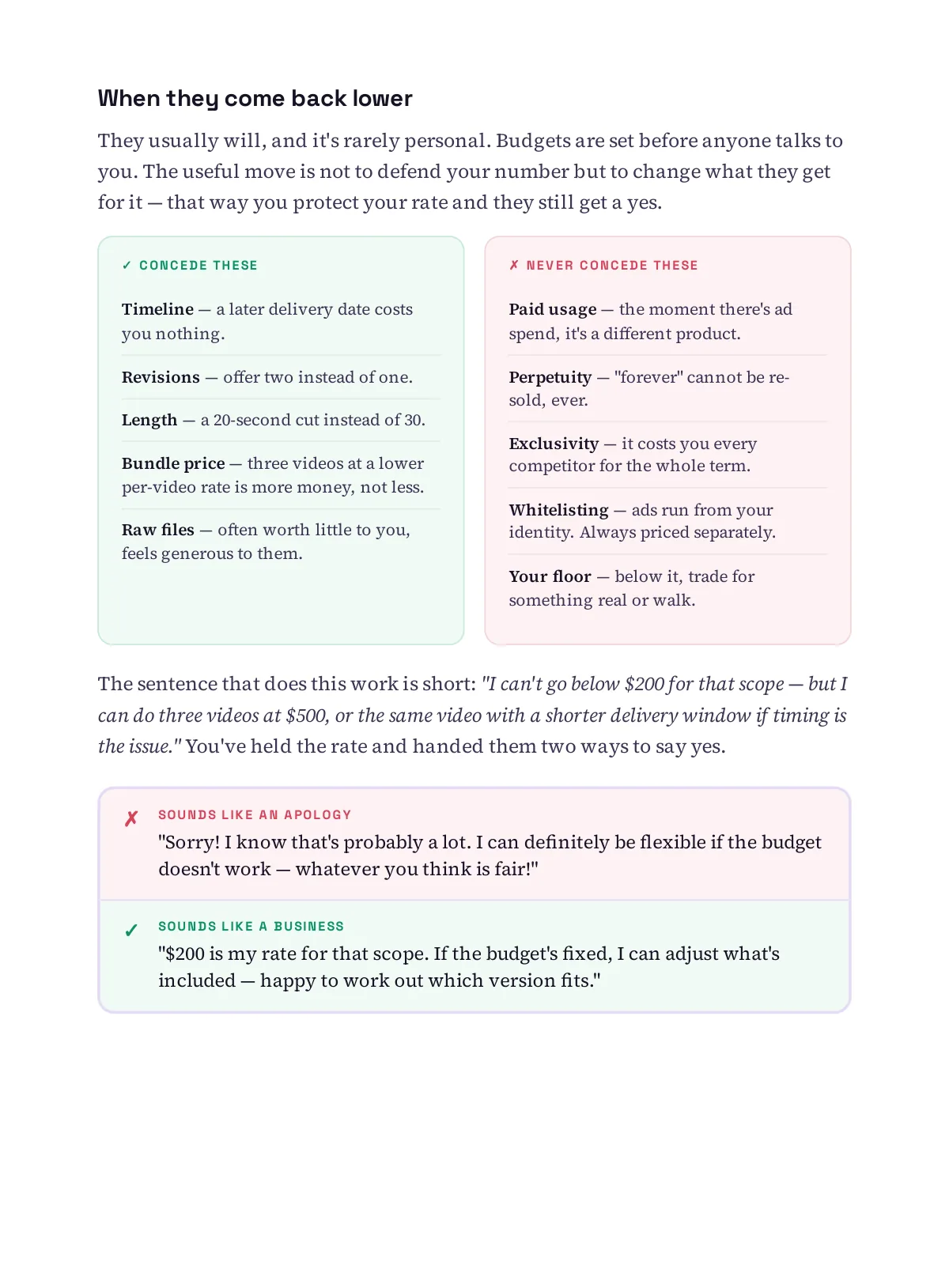
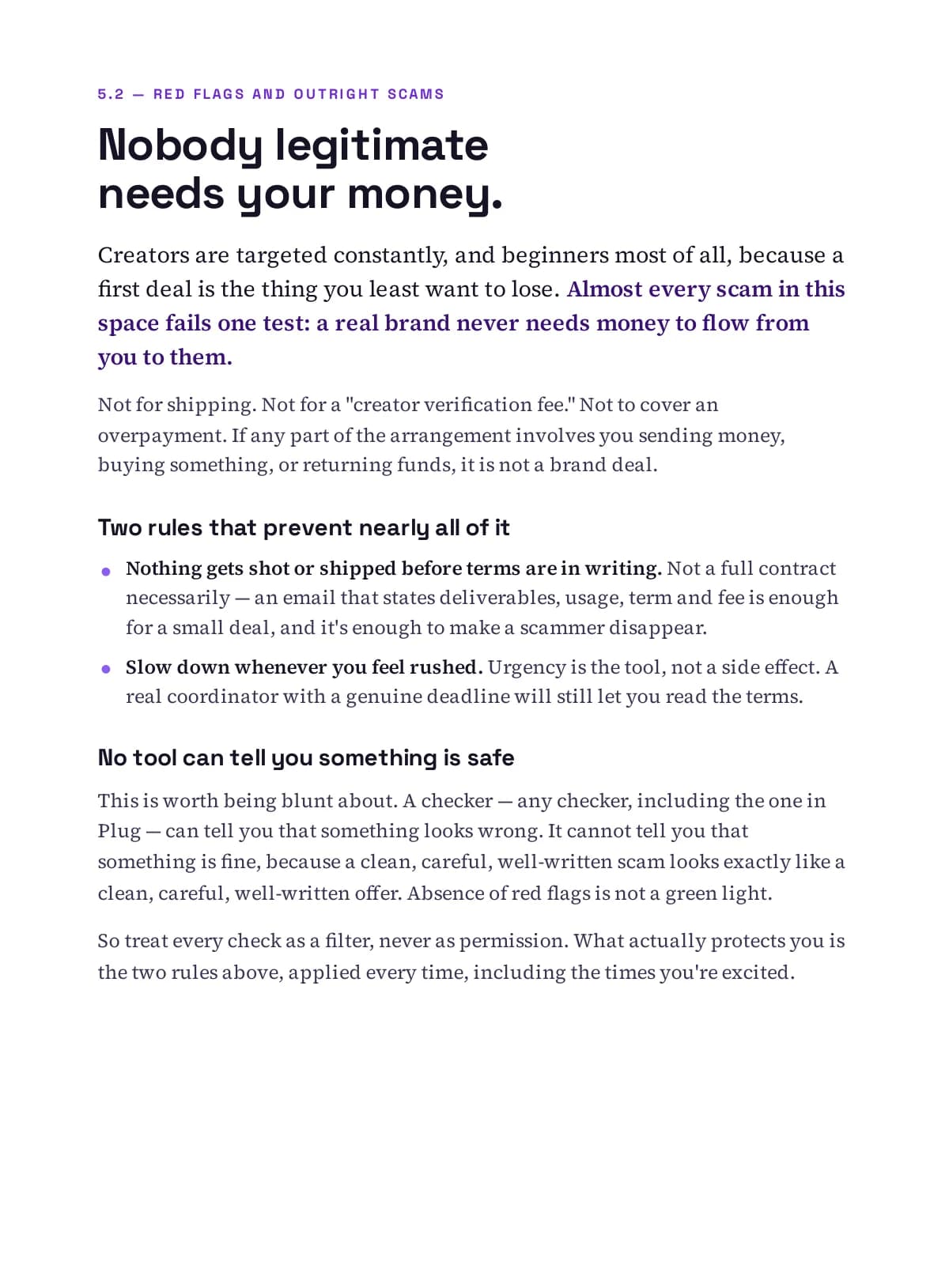
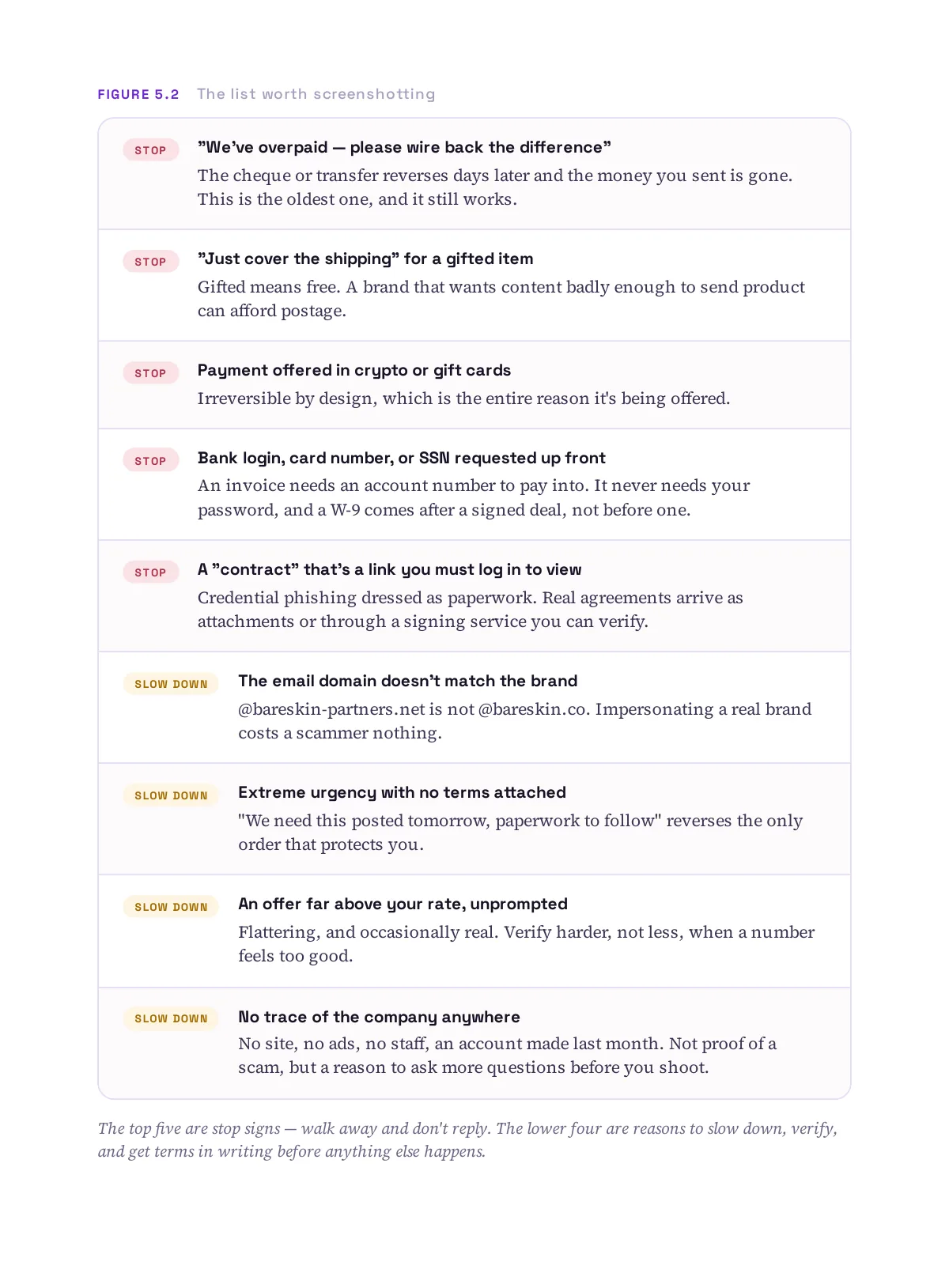
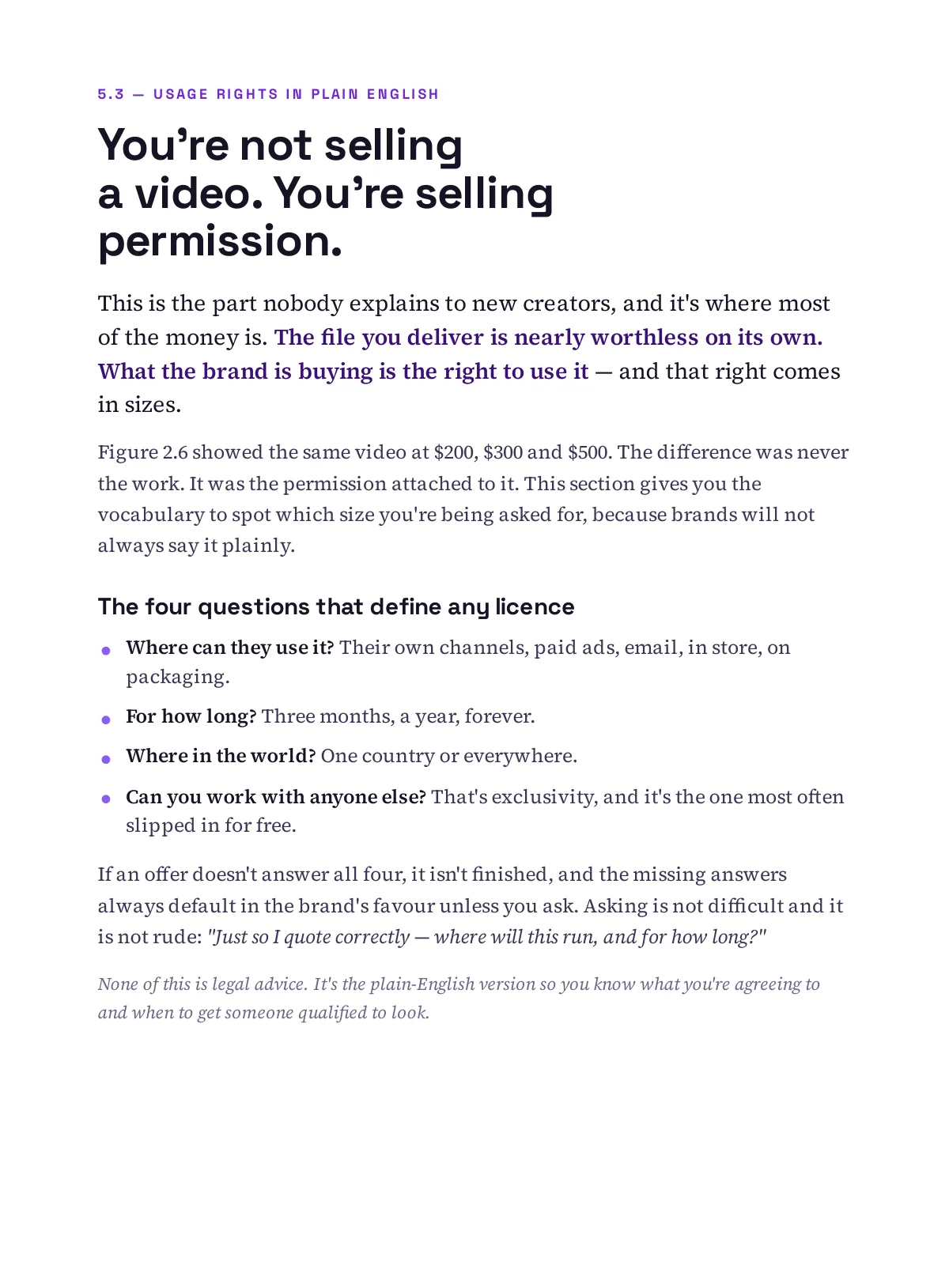
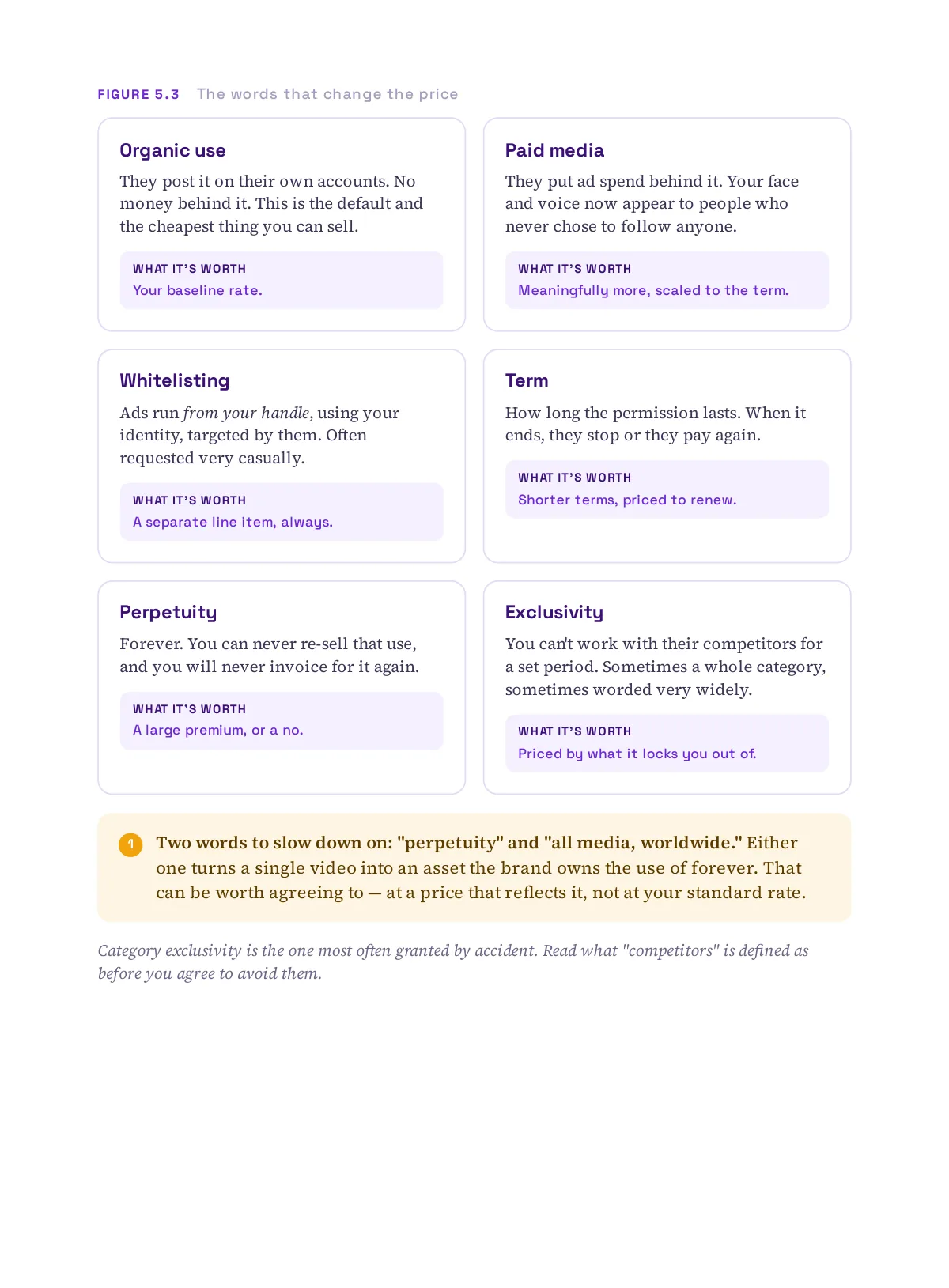
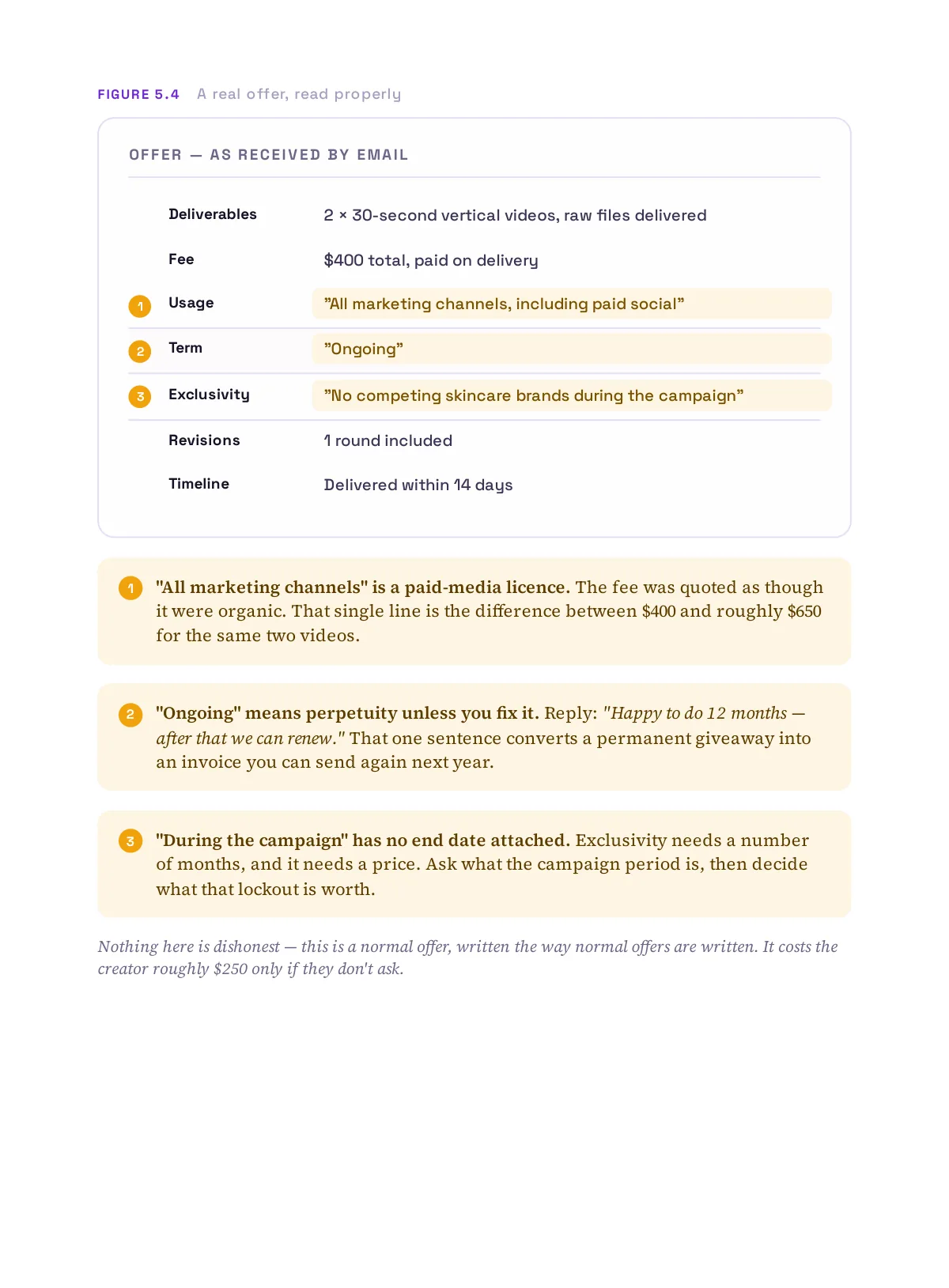
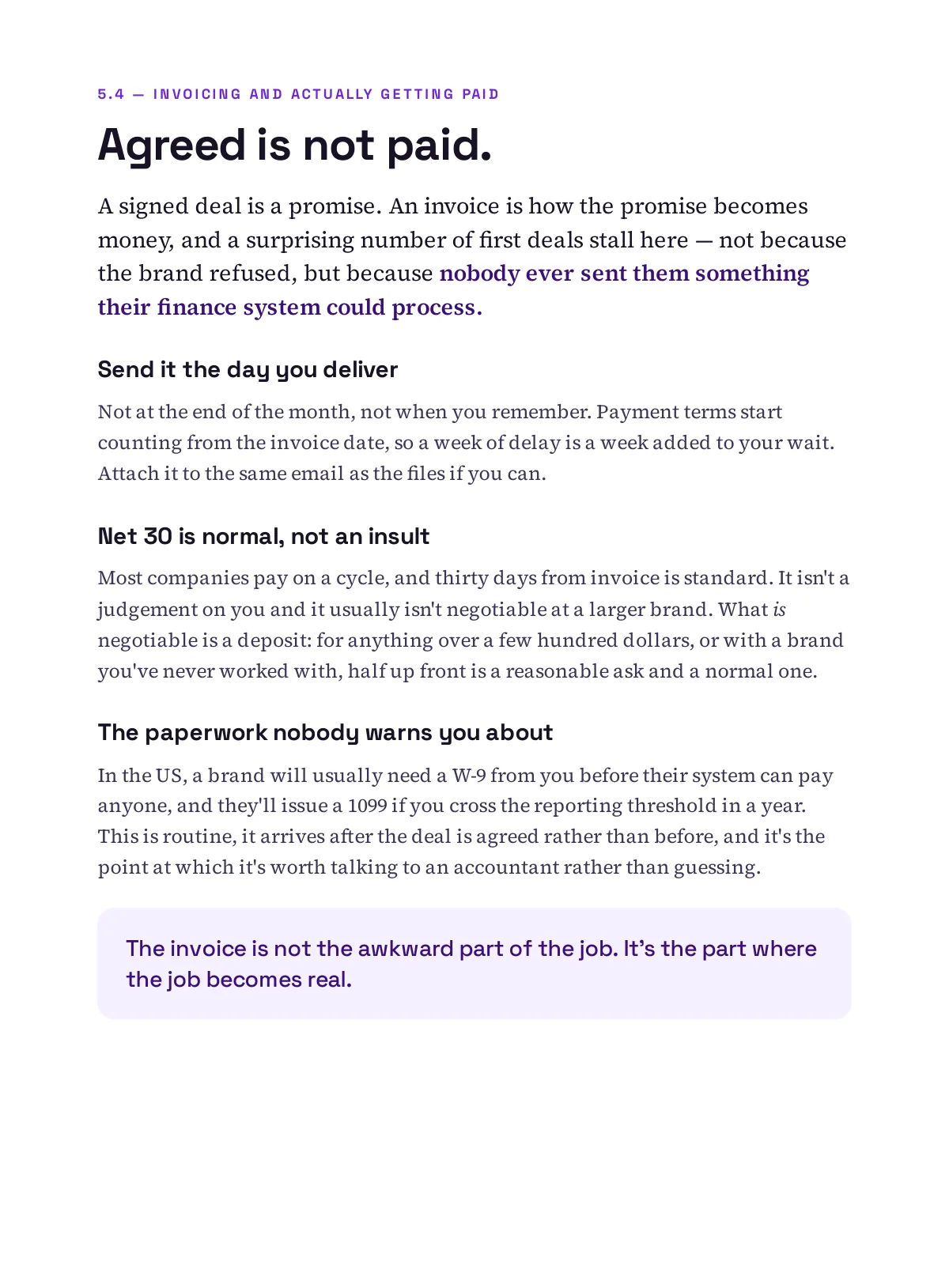
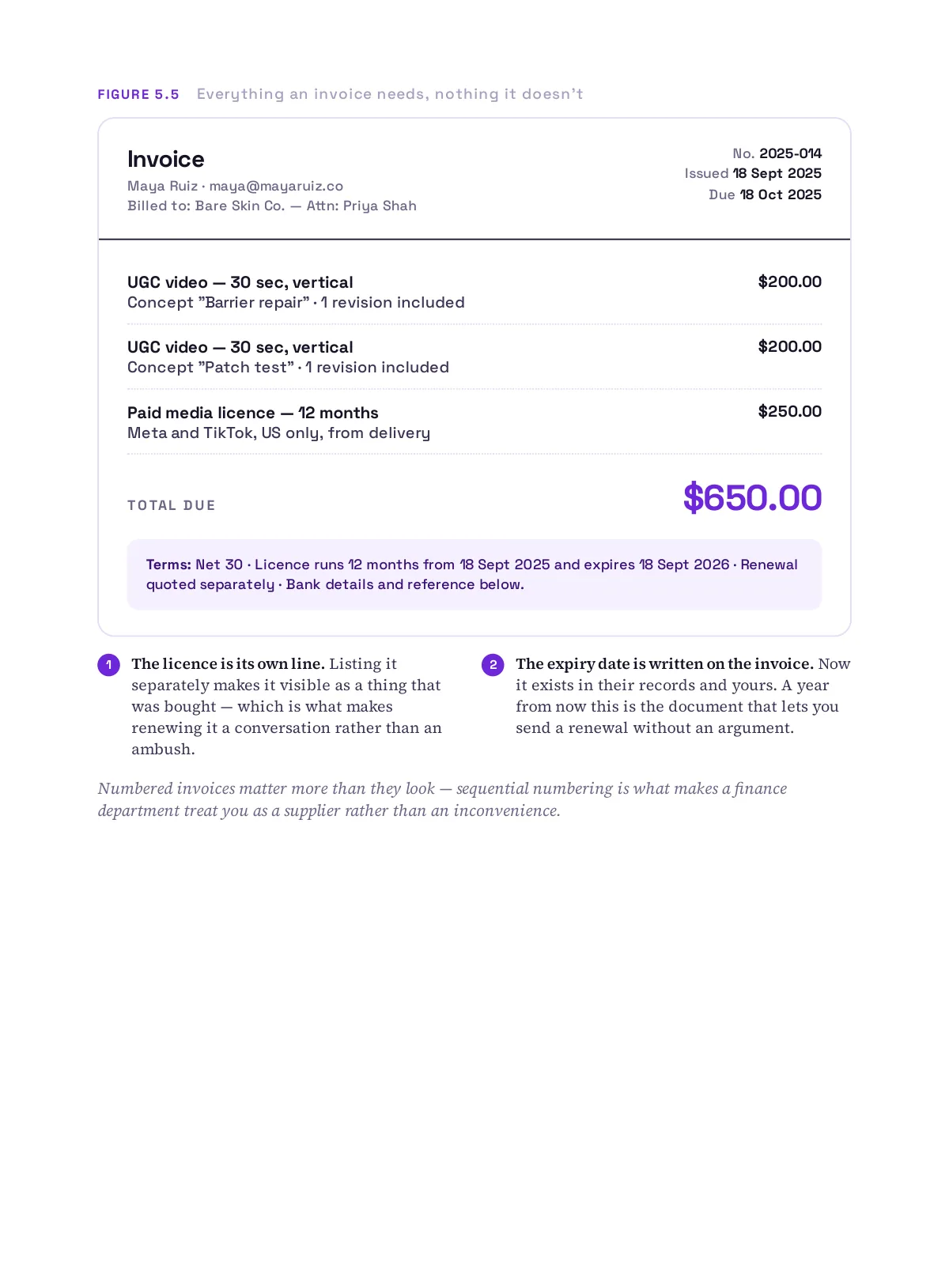
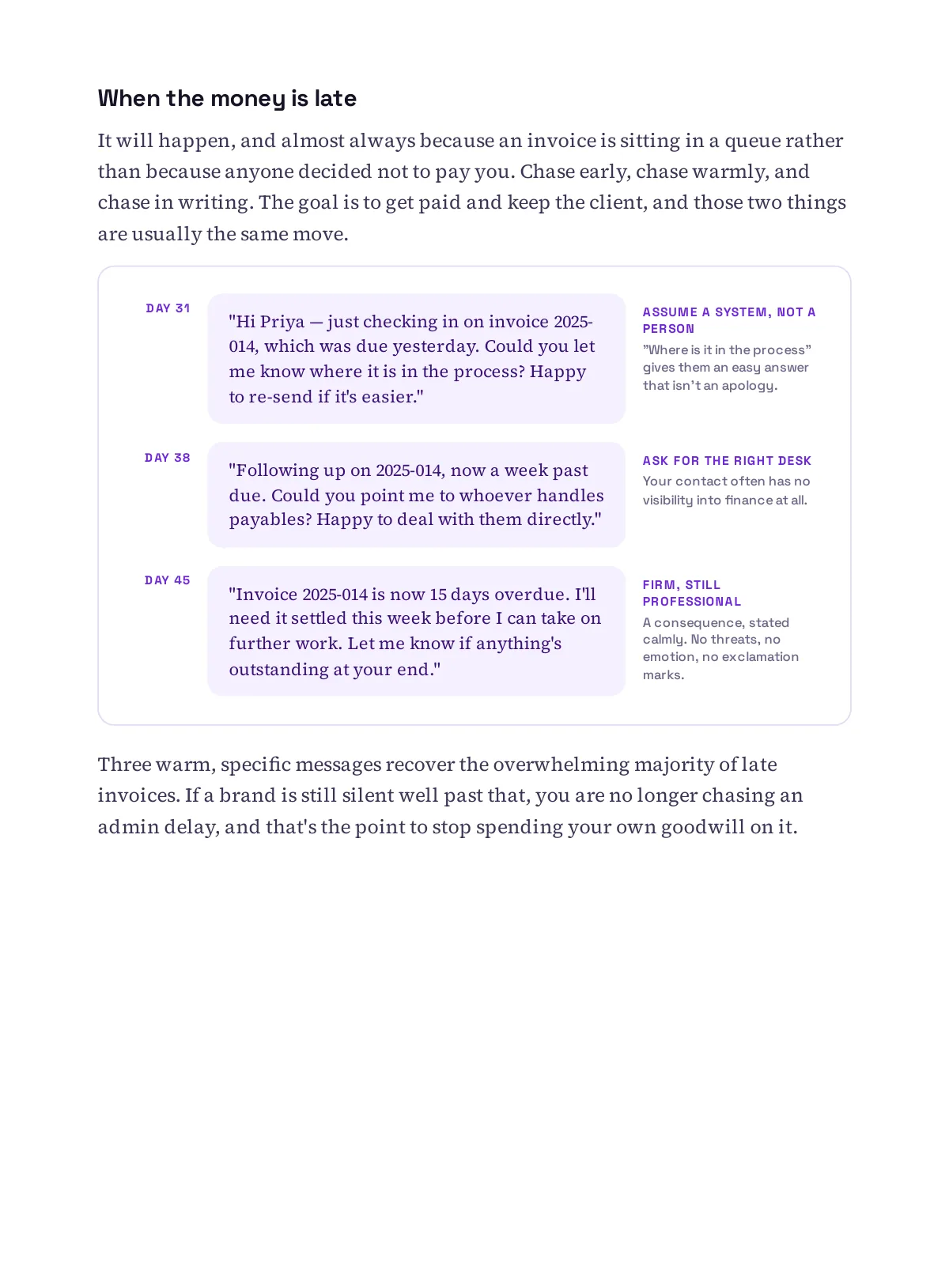
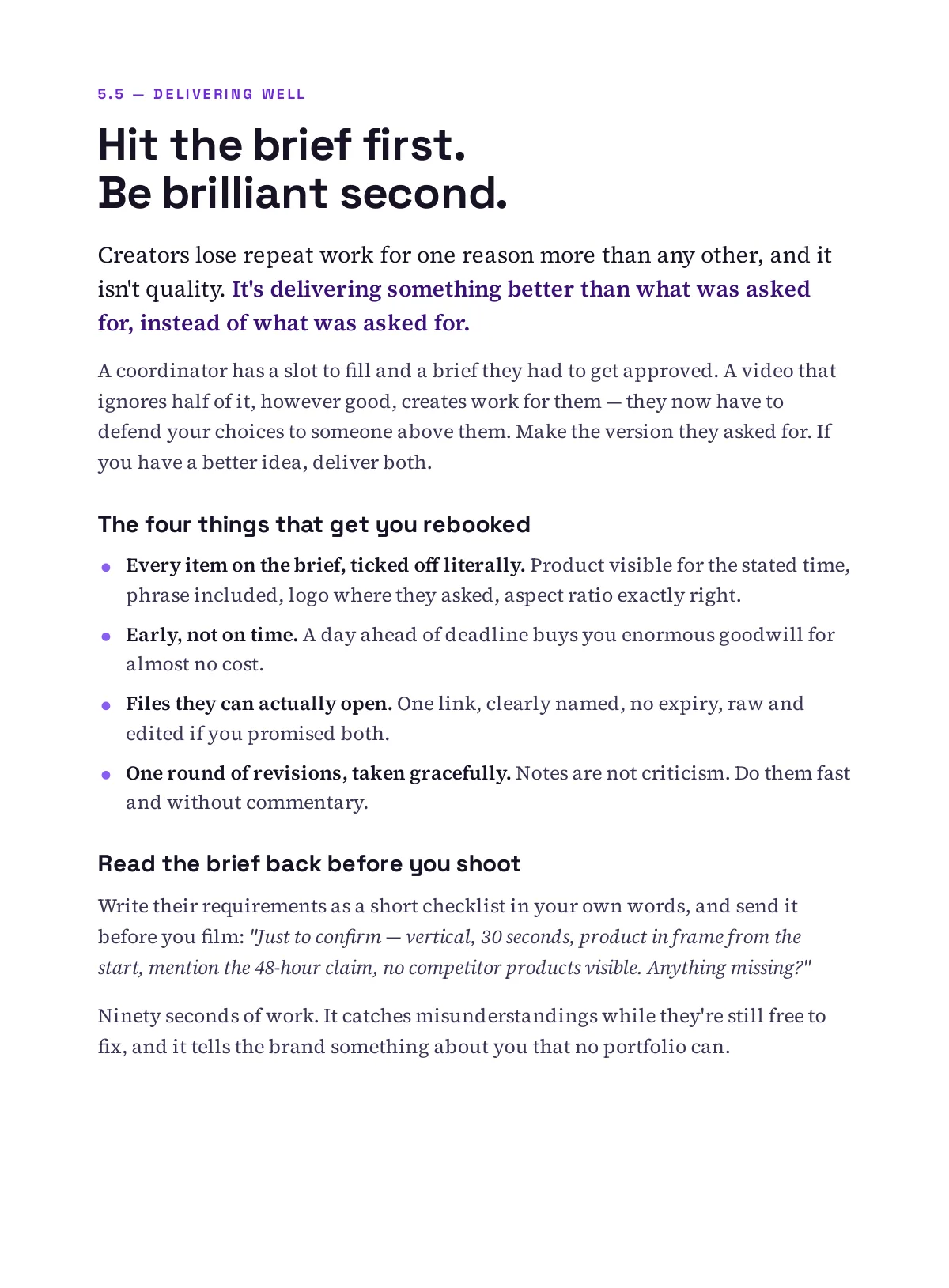
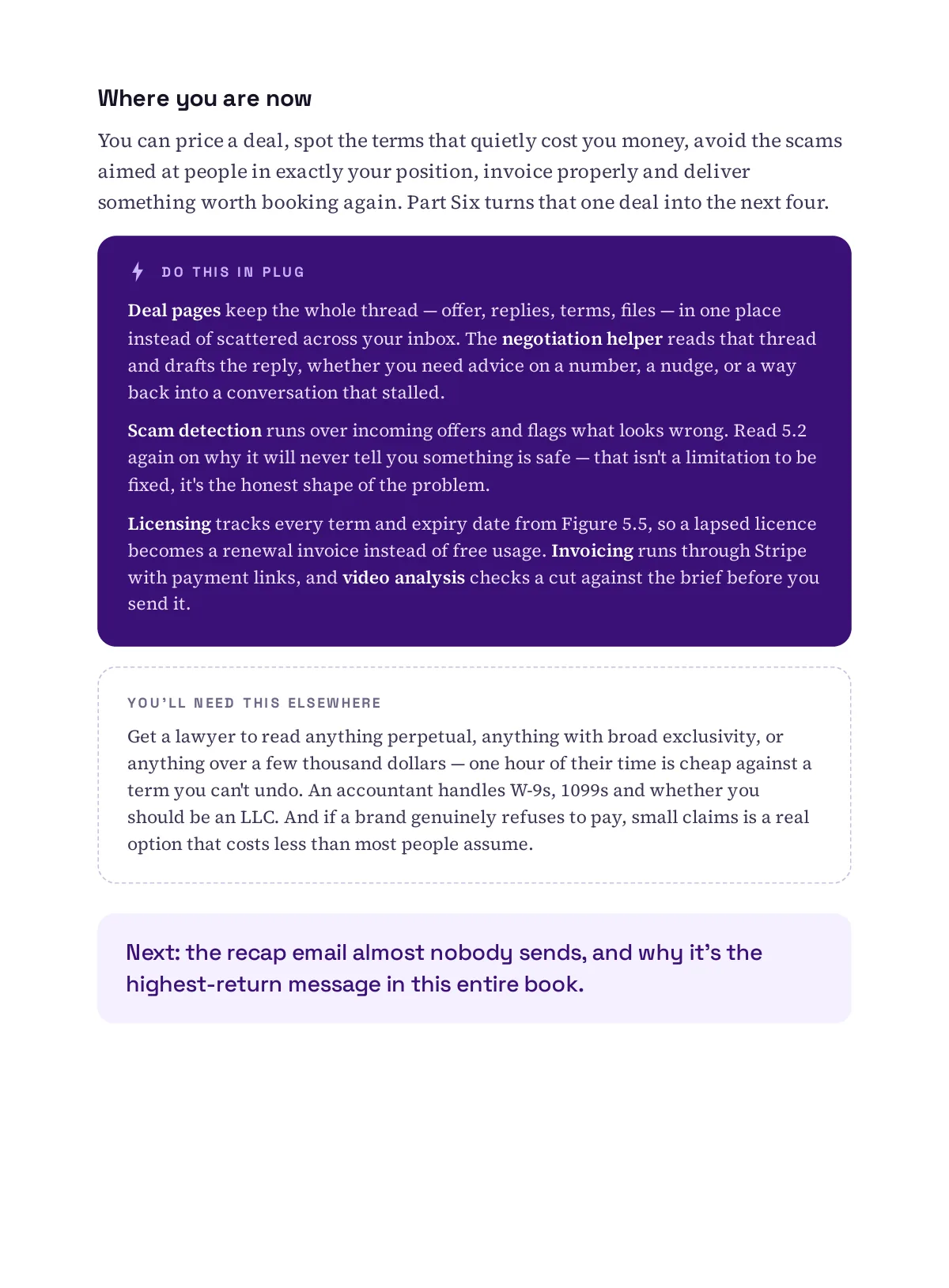
Part five — the reply. How to answer "what are your rates?", the red flags worth screenshotting, usage rights in plain English, invoicing, and getting paid when the money is late.
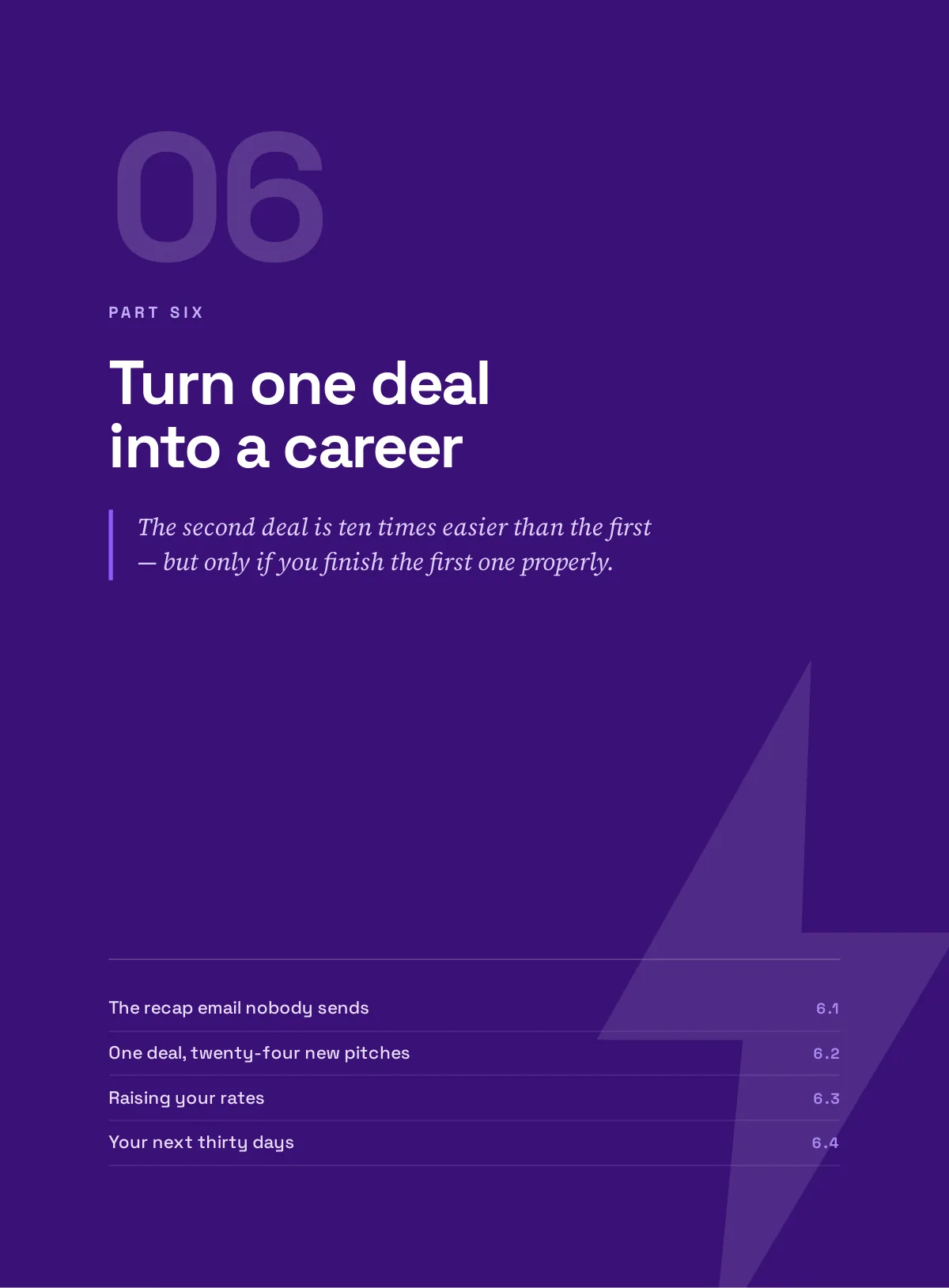
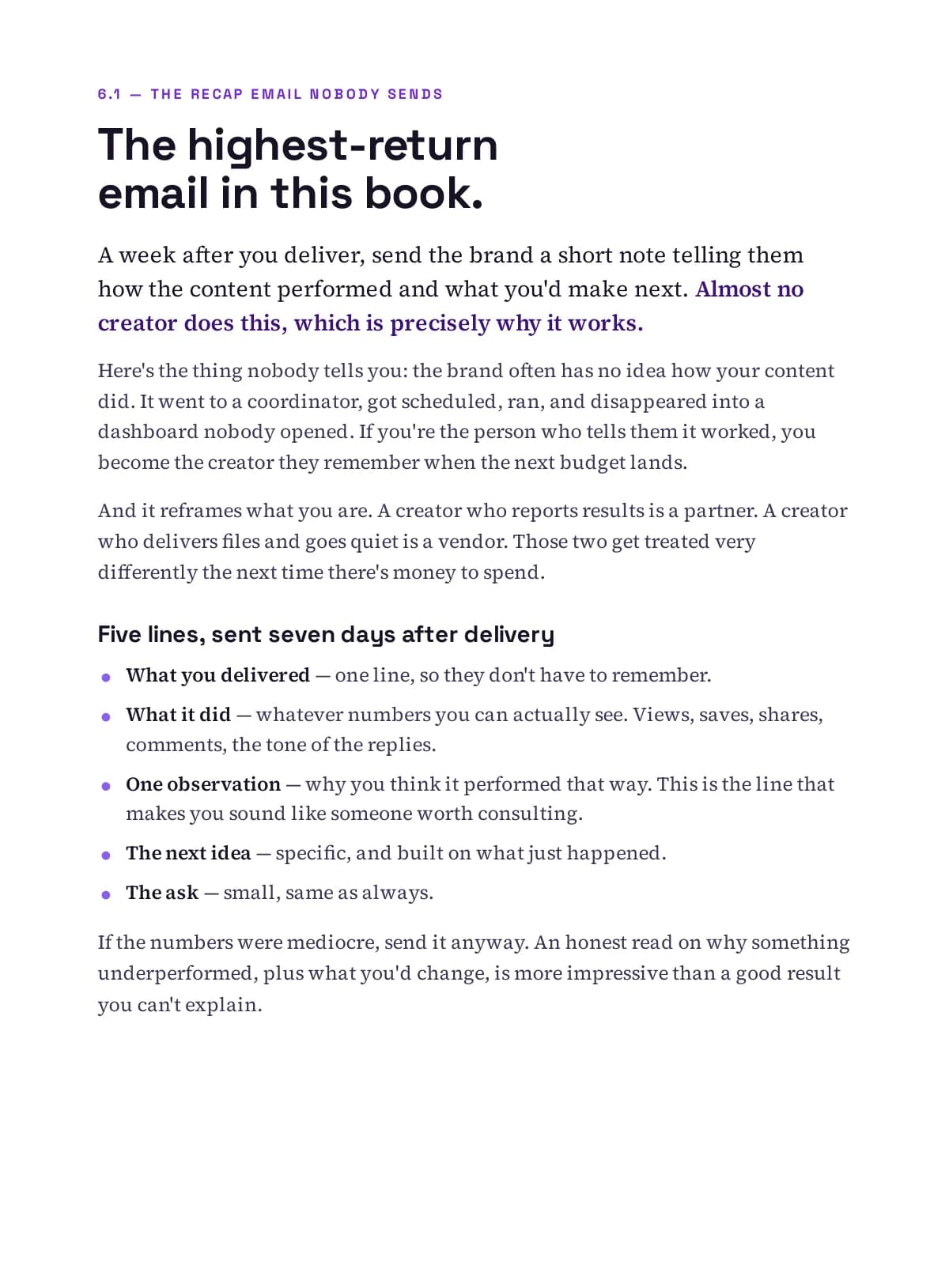
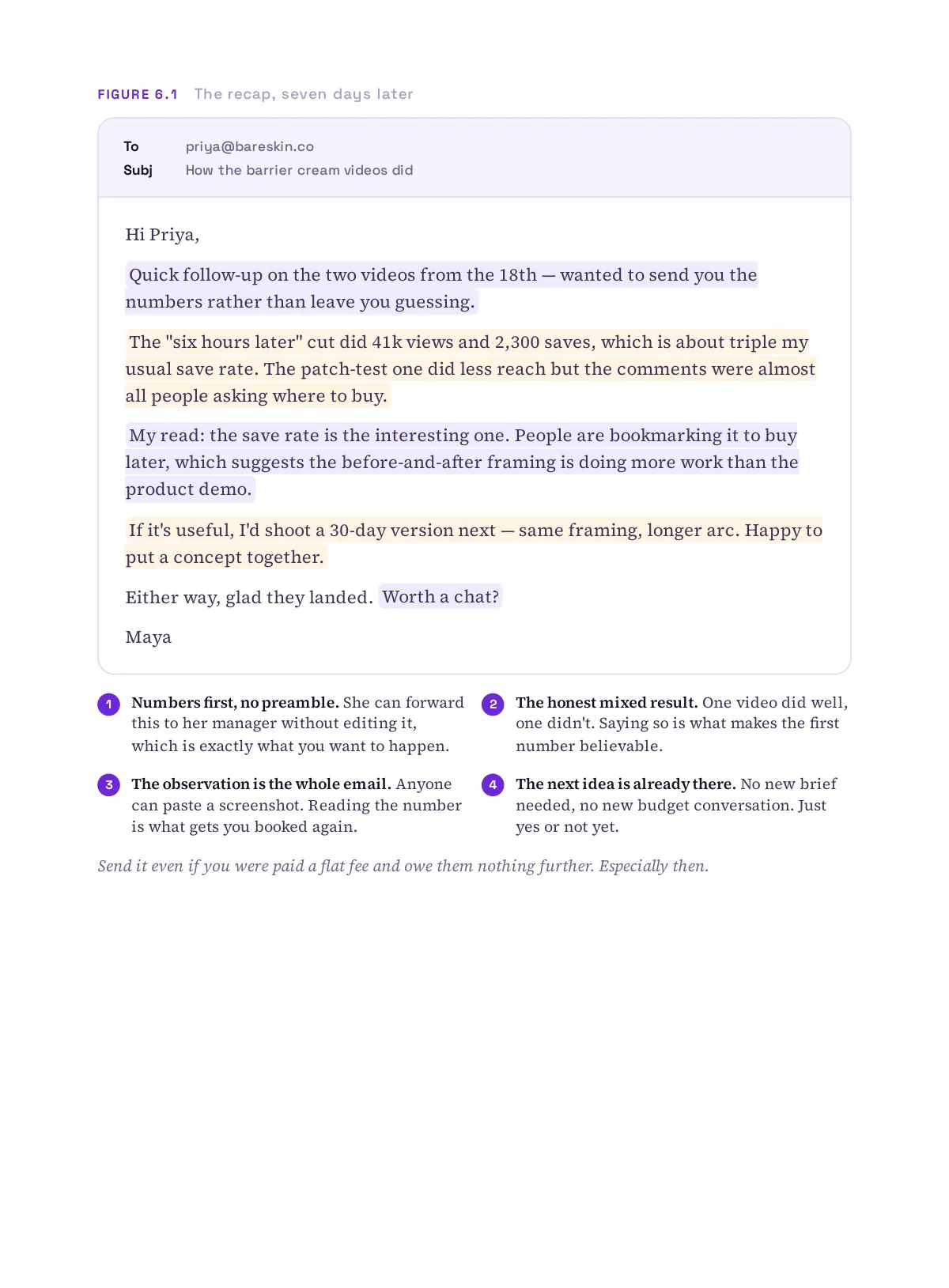
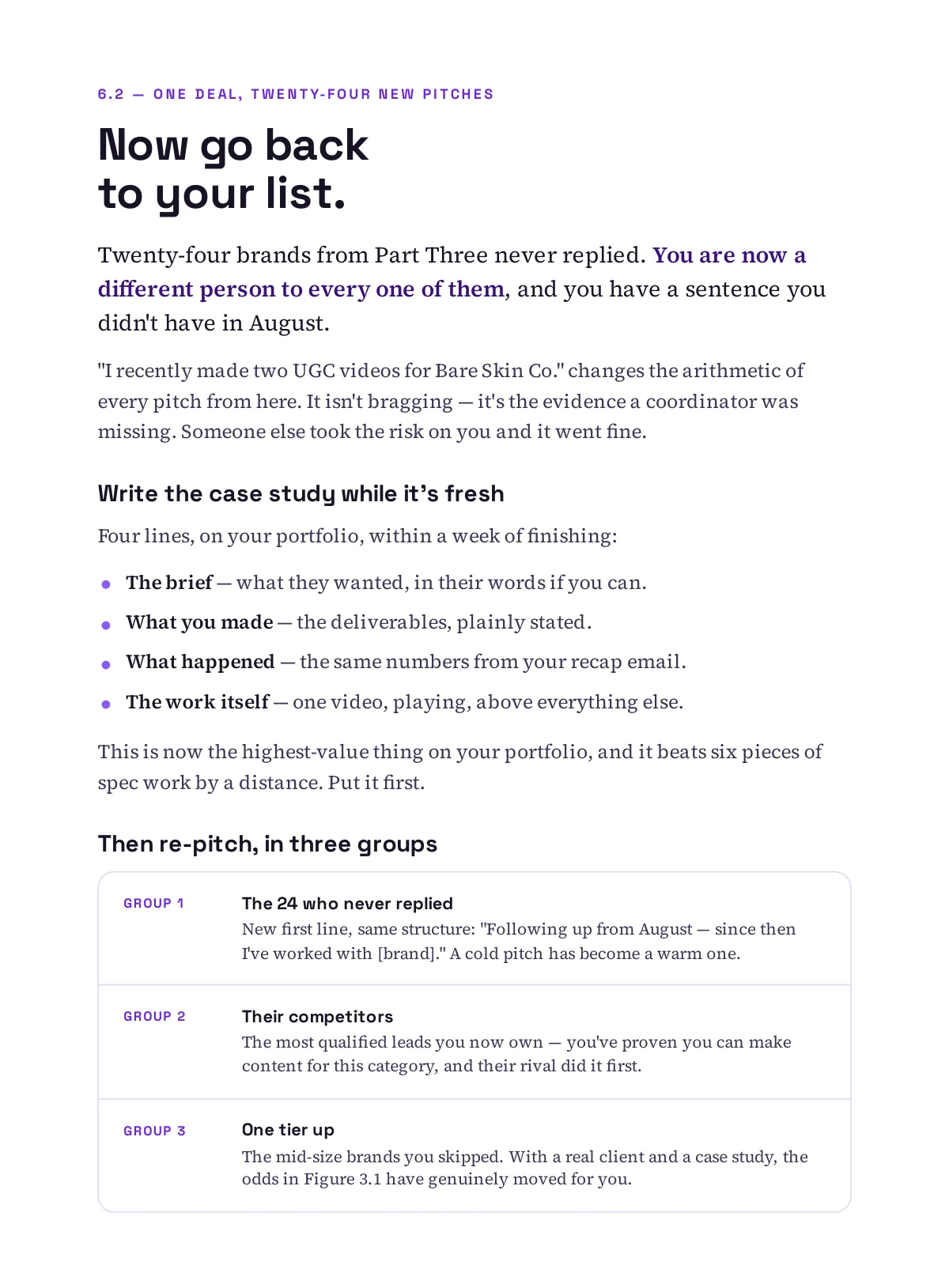
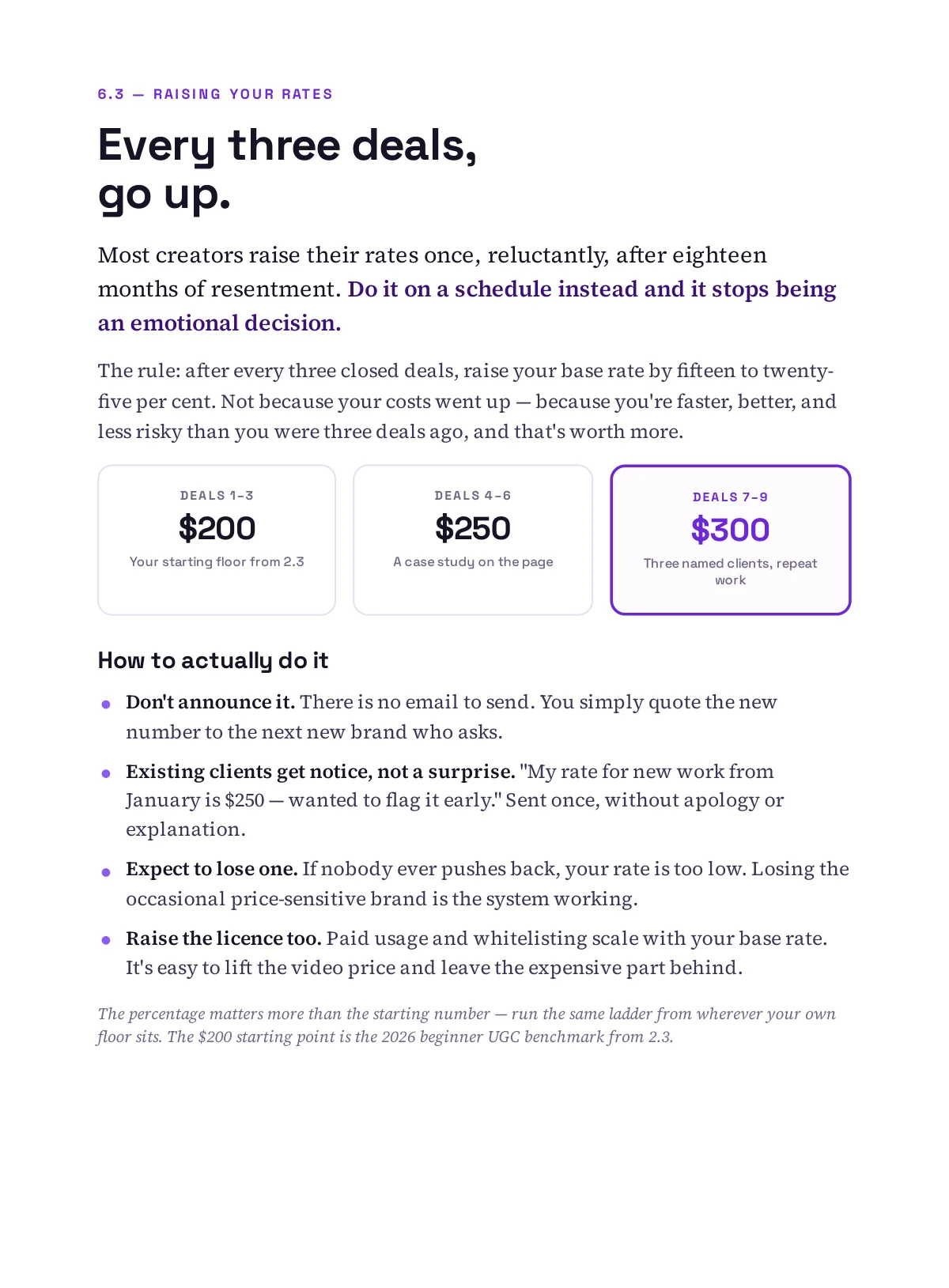
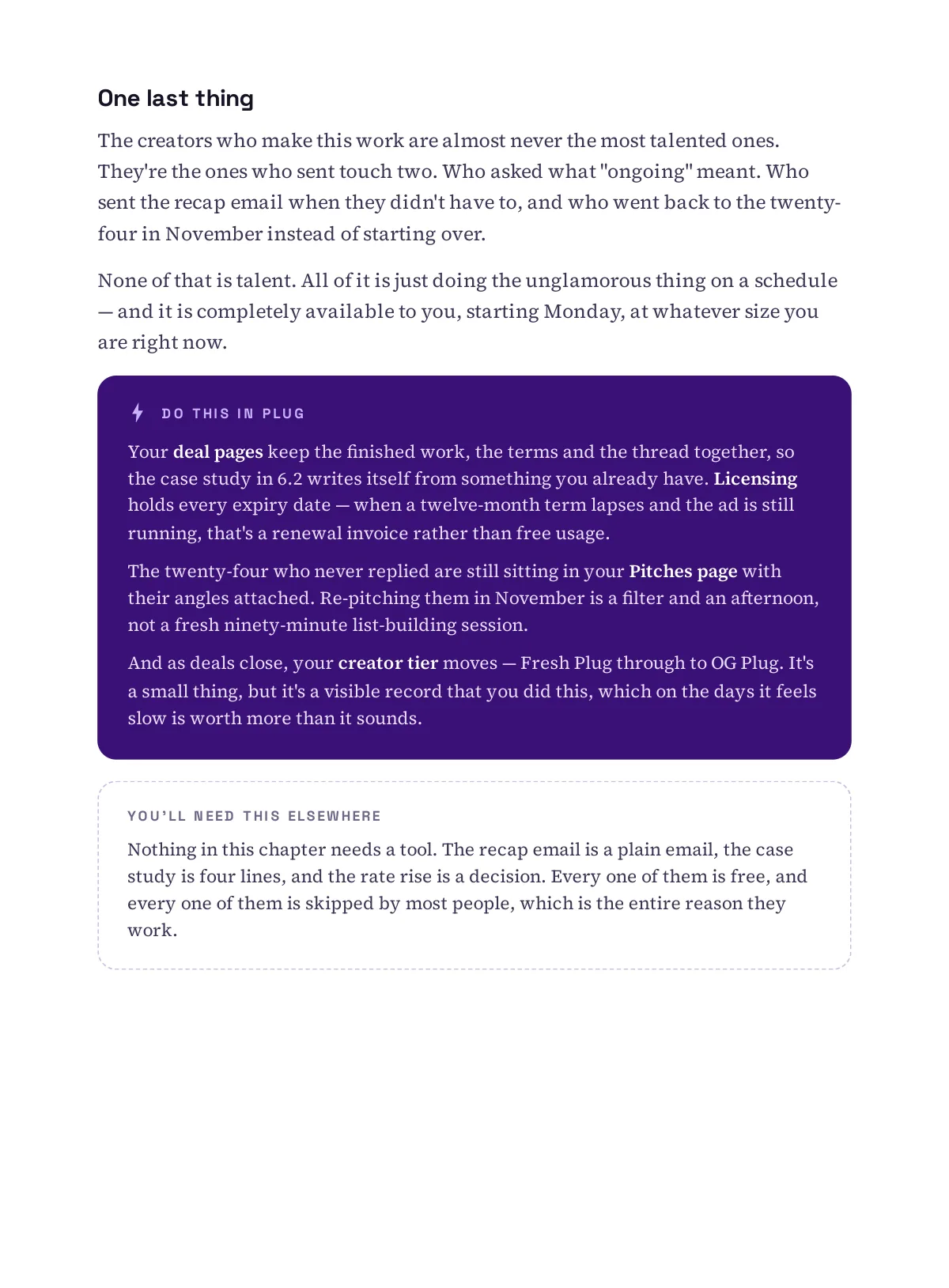
Part six — the second deal. The recap email almost nobody sends, turning one deal into twenty-four new pitches, and when to raise your rates.
The short version of the pitch chapter
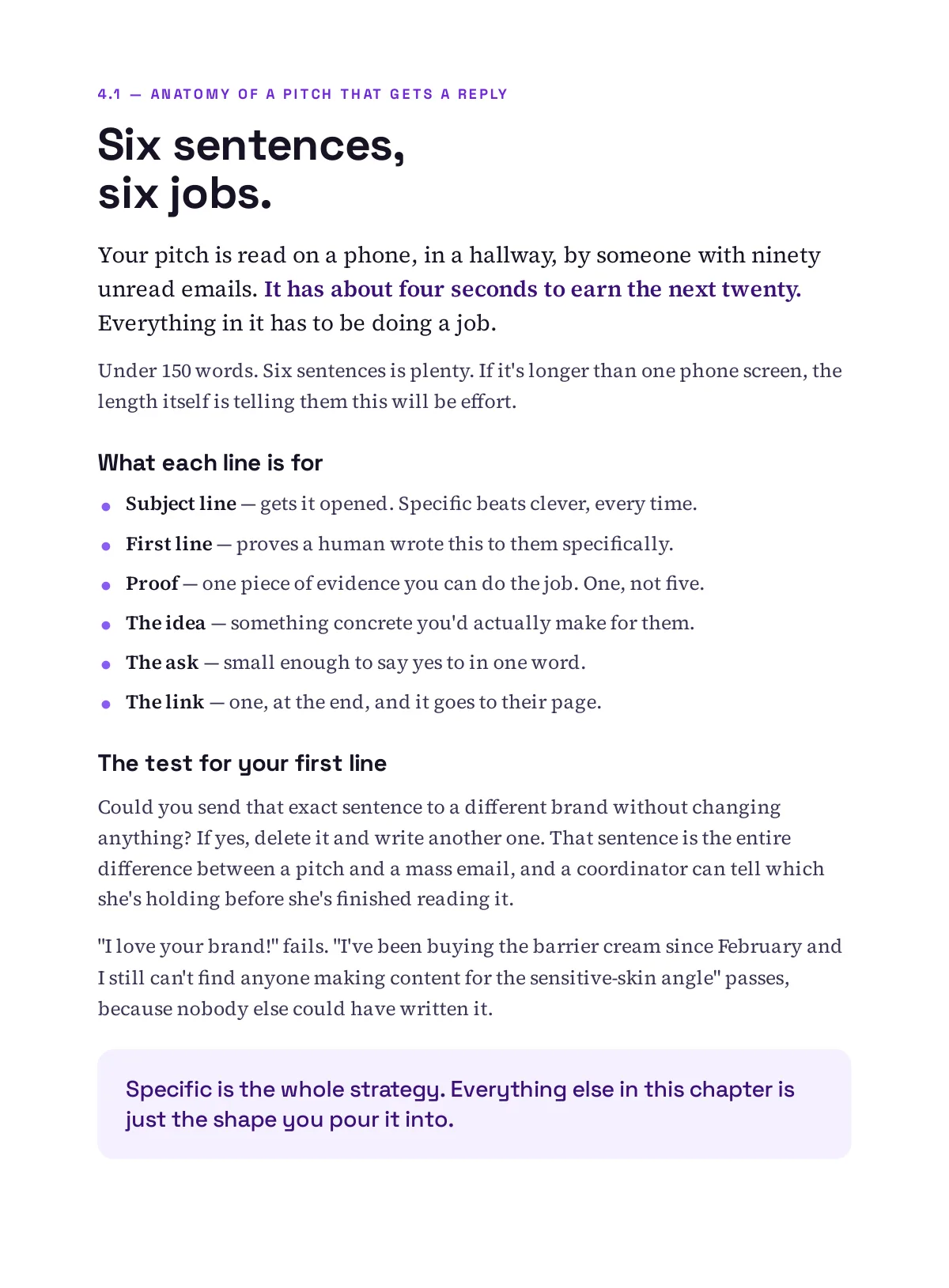
Your pitch is read on a phone by someone with ninety unread emails. It has about four seconds to earn the next twenty. Six sentences, six jobs:
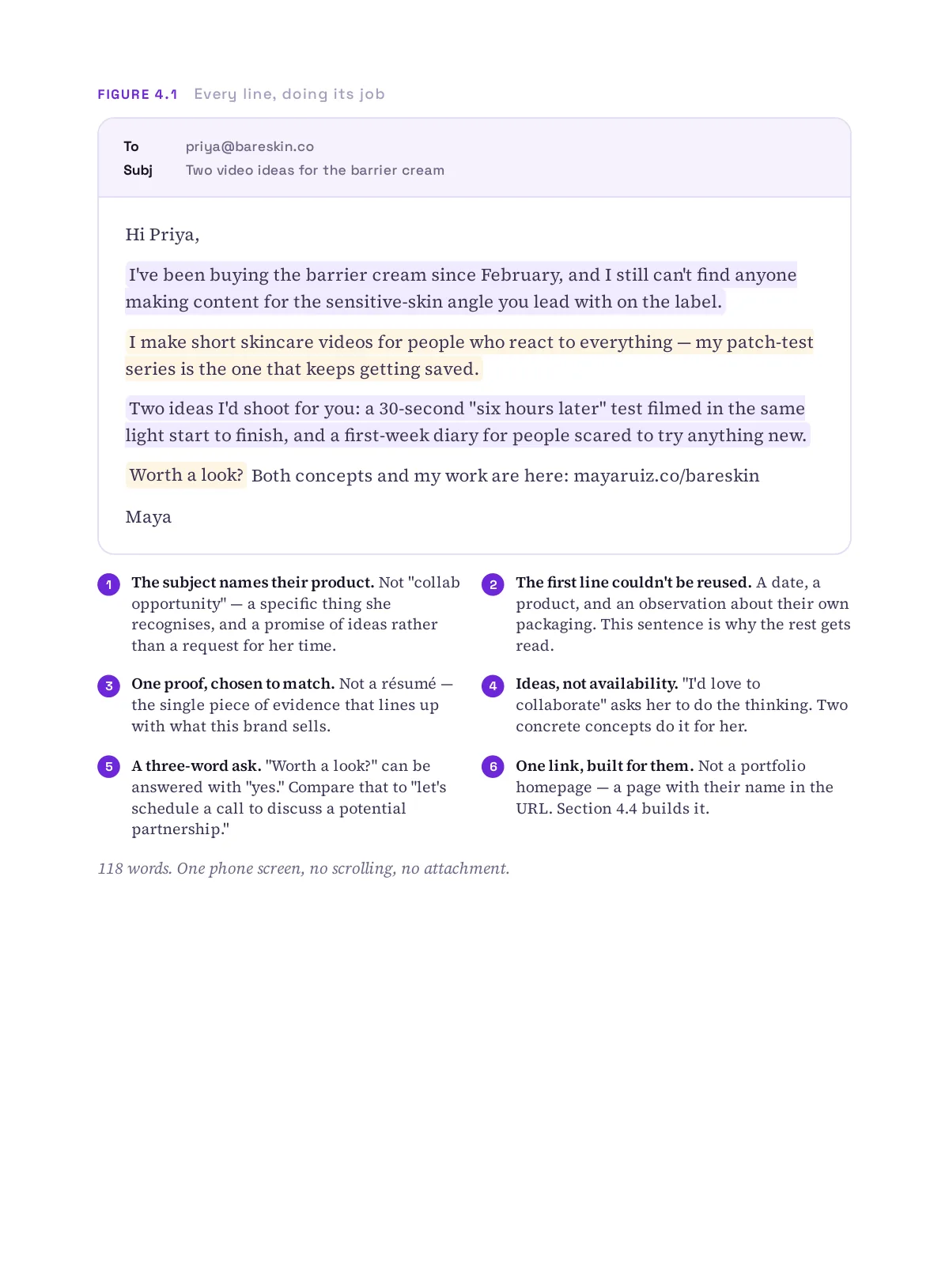
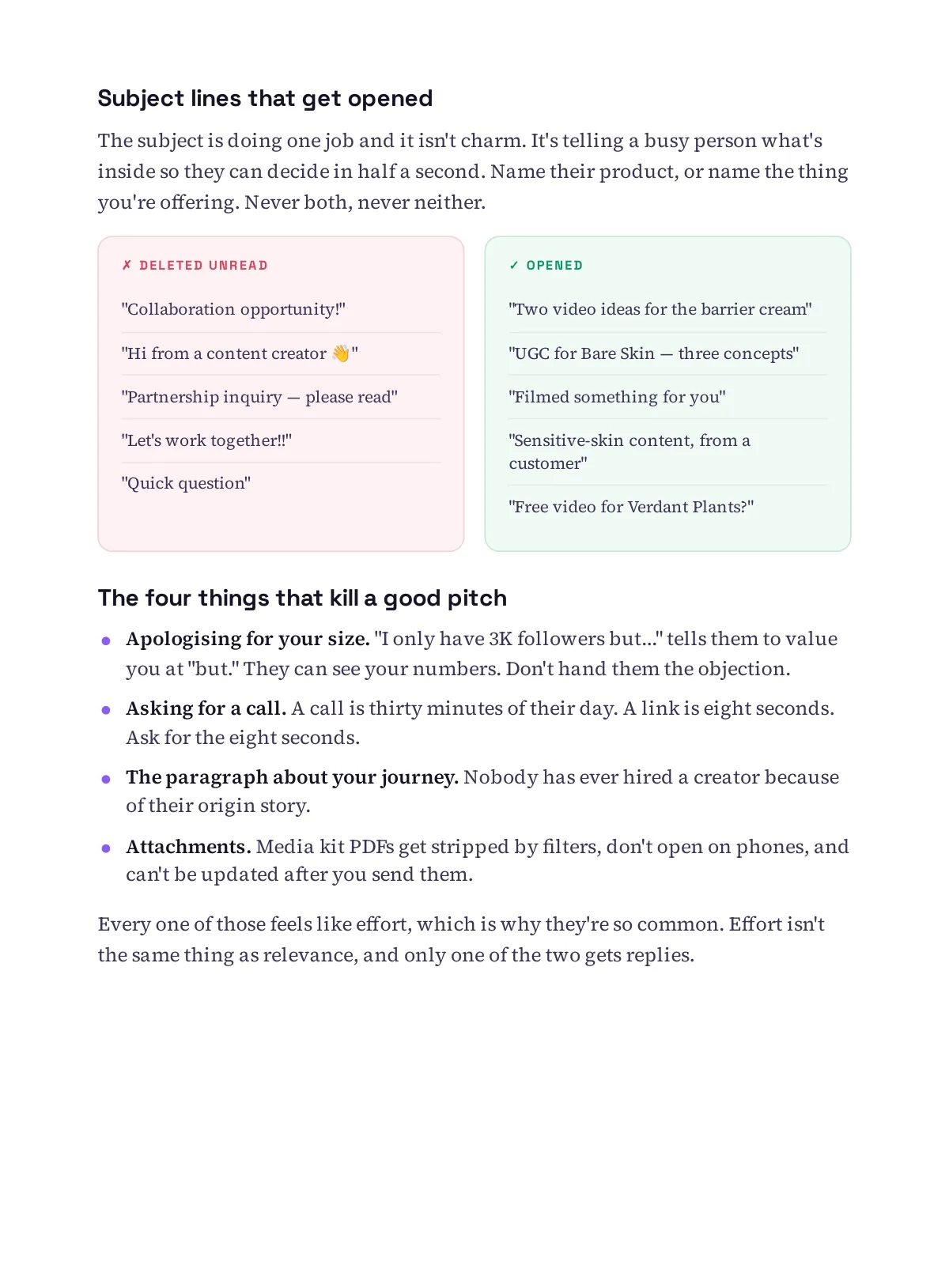
- Subject line — gets it opened. Name their product, or name what you are offering. Never both, never neither.
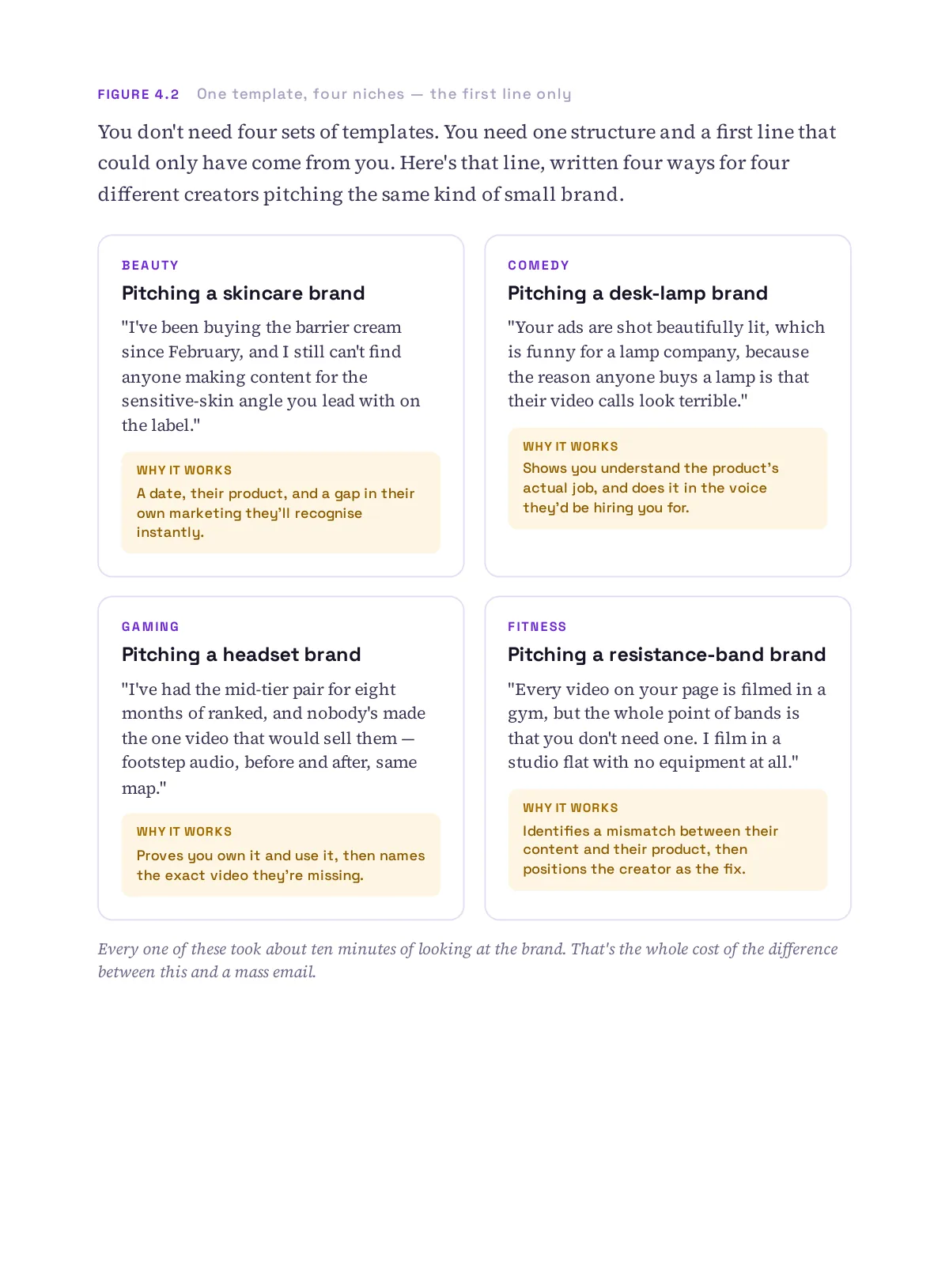
- First line — proves a human wrote this to them specifically.
- Proof — one piece of evidence you can do the job. One, not five.
- The idea — something concrete you would actually make for them.
- The ask — small enough to say yes to in one word.
- The link — one, at the end, and it goes to a page built for them.
The test for your first line
Could you send that exact sentence to a different brand without changing anything? If yes, delete it and write another one.
"I love your brand!" fails. "I've been buying the barrier cream since February and I still can't find anyone making content for the sensitive-skin angle" passes, because nobody else could have written it.
Four things that kill a good pitch
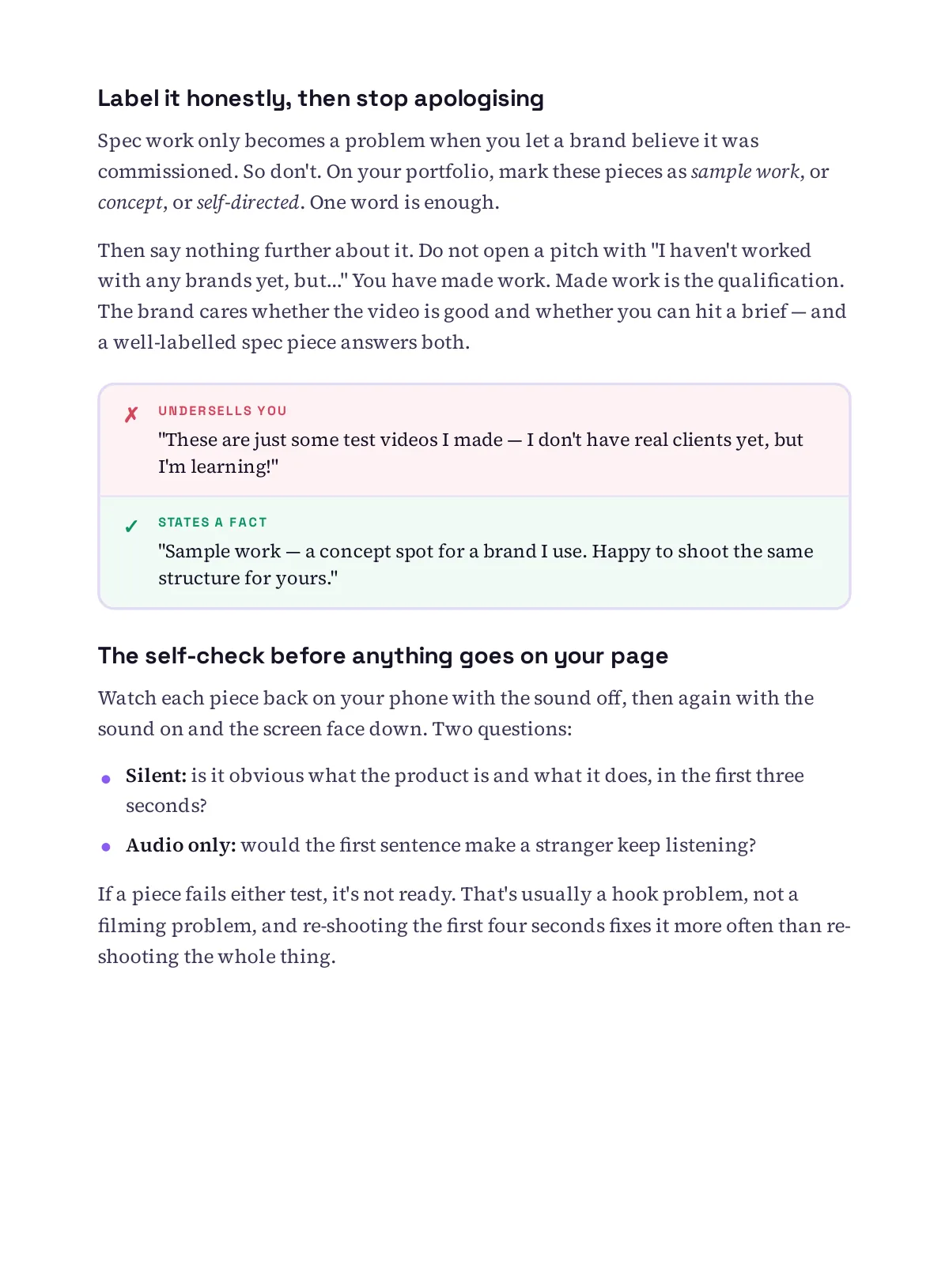
- Apologising for your size. "I only have 3K followers but…" tells them to value you at "but."
- Asking for a call. A call is thirty minutes of their day. A link is eight seconds. Ask for the eight seconds.
- The paragraph about your journey. Nobody has ever hired a creator because of their origin story.
- Attachments. Media kit PDFs get stripped by filters, do not open on phones, and cannot be updated after you send them.
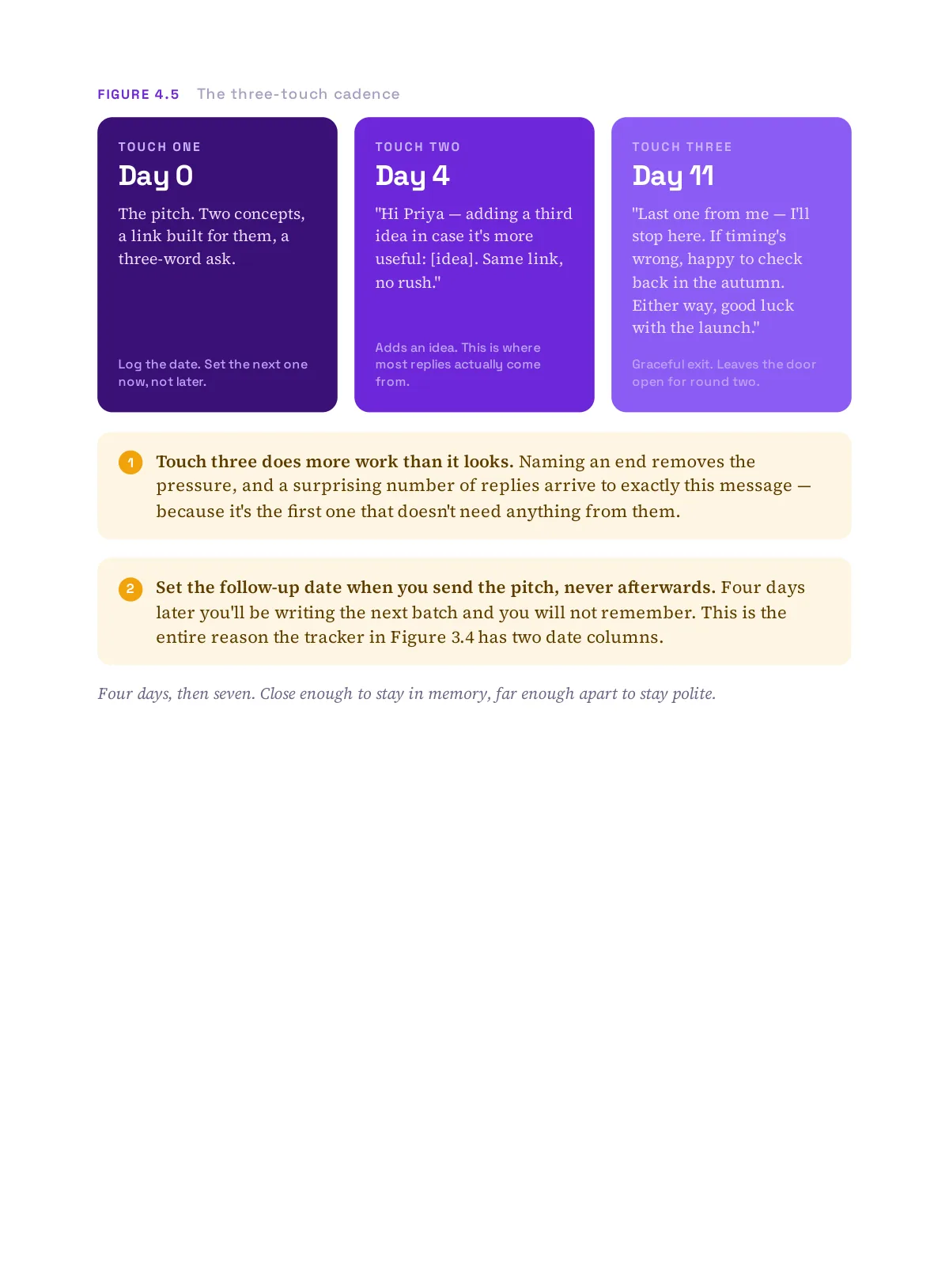
Follow up on day four
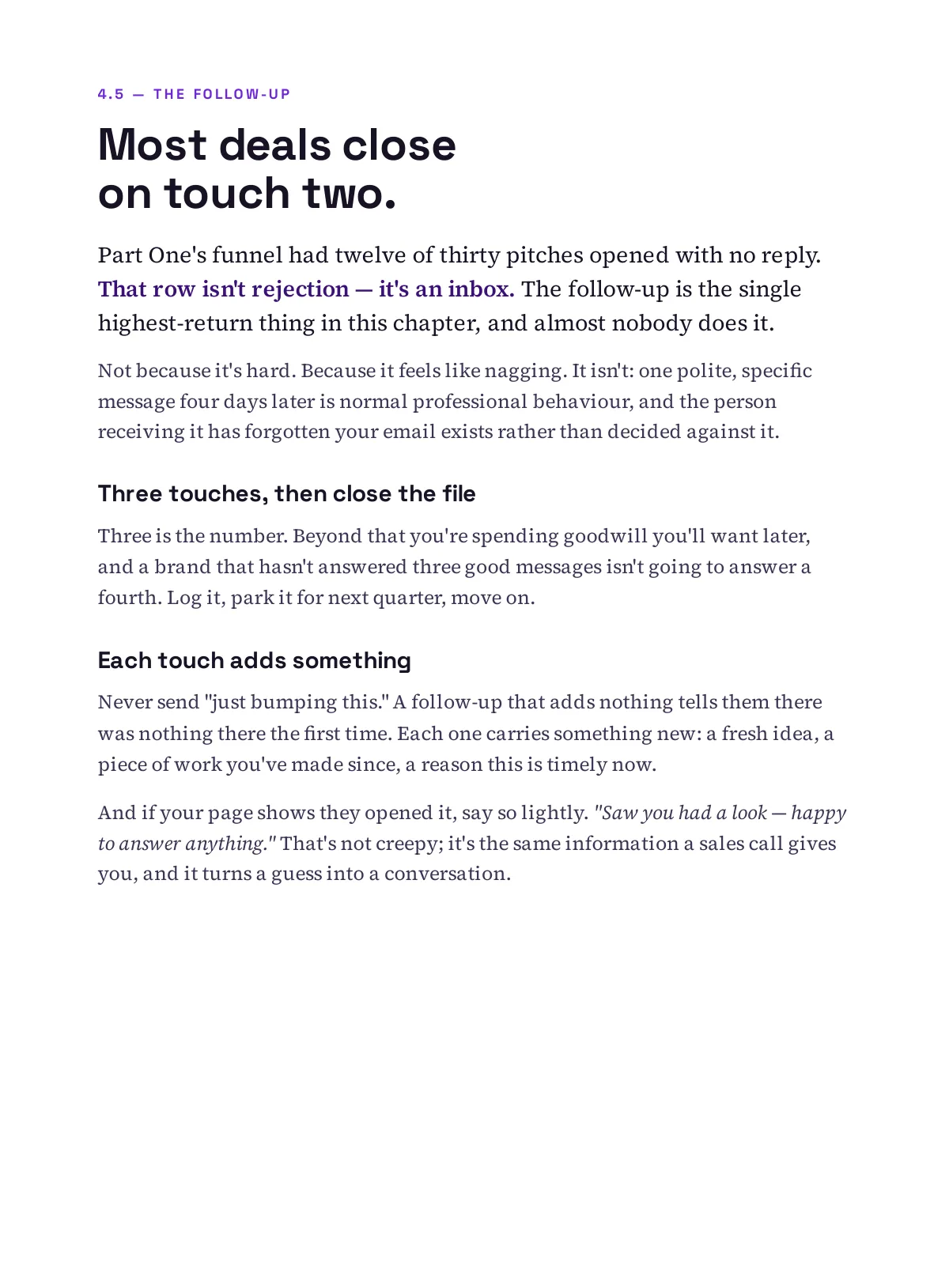
Most deals close on touch two. A pitch that goes unanswered is usually an inbox, not a rejection — the person has forgotten your email exists rather than decided against it.
Three touches, then close the file: the pitch on day zero, a new idea on day four, and a graceful exit on day eleven. Every touch has to add something. Never send "just bumping this."
Take it
Download the guide (PDF, 76 pages)
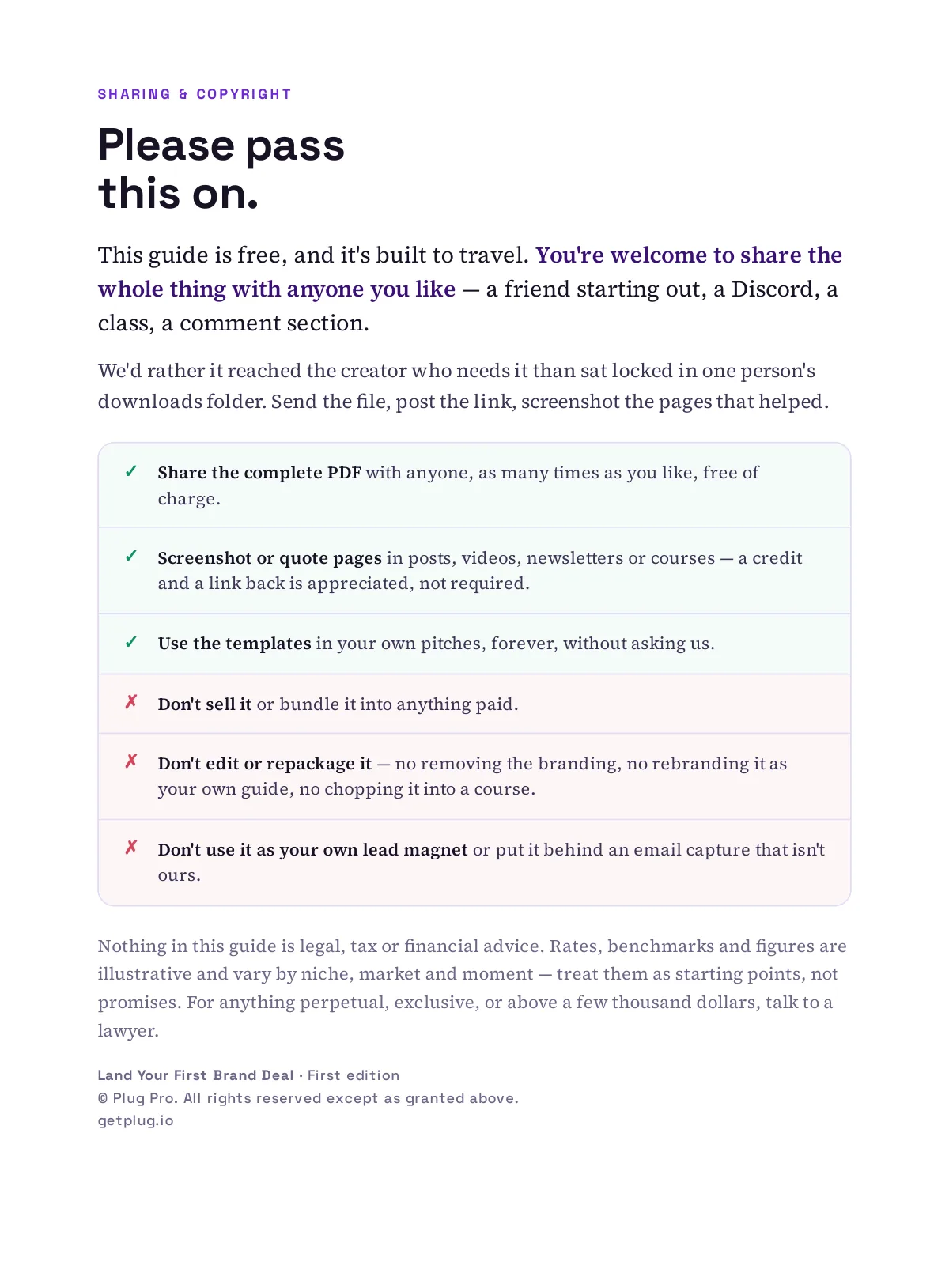
Share it with anyone you like — a friend starting out, a Discord, a class. We would rather it reached the creator who needs it than sat in one person's downloads folder.
Nothing in the guide is legal, tax or financial advice. Rates and benchmarks are illustrative starting points, not promises.